







Definition & Meaning
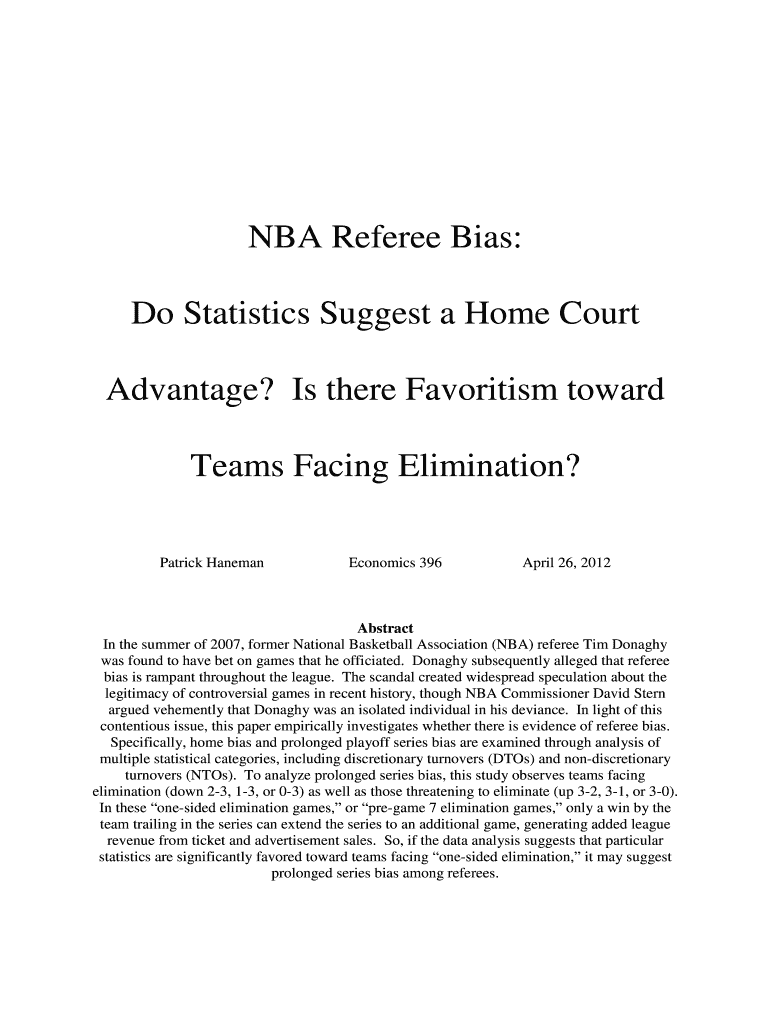
The analysis of referee bias in basketball, specifically within the NBA, brings to light the concept of systemic disadvantages experienced by certain teams due to officiating tendencies. This entails the identification of patterns where officials may unconsciously or consciously favor the home team or exert influence towards extending playoff series. These biases are measured by examining metrics like discretionary turnovers and fouls, essential in assessing refereeing performance and fairness in sports contexts.
How to Use the Study
To effectively utilize this study on basketball referee bias, one must delve into the statistical data collected from NBA playoff games. This involves interpreting the evidence of home court bias, and understanding how these refereeing patterns might impact game outcomes. Use these insights to foster discussions on improving fairness in sports officiating, possibly influencing policy changes or training methodologies to mitigate biases on both conscious and unconscious levels.
Key Elements of the Study
- Home Court Advantage: The study identifies that referees may give favorable calls to home teams, evidenced by examining discretionary turnovers and fouls.
- Playoff Dynamics: The focus on playoff games from 2007 to 2011 highlights periods during which biases can significantly alter outcomes, particularly in elimination scenarios.
- Metrics Analysis: By cataloging specific statistical deviations like DTOs, the study builds data-backed arguments about biases.
- Nature of Bias: Sheds light on how referees might impact the natural progression of a playoff series, suggesting manipulation possibilities in game continuity.
Important Terms Related to Referee Bias
- Discretionary Turnovers (DTOs): Instances where subjective referee calls result in turnovers, which could favor one team.
- Home Court Advantage: The phenomena wherein the home team potentially receives more favorable refereeing decisions.
- Favorable Calls: Decisions by referees that may not be entirely objective, skewed by various influences.
Who Typically Uses the Study
- Sports Analysts: Use this data to provide commentary and insights into games, influencing public perception and discussions around fairness.
- NBA Officials and Regulators: May use the findings to adjust training programs, establish stricter guidelines for impartial officiating.
- Coaching Staffs: Analyze the tendencies revealed by the study to strategize effectively in dealing with potential biases.
- Academic Researchers: Further explore underlying biases and contribute to sports psychology and sociology fields.


Examples of Using the Study
- Broadcasts: Analysts might reference this study during game coverage to substantiate discussions on controversial calls.
- Coaching Strategies: Implementations of this study’s findings could influence how coaches prepare their teams for high-stakes games, taking into account anticipated referee behaviors.
- Policy Development: Sports governing bodies could utilize insights to amend regulations, implementing unbiased referee training programs.
Eligibility Criteria for Analysis Participation
Not aimed at regular public use, eligibility for utilizing this study extends to institutions involved in overseeing sports regulations, academic researchers in sports dynamics, and approved sports organizations. While individual fans may access insights, direct participatory engagement typically involves structured professional and academic interactions.

State-by-State Differences in Bias Perception
While the study is reflective of NBA playoff games on a broader scale, regional perceptions and legal ramifications of referee biases can differ. Some states may have more avid responses to such studies, influencing local sports regulatory frameworks or public sentiment about game fairness.
Penalties for Non-Compliance
Though the notion of penalties directly related to referee bias in the NBA or stated in this study does not exist, failing an ethos of fairness and impartiality in sports can lead to reputational damage, stricter imposed guidelines from leagues, or initiatives to revamp officiating standards across sport governing bodies.




