






Definition and Meaning
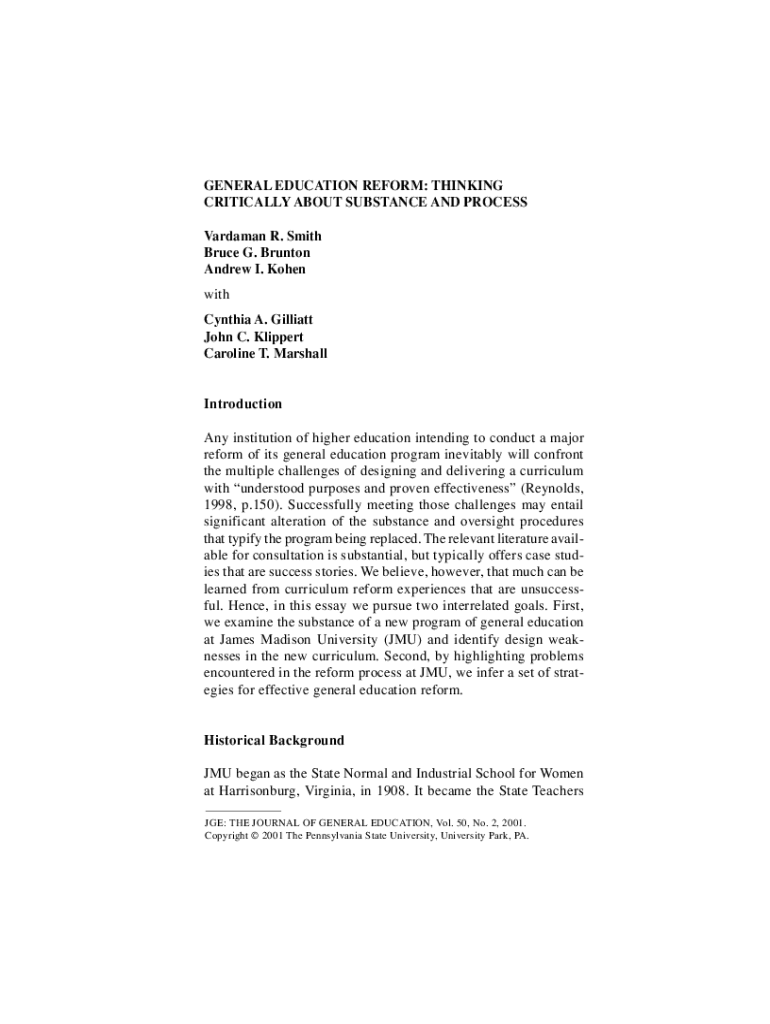
The term "Project MUSE - The Journal of General Education-Volume 50" refers to a specific volume of an academic journal focused on general education. Published via Project MUSE, a leading provider of digital humanities and social science content for the scholarly community, this journal issue includes articles and studies about various aspects of general education. It provides insights into the challenges and developments in the implementation and reform of general education programs in academic institutions.
Examples of Content
- Educational Reforms: Articles discussing the transition from traditional liberal studies programs to more modern general education models.
- Case Studies: Insights from real universities, such as James Madison University, detailing their experiences and adaptations to new curricula.
- Best Practices: Strategies for effectively incorporating faculty input and aligning learning objectives to enhance education quality.
How to Use Project MUSE - The Journal of General Education-Volume 50
Using this journal involves accessing and reading the articles to gain knowledge on recent trends and research in the field of general education. Academics, educators, and policymakers can employ the findings and recommendations from the journal to inform their own curriculum designs and teaching methods.
Practical Applications
- Curriculum Development: Use insights from articles to design or modify your institution's general education curriculum.
- Faculty Workshops: Facilitate professional development workshops based on the journal’s findings to improve teaching strategies.
- Policy Formulation: Inform educational policy decisions with documented case studies and research data from the journal.
Key Elements of the Journal
Main Components
- Research Articles: These form the core content, exploring theoretical and empirical aspects of general education.
- Case Studies: Detailed accounts of education reforms at universities, offering lessons learned and successful strategies.
- Editorials and Opinions: Expert commentary on the current state of general education and potential future directions.
Supporting Features
- Bibliographies: Provide additional resources and references for further study.
- Abstracts: Offer concise summaries of each article, allowing readers to quickly assess relevance.
Important Terms Related to the Journal
Understanding specific terminology used within the journal can enhance comprehension:
- General Education Program (GEP): A curriculum structure aimed at providing a broad-based education across multiple disciplines.
- Liberal Studies: The predecessor of more modern general education reform efforts, emphasizing diverse fields of study.
- Learning Objectives: Specific goals that faculty aim to achieve through their curriculum.
Who Typically Uses the Journal
The primary audience includes educators, researchers, policymakers, and administrators involved in higher education. Professors and teacher trainers may also use it to develop courses or workshops focused on general education strategies.


Steps to Complete the Use of the Journal
-
Access the Journal: Visit Project MUSE and search for "The Journal of General Education-Volume 50."
-
Select Articles: Review the table of contents to identify articles of interest based on your educational needs.
-
Read and Annotate: Take notes and highlight key points as you read, focusing on applicable insights for your role or institution.
-
Apply Insights: Implement the journal's recommendations in your educational settings or policy development tasks.
Legal Use and Permissions
Usage Guidelines
- Access Rights: Ensure your institution has a subscription to Project MUSE for full access, or consider purchasing specific articles or volumes.
- Citation: Follow proper academic citation guidelines when referencing articles in your work.
Ethical Considerations
- Sharing: Refrain from distributing copies of articles beyond what is allowed by your access permissions.
- Academic Integrity: Always credit original authors when using their research and insights.
Digital vs. Paper Version
Access Options
- Digital Access: Most users access the journal digitally via the Project MUSE platform, which allows for enhanced search and navigation features.
- Print Copies: Libraries may offer paper versions for those who prefer reading offline.
Benefits of Digital Access
- Search Functionality: Quickly find specific topics or terms within the journal.
- Portability: Access articles on various devices, such as tablets or laptops, without physical constraints.
Software Compatibility
While the primary interaction with the journal is through reading, educators could incorporate findings into educational technology platforms:
- Learning Management Systems (LMS): Create courses or content based on journal findings.
- Document Editors: Use annotations and PDF readers to highlight and comment on digital copies.
These blocks provide extensive information tailored to the specific needs of educators and policy-makers interested in the comprehensive coverage offered by "Project MUSE - The Journal of General Education-Volume 50."