






Definition & Meaning
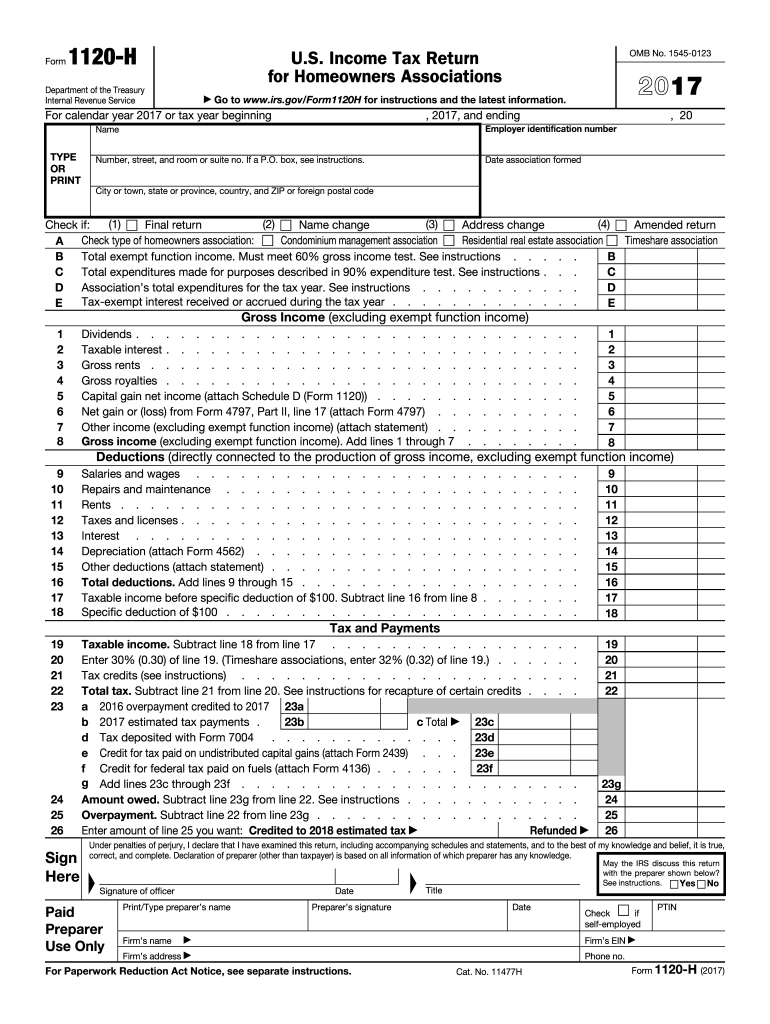
Form 1120-H, titled "U.S. Income Tax Return for Homeowners Associations," is utilized by homeowners associations in the United States to report income, expenses, and tax liabilities for the year 2017. The form allows qualifying homeowners associations to elect to be taxed as a corporation directly under the Internal Revenue Code, offering a streamlined means to file taxes on specific types of income and deductions.
How to Use Form 1120-H for 2017
To effectively use Form 1120-H, the association must ensure eligibility by meeting criteria such as deriving 60% of gross income from dues, fees, or assessments. Associations should report relevant income sections, such as exempt function income, which includes membership dues and fees directly linked to association functions. Additionally, ordinary income from sources like clubhouse rentals should be included to calculate total taxable income.
Completing Form 1120-H
- Header Information: Fill in the association's name, address, and Employer Identification Number (EIN).
- Income Reporting: Distinguish between exempt function income and taxable income.
- Deductions and Tax Calculation: Input allowable deductions and compute the taxable income using the applicable tax rate.
- Exempt and Nonexempt Expenses: Record applicable expenses linked to both exempt and taxable income.
How to Obtain Form 1120-H for 2017
Form 1120-H can be obtained directly from the IRS website, ensuring you have access to the latest version for that tax year. Alternatively, it might be accessible through tax preparation software that offers integrated form download services, allowing associations to complete this form digitally.
Steps to Complete Form 1120-H for 2017
Completing Form 1120-H involves a series of steps designed to ensure accuracy and compliance with tax regulations.
- Gather Financial Records: Collect all financial statements, reports on income and expenses, and membership records.
- Identify Taxable and Exempt Income: Classify income sources correctly to distinguish between dues and other income sources.
- Calculate Deductions: Include all deductible expenses and ensure they comply with IRS guidelines.
- Complete the Form: Insert accurate data, double-check figures, and ensure all signatures are included.
- Review and File: Review the completed form for errors before filing with the IRS by the required deadline.
Key Elements of Form 1120-H for 2017
A fundamental understanding of Form 1120-H's elements is vital for proper completion. The form includes sections for reporting various types of income, deductions, and a summary of tax liabilities. Key elements include:
- Exempt Function Income: Reflects membership dues and fee income.
- Investment Income: Dividends, interest, and other non-membership related income.
- Deductions: Deductions related to income production, excluding capital improvements.
- Tax Calculation: The association's tax obligations, computed based on the net taxable income after considering deductions.
Important Terms Related to Form 1120-H for 2017
Understanding the terminology associated with Form 1120-H is critical. Important terms include:
- Exempt Function Income: Income derived from members primarily for the association's operation.
- Non-Exempt Function Income: Income not associated with exempt functions, such as rentals or non-member fees.
- Deductions: Expenses incurred in the production of both exempt and non-exempt income.
- Taxable Income: Income subject to taxation after applying all allowable deductions.
IRS Guidelines on Form 1120-H for 2017
The IRS provides specific guidance on how homeowners associations should report their income and expenses using Form 1120-H. These guidelines emphasize accurate income reporting, classification of dues, and adherence to the qualifications for exempt status. Associations should consult IRS publications or seek professional advice to ensure proper compliance and avoid audits.
Filing Deadlines and Important Dates for 2017
For tax year 2017, Form 1120-H is due on or before the 15th day of the third month following the end of the association's tax year. Associations with a calendar tax year end of December 31, would have a filing deadline of March 15, 2018. If necessary, filing extensions can be requested, granting an additional six months to file the return, but not to pay any taxes owed.