Definition & Meaning
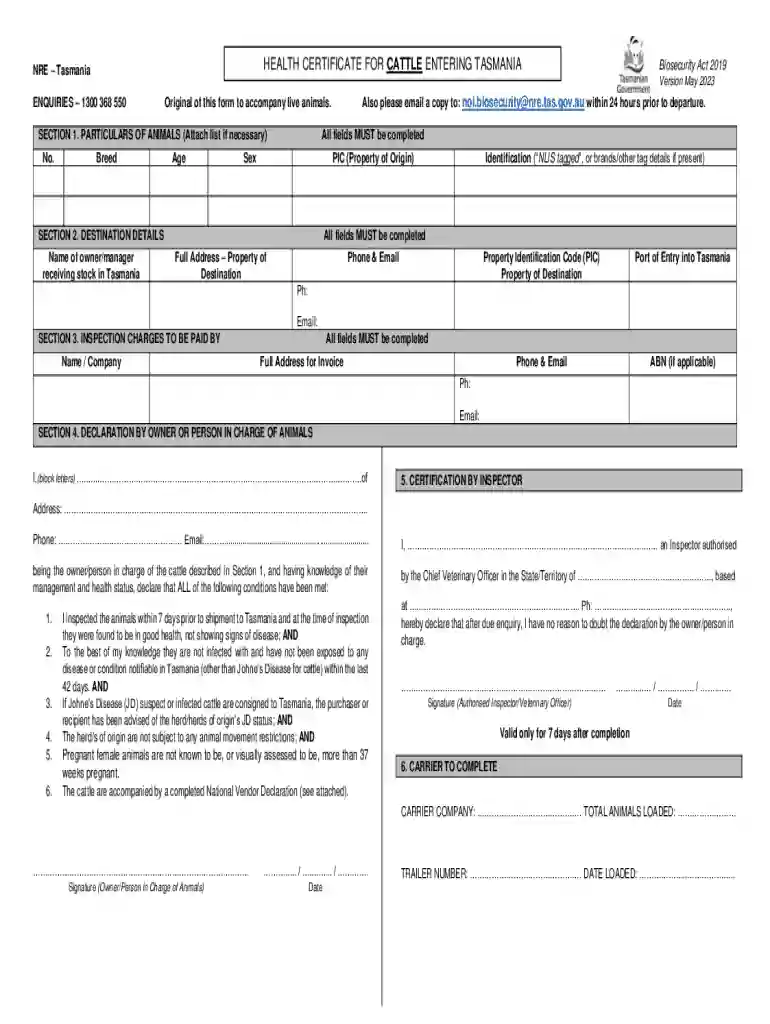
The "Health Certificate for Cattle Entering" is an official document required for the transportation of cattle across state or international borders. It serves to certify that the animals have been inspected and meet specific health standards set by government authorities. This certification helps ensure biosecurity, prevent the spread of diseases, and maintain the overall health of livestock populations. The certificate includes detailed information about the cattle, such as their health status, identification, and vaccination records.
Key Components of a Health Certificate
- Animal Identification: Typically includes ear tags or other identification methods.
- Health Status: Information on vaccinations and any health tests conducted.
- Owner Details: Includes name and contact information of the cattle owner.
- Inspection Date: States when the health inspection was conducted.
- Veterinarian Signature: Confirming the validity of the inspection and findings.
How to Obtain the Health Certificate for Cattle Entering
To secure a health certificate for cattle entering a different jurisdiction, specific steps must be followed. The process usually involves coordination between cattle owners and authorized veterinarians to ensure compliance with regulatory requirements.
Step-by-Step Process
- Consultation with a Veterinarian: Owners should first consult with a licensed veterinarian experienced in livestock health requirements.
- Health Inspection: The veterinarian conducts a thorough health assessment, checking for infectious diseases and verifying vaccination records.
- Documentation Preparation: The veterinarian prepares the health certificate, ensuring all necessary information is accurately documented.
- Submission for Approval: The completed certificate may need to be submitted to relevant agricultural or biosecurity authorities for final approval.
- Obtain the Signed Certificate: Once approved, the signed health certificate is issued to the cattle owner, ready for transport.
Required Information
- Recent health examinations and testing records.
- Details about previous veterinary treatments if any.
- Owner's identification and contact information for verification purposes.
Why You Need a Health Certificate for Cattle Entering
The requirement for a health certificate is grounded in the necessity to maintain a healthy livestock ecosystem and protect public and animal health. It prevents the spread of infectious diseases and ensures compliance with legal and biosecurity standards.
Benefits of Having a Health Certificate
- Disease Prevention: Minimizes the risk of disease spread among cattle populations.
- Legal Compliance: Ensures adherence to state and federal regulations regarding animal transport.
- Market Access: Facilitates smoother access to markets that require health certification for livestock.
- Consumer Confidence: Enhances trust in livestock quality and safety among consumers and stakeholders.
Who Typically Uses the Health Certificate for Cattle Entering
A range of individuals and organizations may use the health certificate in different capacities, depending on their involvement in cattle transport or management.

Common Users
- Livestock Owners: Individuals or businesses responsible for cattle.
- Veterinarians: Professionals tasked with health inspections and certification.
- Transport Companies: Organizations involved in the logistics of cattle movement.
- Regulatory Authorities: Government agencies overseeing agricultural and health regulations.
Associated Roles
- Livestock managers needing to move cattle for market or breeding purposes.
- Exporters and importers focused on international cattle trade.
- Agricultural inspectors checking compliance at state borders.
Important Terms Related to Health Certificate for Cattle Entering
Understanding the relevant terminology is crucial for anyone engaging in the process of obtaining or using a health certificate for cattle.
Glossary of Key Terms
- Biosecurity: Measures taken to protect against the spread of pests and diseases.
- Vaccination Record: A document listing all the vaccines administered to livestock.
- Inspection Protocol: The detailed procedure a veterinarian follows during an animal health check.
- Identification: Methods of marking animals to ensure traceability, such as ear tags.
Legal Use of the Health Certificate for Cattle Entering
Adhering to legal requirements surrounding health certificates is essential to avoid potential penalties and ensure smooth cattle transportation.
Compliance and Regulations
- Biosecurity Act 2019: This act provides a legal framework for managing biosecurity risks.
- State-Specific Legislation: Regulations may vary by state, necessitating awareness of local laws.
- International Standards: Exporting cattle may require compliance with international health standards.
Legal Implications
- Failure to comply can result in fines, transportation halts, or loss of livestock.
- Legal consequences for false information on the health certificate.
Steps to Complete the Health Certificate for Cattle Entering
Completing a health certificate involves precise documentation and adherence to guidelines as specified by the relevant authorities.
Detailed Process
- Schedule an Appointment: Contact a licensed veterinarian to conduct the necessary inspections.
- Animal Assessment: Ensure cattle undergo required tests and vaccinations.
- Complete Documentation: The veterinarian fills out the certificate, confirming the cattle's health and identification.
- Verification and Approval: Submit the certificate for confirmation to necessary authorities when required.
- Receive Final Certificate: Once verified, the certificate is ready for use during cattle transport.
Common Errors to Avoid
- Incorrect or incomplete animal identification details.
- Missing veterinarian signature or date of inspection.
- Neglecting state-specific health requirements.
State-Specific Rules for the Health Certificate for Cattle Entering
Regulations can differ significantly depending on the state to which cattle are being transported, making it critical to understand these variations.
Variability Across States
- Each state may have unique additional requirements for tests or vaccinations.
- Some states require electronic submissions of health certificates for faster processing.
Example: Texas vs. California
- Texas: Emphasizes testing for brucellosis and tuberculosis.
- California: May require additional vaccinations, such as for bluetongue disease.
By understanding these diverse aspects, stakeholders can better navigate the requirements of the Health Certificate for Cattle Entering, ensuring both compliance and the well-being of livestock.