




01. Edit your form online
Type text, add images, blackout confidential details, add comments, highlights and more.

Type text, add images, blackout confidential details, add comments, highlights and more.

Draw your signature, type it, upload its image, or use your mobile device as a signature pad.

Send it via email, link, or fax. You can also download it, export it or print it out.
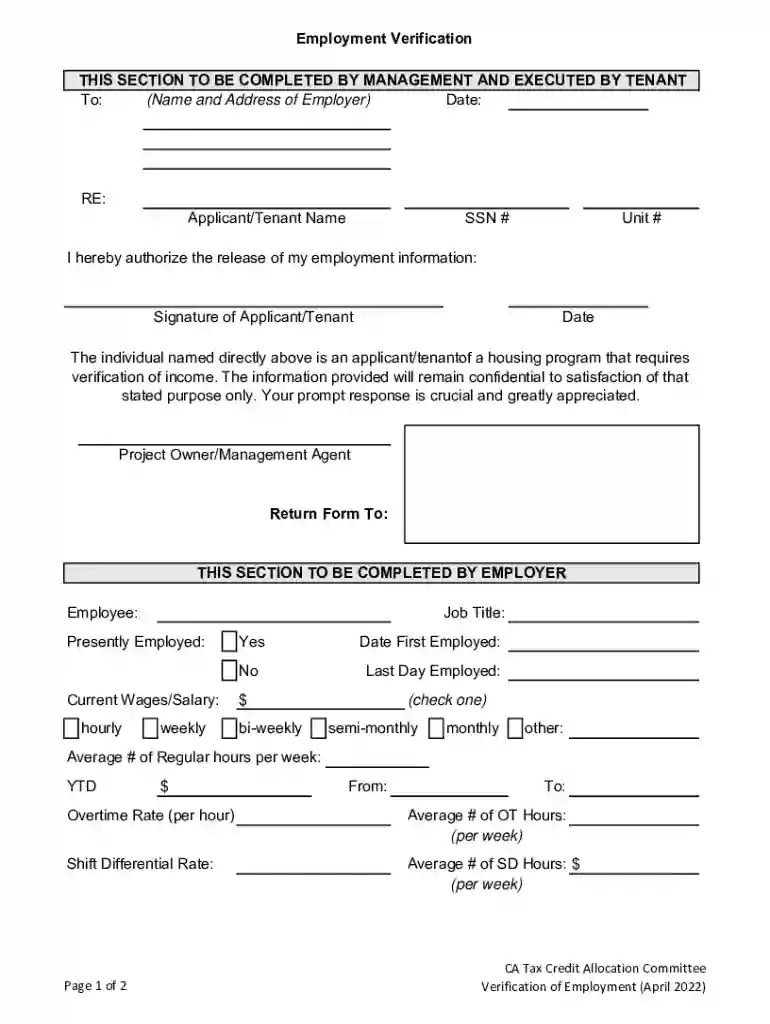
Verification of Employment (VoE) is a formal process through which an individual's employment history is confirmed. This process is typically required by landlords, lenders, or government agencies to verify a person's current or previous job status, salary, and employment duration. In the U.S., a VoE document can also be used as part of the income verification process for various applications, including loan approvals and housing eligibility.
To effectively use a Verification of Employment, the requesting party, such as a lender or landlord, should provide clear instructions on how the form needs to be completed. Here’s how the process typically works:
Completing a Verification of Employment involves several steps to ensure that the document is accurately filled out and submitted.
Verification of Employment serves several purposes, each critical in verifying financial and employment status:
Understanding these terms is crucial for correctly navigating the VoE process:
The VoE has legal standings and is used under specific guidelines:
For a VoE document to be complete and useful, certain elements must be accurately filled out:
Although the fundamentals of VoE remain consistent across the U.S., there can be state-specific variations in handling such documentation:
Understanding these variances is crucial for both employers and employees involved in multi-state operations.
We've got more versions of the Verification of Employment form. Select the right Verification of Employment version from the list and start editing it straight away!
At DocHub, your data security is our priority. We follow HIPAA, SOC2, GDPR, and other standards, so you can work on your documents with confidence.




The U.S. Department automated employment verification service, allowing current and former DOL employees to have employment via phone at: 1-800-367-5690.
May 24, 2012 Basic verification includes dates of employment, job title and reason for leaving. Some employers will verify salary. Usually obtained from HRRead more
Automate income and employment verifications with The Work Number. instant verification for mortgage, auto, and social service applications.


