







Definition & Meaning
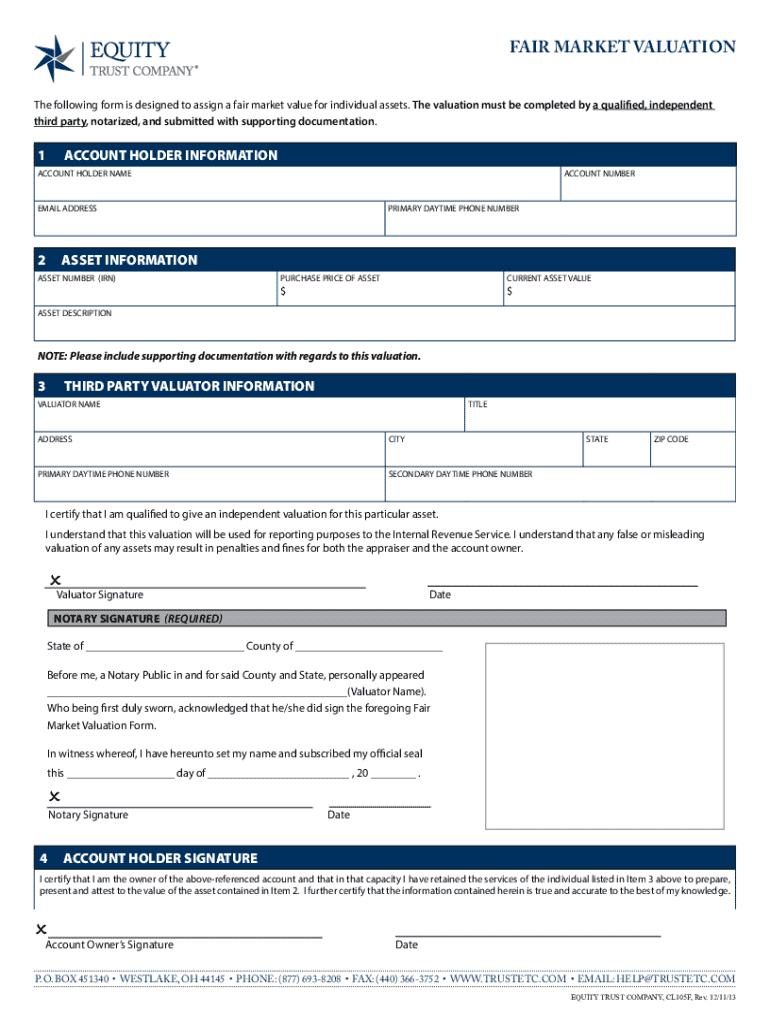
The Fair Market Valuation Form - eVANTAGE - Equity Trust Company is a document used primarily for assessing the current market value of assets held in trust or through an equity account. This valuation plays a crucial role in determining asset values for tax reporting, transfers, and distributions. It must be completed by an independent third party, ensuring accuracy and impartiality.
The form is essential for maintaining compliance with IRS requirements and providing a transparent view of asset values, especially when there are significant changes in value or annual reporting obligations.
How to Use the Fair Market Valuation Form
Using the Fair Market Valuation Form involves several steps to ensure accuracy and compliance. Initially, one must gather all relevant documentation related to the assets that require valuation. This includes past statements, purchase receipts, and any appraisals previously conducted.
-
Complete the Identification Section:
- Provide personal or business information, including the entity's name and account details.
-
Detail Asset Information:
- Record each asset requiring valuation, its identification number, and description.
- Include the last known value and date of acquisition.
-
Obtain Third-Party Valuation:
- Engage an approved third-party appraiser to complete the valuation, ensuring they provide their signature and credentials.
-
Notarization:
- Once completed, notarize the form to cement its legal standing.
-
Submit Form:
- Send the form along with supporting documents to Equity Trust Company via the chosen submission method.
How to Obtain the Fair Market Valuation Form
This form can be obtained through several channels:
- Request directly from Equity Trust Company via their customer service.
- Access through the Equity Trust online portal available to account holders.
- Professional financial advisors or trust managers may also provide access as part of their services.
These methods ensure that individuals can obtain the most current version of the form, along with any supplemental instructions tailored to specific asset types.
Steps to Complete the Fair Market Valuation Form
Gathering Required Information
- Asset Inventory: Compile a detailed list of all assets needing valuation, including their purchase dates and any previous valuations.
- Documentation: Collect all necessary supporting documents such as past appraisals, purchase receipts, and any significant transactions.
Engaging an Appraiser
- Selection: Choose an independent, certified appraiser familiar with the asset types you wish to value.
- Appraisal: Ensure the appraiser completes all necessary sections of the form, providing a signed valuation report.
Finalizing the Form
- Check Completion: Verify all sections of the form are complete and accurate.
- Notarization: Arrange for a notary to witness signatures where required.
Submission
- Send: Submit the form and all required documents to Equity Trust through the preferred method (online or by mail).
Key Elements of the Fair Market Valuation Form
- Asset Details: Comprehensive information on each asset for clarity and accurate valuation.
- Valuation Date: Specifies when the valuation is effective, critical for reporting accuracy.
- Appraiser's Information: Includes credentials and contact information for the third-party appraiser.
- Signatures and Notarization: Ensures form authenticity and compliance.
These elements ensure the form fulfills its purpose in providing a precise asset value assessment.
Important Terms Related to the Fair Market Valuation Form
- Fair Market Value (FMV): The price at which an asset would sell in a competitive and open market.
- Independent Third Party: A neutral appraiser with no vested interest in the asset's value.
- Notarization: The process by which a state-authorized official witnesses the signing of a document.
Understanding these terms fosters clarity and compliance when completing the form.
Legal Use of the Fair Market Valuation Form
The Fair Market Valuation Form must be used following specific legal guidelines. The valuation must be independent, ensuring adherence to IRS requirements for accurate reporting. Legal ramifications may ensue from inaccurate filings, including fines or audits.
Engaging a certified appraiser and ensuring proper notarization are critical steps in the legal use, safeguarding against disputes or compliance issues.
Required Documents
Obtaining a precise fair market valuation requires collecting appropriate documentation. Essential documents include:
- Asset Purchase Documents: Original purchase receipts or acquisition records.
- Previous Valuations: Any reports from past appraisals.
- Financial Statements: Relevant to the trust or equity account holding the assets.
Ensuring these documents are complete and accurate simplifies the valuation process, providing transparency and compliance with reporting requirements.
Form Submission Methods
Submission of the completed form can be executed through different channels:
- Online Submission: A secure portal provided by Equity Trust Company that allows direct upload and submission of forms.
- Mail Submission: Traditional postal method, sending the notarized form and supporting documents to the company's specified address.
These options offer flexibility in submission, allowing users to choose the most convenient method based on their preferences and access to technology.




