
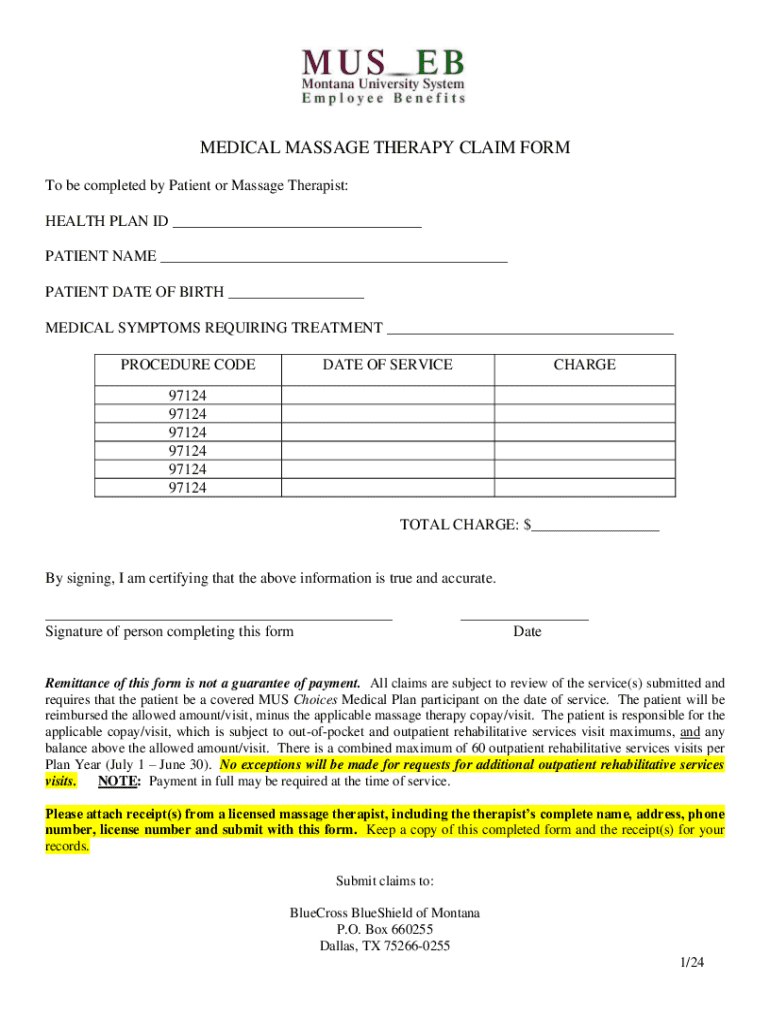







Definition and Meaning
The "Massage Therapy: Statement of Services Rendered" form is a crucial document utilized primarily for reimbursement and record-keeping purposes in the medical and therapeutic context. This form provides a detailed account of the massage therapy services provided, serving as both a claim and a statement to inform patients, healthcare providers, or insurance companies of the treatments administered.
Key Components
- Service Details: Identifies the specific massage therapy services rendered, including descriptions and procedure codes.
- Patient Information: Collects essential patient details, ensuring proper identification and association with the claim.
- Charges and Dates: Records the financial aspects of the services, specifying the dates they were provided to establish a timeline for treatments.
- Financial Responsibilities: Explains patient's obligations, such as copays and coverage limits under specific medical plans.
How to Use the Massage Therapy: Statement of Services Rendered
This section explores practical scenarios for utilizing the form effectively in various contexts. Whether you are a patient seeking reimbursement or a therapist documenting services, understanding the proper use of this form streamlines the process.
Step-by-Step Usage
- Gather Necessary Information: Collect patient details, specific treatments administered, and associated costs.
- Complete the Form Fields: Enter the required data in each designated section, ensuring accuracy in codes and descriptions.
- Attach Supporting Documents: Include any relevant receipts or documentation from licensed massage therapists.
- Submit the Form: Once completed, submit the form to the appropriate party, such as an insurance provider or employer, for processing.
Best Practices
- Accuracy: Double-check all entries for spelling and numerical accuracy to prevent delays.
- Timeliness: Submit the form promptly to adhere to deadlines and expedite reimbursement.
Steps to Complete the Massage Therapy: Statement of Services Rendered
Completing the form accurately is crucial for ensuring that services are properly documented and claims processed without issues. This section offers a guide to filling out each element of the form.
Detailed Instructions
-
Start with Patient Information: Fill in the patient's full name, contact information, and other identifying details.
-
Enter Service Details: Specify each therapy session, including the type of massage, duration, and any significant outcomes.
-
Record Treatment Costs: Document the charges for each service, utilizing accurate procedure codes to align with insurance protocols.
-
Sign and Date: Ensure that both therapist and patient provide signatures to validate the services rendered and agree on the details.
Verification and Submission
- Review for Completeness: Check that all fields are filled out and no required information is missing.
- Submit Through Correct Channels: Depending on who needs the documentation, submit through mail or electronically, ensuring it's directed to the right recipient.
Why Use the Massage Therapy: Statement of Services Rendered
Understanding the importance of this document can enhance compliance and streamline financial transactions associated with therapeutic massage services.
Benefits
- Reimbursement Facilitation: Essential for patients seeking insurance payouts for covered services.
- Record Keeping: Helps therapists maintain a detailed log of services provided, aiding in professional tracking and reporting.
- Accountability and Clarity: Ensures that both patients and providers have clear records to prevent misunderstandings or disputes regarding treatment and costs.
Key Elements of the Massage Therapy: Statement of Services Rendered
Identifying and understanding the crucial components of this form can significantly impact its successful completion and the resulting financial transactions.
Core Elements
- Patient Information Section: Collects critical details about the patient, including address and contact numbers.
- Service Descriptions and Codes: Lists each type of massage service with corresponding standardized codes.
- Billing Details: Offers a breakdown of the costs, total amount charged, and any covered insurance payments.
- Authorization Signatures: Confirms with signatures from both provider and patient to approve the rendered services and associated charges.
Legal Use of the Massage Therapy: Statement of Services Rendered
Legal compliance is a vital aspect of utilizing the form correctly. This section elucidates how this document fits legal and insurance frameworks.
Compliance and Use
- Adherence to Regulations: Aligns with the ESIGN Act by ensuring that all required electronic signatures are binding and recognized.
- Insurance Claims: Necessitated by insurers for claims processing, requiring full conformity to outlined formats and details.
- Patient Privacy: Ensures that personal and treatment information is handled with confidentiality according to HIPAA standards.
Examples of Using the Massage Therapy: Statement of Services Rendered
Real-world examples provide clarity on the practical application of this form and its impact on various stakeholders.
Practical Scenarios
- Insurance Reimbursement: A patient can use the form to claim covered massage services from their health insurance provider.
- Professional Recordkeeping: A massage therapist documents services provided to a regular client for both billing and tax purposes.
- Periodic Treatment Updates: Used by a clinic to update a patient’s medical records with ongoing treatment interventions and progress tracking.
Who Typically Uses the Massage Therapy: Statement of Services Rendered
In identifying the primary users of this form, one can better appreciate its role and significance across different professional and personal contexts.


Typical Users
- Patients: Individuals who frequently receive therapy for medical or wellness reasons and need reimbursement.
- Massage Therapists: Professionals who provide treatments and need to document services both for client satisfaction and compliance with healthcare standards.
- Healthcare Providers: Organizations that require a comprehensive account of therapy sessions to integrate into broader medical records.
Important Terms Related to Massage Therapy: Statement of Services Rendered
Understanding key terminology associated with the form can enhance comprehension, leading to smoother completion and submission processes.
Terminological Clarity
- Procedure Codes: Numeric representations used to categorize and bill for specific therapy services.
- Copays: Fixed payment amounts set by insurance plans that the patient is responsible for paying when receiving healthcare services.
- HIPAA Compliance: Regulations governing the protection of sensitive patient health information from being disclosed without the patient's consent or knowledge.




