
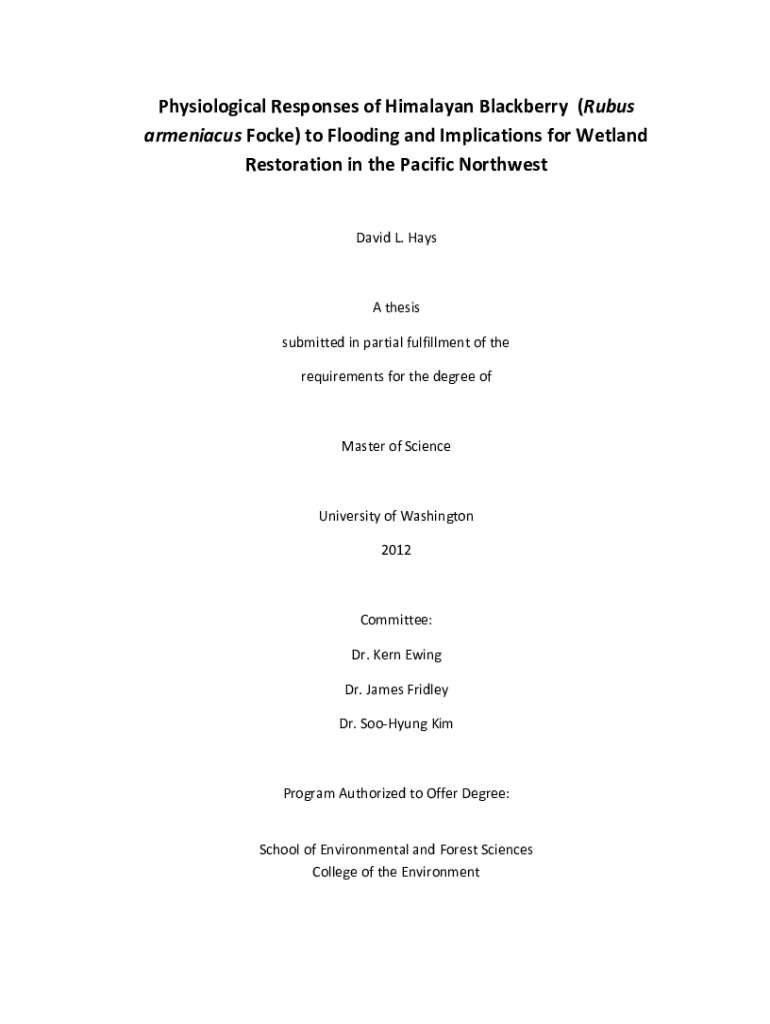







Definition and Meaning of Managing Himalayan Blackberry in Western Oregon Riparian
Managing Himalayan blackberry refers to the strategies and practices implemented to control and reduce the presence of the invasive species Rubus armeniacus, commonly known as Himalayan blackberry, in riparian zones in western Oregon. These areas, characterized by their proximity to water bodies, are particularly susceptible to invasion due to the blackberry's adaptability to moist environments. Himalayan blackberry poses a significant ecological threat by outcompeting native vegetation, altering habitat structures, and affecting water quality. Comprehensive management strategies typically involve an integrated approach utilizing mechanical removal, chemical treatments, and ecological restoration techniques to mitigate its spread and impact.
Key Elements of Managing Himalayan Blackberry
Effective management of Himalayan blackberry in riparian zones involves several critical elements:
- Integrated Control Methods: Utilizing a combination of mechanical, chemical, and biological approaches to manage the infestation effectively.
- Ecological Restoration: Rehabilitating treated areas by replanting native species that can outcompete Himalayan blackberry, thus reducing its chance of reestablishment.
- Monitoring and Maintenance: Ongoing assessment to evaluate treatment effectiveness and perform necessary follow-up actions.
- Community Involvement: Engaging local communities to assist in management efforts, raising awareness, and promoting stewardship of natural resources.
Steps to Complete the Management Plan
- Assessment and Planning: Conduct a thorough site assessment to determine the extent of the infestation and identify any sensitive ecological areas that may require special handling.
- Selection of Control Methods: Choose appropriate methods based on site characteristics, infestation level, and available resources.
- Mechanical methods might include cutting, mowing, or grubbing.
- Chemical methods involve the application of herbicides with consideration for surrounding flora and fauna.
- Implementation: Execute the chosen control methods during optimal times of the year to maximize effectiveness.
- Restoration Activities: Follow up with planting native vegetation to restore the ecological balance and prevent re-infestation.
- Monitoring: Establish a monitoring schedule to track the success of management activities and adjust strategies as needed.
Who Typically Uses the Management Strategy
This management strategy is employed by a wide range of stakeholders, including:
- Environmental and Conservation Agencies: Government bodies and non-governmental organizations focus on preserving natural habitats and maintaining biodiversity.
- Local Governments: Municipalities responsible for managing public lands and ensuring ecological health.
- Private Landowners: Those affected by Himalayan blackberry on their property who wish to manage it sustainably.
- Ecological Consultants: Specialists hired to develop and implement management plans tailored to specific sites.


Why Managing Himalayan Blackberry is Essential
Managing this invasive species is crucial for maintaining the ecological integrity of riparian zones. Uncontrolled proliferation of Himalayan blackberry can lead to:
- Loss of Biodiversity: Native plant and animal species decline due to habitat competition.
- Altered Hydrology: Dense blackberry thickets can change water flow patterns, leading to increased erosion and sedimentation.
- Economic Impact: Management costs can be significant, and dense infestations can hinder recreational activities, reducing tourism revenue.
Important Terms Related to the Management Process
- Invasive Species: Non-native organisms that spread rapidly and cause harm to the environment, economy, or human health.
- Riparian Zone: Areas adjacent to rivers and streams, characterized by distinct vegetation and ecosystems.
- Herbicide: A chemical substance used to control unwanted plants.
- Mechanical Control: Physical methods such as cutting and removal to manage plant populations.
State-Specific Rules and Considerations
Western Oregon has specific regulations governing the management of invasive species like Himalayan blackberry:
- Permit Requirements: Certain management activities, especially those involving chemical treatments near water bodies, may require permits.
- Compliance with Environmental Laws: Ensure activities are in line with laws such as the Clean Water Act and Endangered Species Act.
- Local Adaptations: Adjust management plans to reflect local ecological conditions and resource availability.
Examples of Successful Management Projects
Several case studies highlight effective management strategies for Himalayan blackberry:
- Community Partnerships: Collaborative efforts between government agencies and local volunteers have successfully reduced infestations in public parks.
- Integrated Pest Management Programs: Programs combining herbicide use with native species planting have restored ecological balance in affected riparian zones.
- Innovative Approaches: Some projects have utilized goats for biological control, which can effectively manage blackberry and promote native species regeneration.
Application Process for Managing Projects
- Submit a Management Proposal: Outline planned activities, including goals, methods, and timelines, to relevant authorities for review.
- Obtain Necessary Approvals: Secure any required permits or clearances, ensuring compliance with legal and environmental standards.
- Engage Stakeholders: Collaborate with local communities and experts to gain support and improve management outcomes.
- Implement and Monitor: Execute the management plan and assess its effectiveness through ongoing monitoring and evaluation.




