







Definition & Meaning
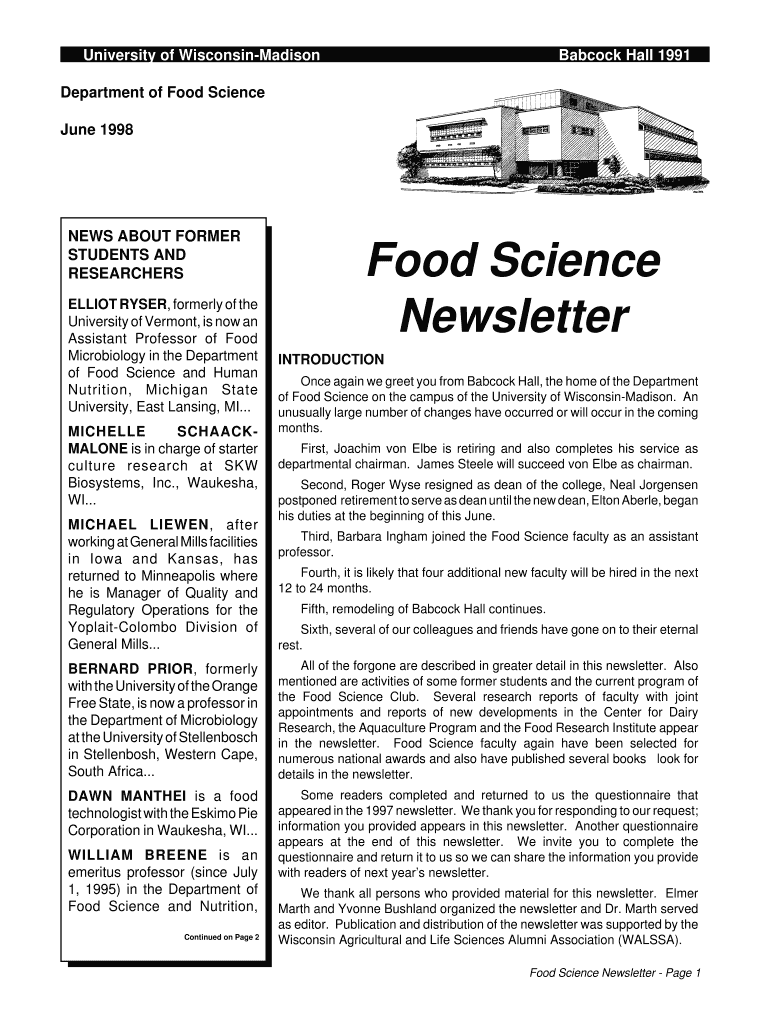
The "Department of Food Science - foodsci wisc" refers to the Department of Food Science at the University of Wisconsin-Madison. This department is a leading institution in the field of food science, focusing on the study and research of food safety, quality, and nutrition. It encompasses various aspects of food production, processing, and preservation to enhance safety, taste, and nutritional value. The department is also involved in innovation and developing new technologies to improve food systems globally.
How to Use the Department of Food Science - foodsci wisc
Engaging with the Department of Food Science at UW-Madison can be achieved through various channels:
- Educational Programs: Enroll in undergraduate or graduate courses to gain in-depth knowledge and skills.
- Research Collaboration: Partner with faculty on research projects to explore new food science innovations.
- Workshops and Seminars: Attend events for professional development and networking with experts in the field.
- Resources Access: Utilize the department's library and lab facilities for academic and professional purposes.
Key Elements of the Department of Food Science - foodsci wisc
The department features a host of key elements that define its operations and offerings:
- Cutting-edge Research: Projects focused on food safety, quality assurance, and nutritional improvement.
- Experienced Faculty: A team of renowned experts specializing in diverse areas of food science.
- State-of-the-Art Facilities: Well-equipped labs and research centers that support advanced studies.
- Industry Partnerships: Collaboration with food industry leaders to bridge academic research and real-world applications.
Steps to Complete the Department of Food Science - foodsci wisc
While there is no "completion" per se for the department, engaging with it through a structured approach can enhance your experience:
- Application: Submit a detailed application if enrolling in a program or seeking research opportunities.
- Enrollment: Complete the necessary enrollment procedures for courses or activities.
- Active Participation: Engage actively in classes, labs, or research work.
- Networking: Build connections with faculty and peers to expand professional networks.
- Utilize Resources: Fully leverage the department's facilities and support services.
Who Typically Uses the Department of Food Science - foodsci wisc
The primary users include:
- Students: Both undergraduate and graduate students pursuing food science studies.
- Researchers: Individuals involved in academic or industry-related food science research.
- Industry Professionals: Experts seeking professional development or collaboration opportunities.
- Educators: Faculty members engaging in teaching or curriculum development.


Important Terms Related to Department of Food Science - foodsci wisc
Understanding key terminology is crucial for engaging with the department:
- Food Safety: Practices that protect food from contamination and ensure consumer health.
- Nutritional Science: Study of nutrients and how they impact human health and disease prevention.
- Quality Assurance: Processes that ensure the quality and consistency of food products.
- Food Processing: Techniques used to transform raw ingredients into consumable food products.
Examples of Using the Department of Food Science - foodsci wisc
Several scenarios illustrate how individuals engage with the department:
- Researcher Example: A researcher partners with faculty to investigate new methods of food preservation.
- Student Scenario: An undergraduate student enrolls in a food microbiology course to fulfill degree requirements.
- Industry Professional Case: A quality assurance manager attends a seminar to stay updated on regulatory changes.
Application Process & Approval Time
Engagement with the department, especially through academic programs, follows a structured application process:
- Review Requirements: Understand prerequisites for courses or research opportunities.
- Submit Application: Provide necessary documentation, such as transcripts or research proposals.
- Interview: Participate in interviews if required for specific programs or collaborations.
- Await Approval: Allow for processing time, which varies based on application type and time of year.
State-Specific Rules for the Department of Food Science - foodsci wisc
While the department adheres to federal and university guidelines primarily, there may be Wisconsin-specific regulations affecting research and educational practices:
- Research Compliance: Ensure adherence to state laws regarding food safety and environmental policies.
- Educational Standards: Programs align with Wisconsin's educational requirements and standards.
This comprehensive content provides a detailed guide to understanding and utilizing the Department of Food Science at the University of Wisconsin-Madison, catering to different users' needs and offering insights into its vast array of resources and activities.




