
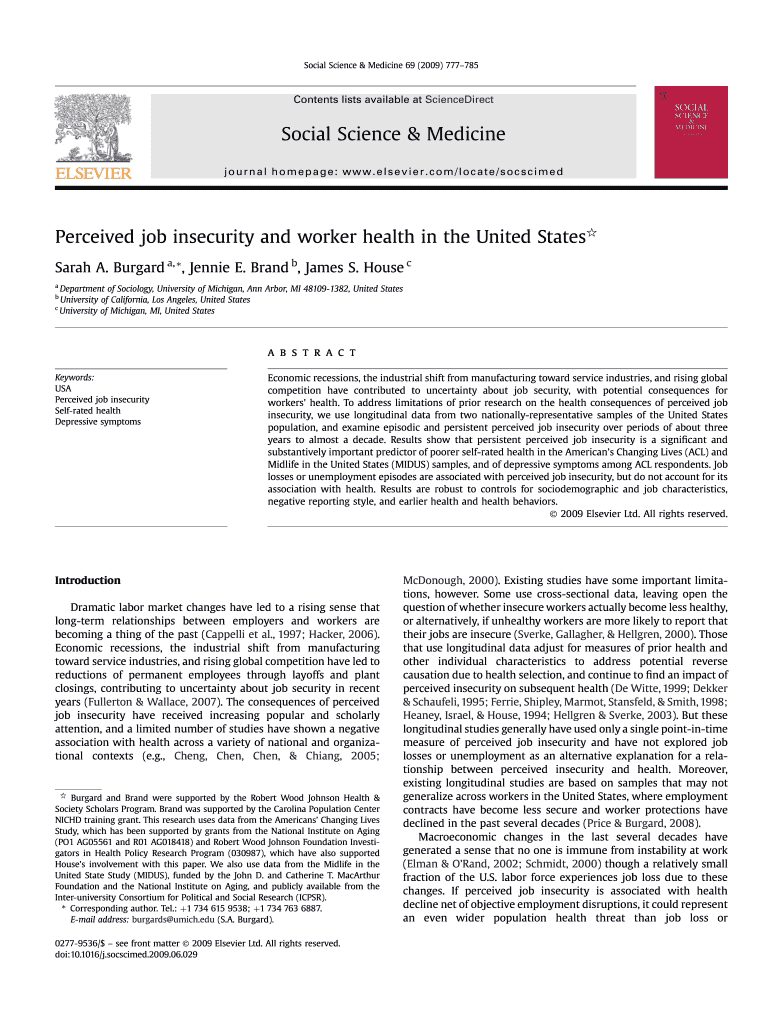







Definition and Meaning of Perceived Job Insecurity
Perceived job insecurity refers to an individual's subjective assessment of the likelihood of losing their job in the near future. This psychological state does not necessarily align with actual job threats or economic conditions but can significantly impact employees' mental and physical health. In the context of worker health in the United States, perceived job insecurity has become more relevant due to economic fluctuations that foster uncertainty even without realignment in the employment status. Research shows that this perception can lead to chronic stress, heightened anxiety, and even depression, which are critical public health issues.
How Perceived Job Insecurity Affects Worker Health
Various studies have highlighted the direct and indirect ways in which perceived job insecurity affects worker health. Persistent job insecurity can result in long-term health issues, such as cardiovascular diseases and mental health disorders. The psychological strain leads to higher levels of cortisol, adversely affecting physical health and leading to conditions like hypertension. Furthermore, mental health deteriorates over fears of job loss, causing heightened depressive symptoms and reduced self-esteem. Understanding these impacts is crucial for organizations aiming to support employees and mitigate such concerns.
Psychological Impacts
- Increased anxiety and stress
- Higher incidence of depressive symptoms
- Decreased job satisfaction
Physical Health Effects
- Elevated risk of cardiovascular diseases
- Poorer self-rated health
- Increased instances of sleep disturbances
Steps to Address Perceived Job Insecurity
Addressing perceived job insecurity involves strategies at both individual and organizational levels. Companies can take steps to improve communication and create a culture of transparency that can help alleviate uncertainties among workers. On an individual level, employees can focus on skill development and career planning to increase job security and reduce perceived risks.
-
Organizational Strategies:
- Enhance communication about job stability and company performance.
- Establish transparent assessment and promotion criteria.
- Provide employee assistance programs focusing on mental health support.
-
Individual Strategies:
- Engage in continuous learning and skill enhancement.
- Develop a professional network for support and opportunities.
- Focus on personal career development and resilience-building.
Who Typically Experiences Perceived Job Insecurity
While perceived job insecurity can affect anyone, specific groups are more vulnerable. These include employees in industries undergoing rapid technological changes, workers with non-standard employment contracts, and older employees who may feel less competitive in evolving job markets. Additionally, employees in sectors heavily impacted by economic uncertainty, such as manufacturing and retail, may feel increased insecurity.
High-Risk Groups
- Part-time and contract workers
- Older workforce with outdated skills
- Sectors prone to automation and outsourcing
Important Terms Related to Worker Health
Understanding terminology is essential when discussing perceived job insecurity and its impact on worker health:
- Job Insecurity: The feeling of uncertainty about continuity in a current job.
- Depressive Symptoms: Indicators of depression such as insomnia, lack of energy, and persistent sadness.
- Longitudinal Study: Research conducted over a long period to study developments and patterns.
Legal and Ethical Considerations
From a legal perspective, addressing perceived job insecurity involves ensuring fair labor practices and maintaining workplace standards. Ethical considerations require employers to foster environments of trust and open communication, where employees are informed of company changes that may affect their positions.
Ethical Practices
- Promote fairness and transparency in job evaluations.
- Uphold employee rights and address grievances effectively.
Key Elements Identified in Studies
Research studies on the relationship between perceived job insecurity and worker health have identified key elements crucial for understanding this phenomenon. These include the role of perceived control over one's job circumstances and the availability of social support within the workplace.
Elements Impacting Perception
- Employee's perception of job control
- Availability of workplace support systems
- Recognition and rewards for employee contributions
State-By-State Differences in Worker Health Support
Worker health support in relation to perceived job insecurity may differ across states given variations in employment laws and economic conditions. Some states have more robust support systems and legal requirements for employers, impacting how job insecurity is perceived and managed.
- Variations in Employment Protections: Some states have stronger worker protection laws, providing better security and reducing perceived threats.
- Health Support Services: Availability of health resources may vary, influencing the impact of perceived insecurity on health.




