







Definition & Meaning
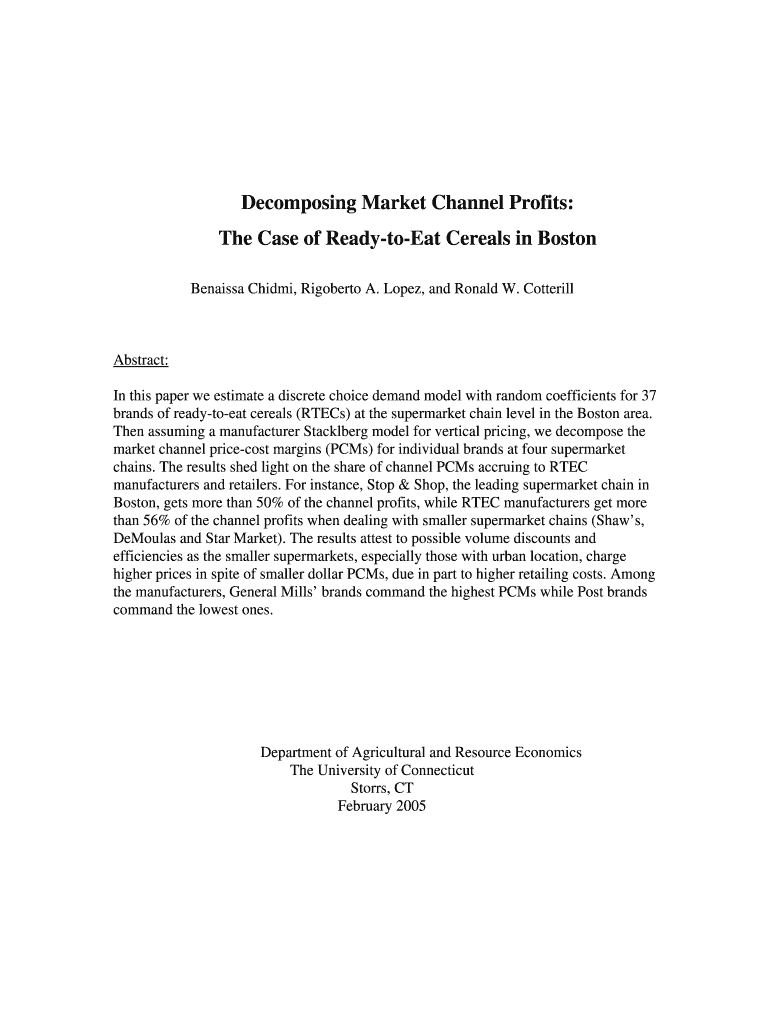
The "Decomposing Market Channel Profits - Agricultural and Applied - aae wisc" form is an analytical tool used primarily in the field of agricultural economics to gain deeper insights into the distribution of profits across different market channels. It involves breaking down price-cost margins (PCMs) between various players in the supply chain, such as manufacturers and retailers. By understanding these margins, stakeholders can make informed decisions about pricing strategies, market positioning, and competitive dynamics. This form is particularly useful for those involved in agricultural markets, where profit sharing and cost allocation can significantly impact business outcomes.
Key Elements of the Decomposing Market Channel Profits
Understanding the critical elements of the "Decomposing Market Channel Profits" form is essential in leveraging its full potential. Important components include:
- Price-Cost Margins (PCMs): These margins serve as a measure of profitability for both manufacturers and retailers. Analyzing PCMs helps identify the share of profits captured by each entity in the market channel.
- Market Channel Participants: The form considers various players, including manufacturers, retailers, wholesalers, and consumers. Each participant's role and influence on profit distribution are analyzed.
- Demand Model: A discrete choice demand model, often a feature, is used to estimate consumer preferences and retail pricing strategies' impact, providing a comprehensive view of market dynamics.
- Retailer and Manufacturer Strategies: The form examines different strategies used by market participants, such as pricing tactics and cost management.
Steps to Complete the Decomposing Market Channel Profits
Completing the "Decomposing Market Channel Profits" form requires a systematic approach to ensure accurate analysis:
- Gather Data: Begin by collecting detailed data on prices, costs, and quantities across different market segments and channels.
- Input Information: Enter the gathered data into the designated fields, ensuring accuracy in the values used for analysis.
- Analyze PCMs: Utilize provided tools to calculate price-cost margins for different market participants.
- Review Results: Examine the results to understand the distribution of profits and identify areas for potential improvement in pricing or strategy.
- Interpret Findings: Utilize the analysis to draw conclusions about market competitiveness and profitability distribution.
- Document Insights: Record key findings for discussion and decision-making with stakeholders or team members.
Examples of Using the Decomposing Market Channel Profits
Practical application of the "Decomposing Market Channel Profits" form can be seen in several scenarios:
- Retail Analysis: A retail chain uses the form to evaluate how much profit they retain versus what is passed to manufacturers, offering insights into competitive pricing.
- Supply Chain Adjustment: Agricultural producers analyze the data to adjust supply chain strategies, improving overall profitability by collaborating more effectively with retailers.
- Market Entry Study: New market entrants use the form to understand existing profit dynamics, helping in strategic planning for competitive positioning.
- Efficiency Improvements: By analyzing profit distribution, companies can identify inefficiencies in cost structures and seek strategic partnerships for better margins.
Who Typically Uses the Decomposing Market Channel Profits
The form is primarily used by a diverse set of stakeholders within the agricultural and retail sectors:
- Agricultural Economists: Use the tool to analyze market dynamics and inform policy decisions.
- Retail Managers: Apply the form to assess and optimize pricing strategies and profit distribution.
- Market Analysts: Utilize the information to provide competitive analysis and market forecasts.
- Supply Chain Consultants: Leverage the form to recommend improvements in cost management and profit sharing strategies.


Software Compatibility
Understanding software compatibility is vital for seamless execution of the form's analyses:
- Spreadsheet Programs: Many users utilize Excel or Google Sheets to input data and perform basic calculations for margin analysis.
- Statistical Software: Advanced users may turn to software like R or SPSS to run discrete choice models, offering more sophisticated market insights.
- Document Management Platforms: Platforms like DocHub streamline form completion processes and data management through cloud-based functionalities, enhancing workflow efficiency.
Business Types That Benefit Most
Different business types can benefit from analyzing market channel profits:
- Agricultural Producers: Gain insights into market forces affecting product pricing and profit margins.
- Retailers: Understand their role in profit distribution and identify room for strategic adjustments.
- Wholesale Distributors: Examine cost structures and improve profit-sharing arrangements with supply chain partners.
- Food Manufacturers: Analyze how their pricing strategies impact channel profitability and explore new market opportunities.
State-Specific Rules
Certain state-specific considerations might affect how market channel profits are analyzed:
- Price Controls: Some states impose regulations affecting allowable price increases, influencing PCM analysis.
- Agricultural Policies: State-level agricultural policies or subsidies can impact the overall market profit structures.
- Retailer Legislation: Laws regulating retailer practices and bartering agreements may alter profit distribution at a local level.
Given these complexities, the form is a flexible tool providing clarity and strategic insights across different industries and operational scales, subject to regional legislation and economic dynamics.




