
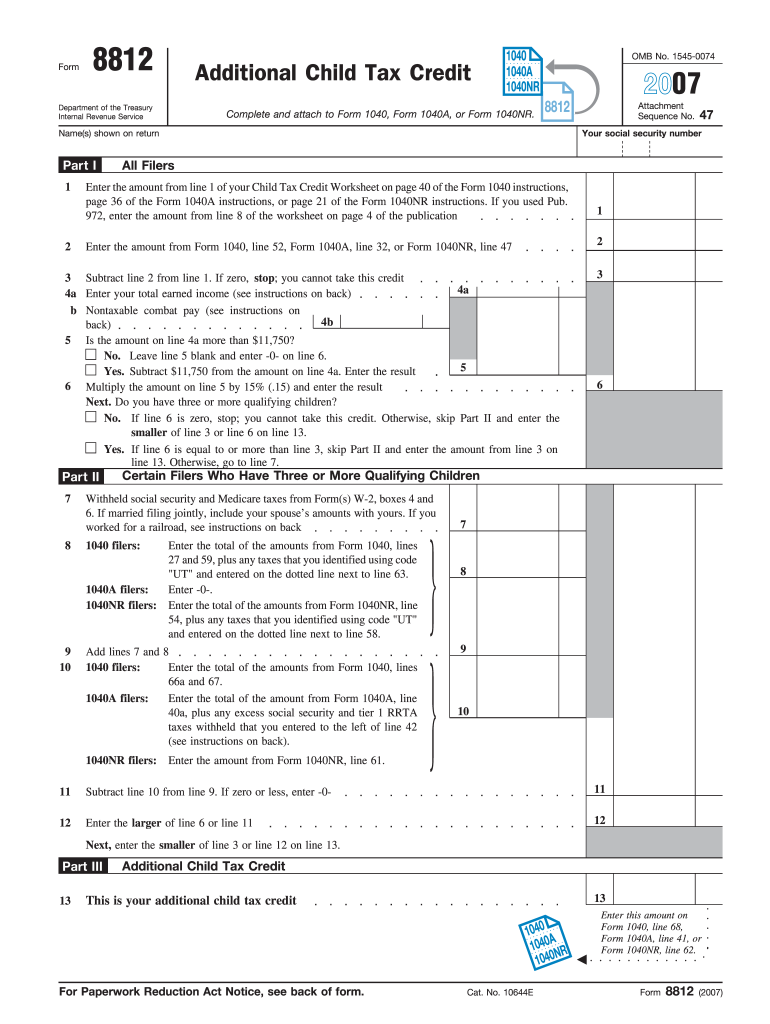







Definition & Meaning of the 8 Form
The 8 Form, commonly known as Form 8812, is utilized to calculate the Additional Child Tax Credit (ACTC). This tax credit is particularly significant for individuals who are eligible to receive a refund even if they owe no tax. The form aids in determining the taxpayers' eligibility for this refund by considering their earned income and the number of qualifying children they have. By providing this calculation, Form 8812 plays a crucial role in alleviating the tax burden on working families.
The Additional Child Tax Credit is part of a larger effort to support families with children by reducing their tax liability and, in cases where the credit exceeds the tax owed, providing a refundable amount. This refundability is what distinguishes the ACTC from the non-refundable Child Tax Credit.
How to Use the 8 Form
To utilize the 8 Form effectively, taxpayers must first ensure that they qualify for the Additional Child Tax Credit. This involves reviewing their earned income, number of children, and other dependent factors that might influence eligibility.
- Earned Income Calculation: Begin by adding all sources of earned income, such as wages, salaries, and tips. Individuals with nontaxable combat pay must also consider this in their calculations, as it may influence the credit amount.
- Qualifying Children: Confirm that children qualify under specific criteria like age, relationship to the taxpayer, residency, and financial dependency throughout the year.
- Filing the Form: After gathering the necessary information, calculate the credit amount as outlined on the form. Review the calculations carefully to ensure accuracy before submission.
The form's step-by-step instructions guide taxpayers through each section, providing detailed processes for accurately completing the document.
How to Obtain the 8 Form
The 8 Form can be easily accessed through several sources. Individuals may download the form directly from the official IRS website, which provides the most current version and instructions. Additionally, taxpayers can obtain physical copies by visiting local IRS offices or requesting a mailed version by calling the IRS.
Many tax preparation software platforms, such as TurboTax and QuickBooks, also include the form within their programs, allowing users to fill it out digitally and submit it with their other tax documents.
Steps to Complete the 8 Form
Completing Form 8812 involves a series of detailed steps to ensure accuracy and compliance with IRS requirements:
- Personal Details: Include personal identification information such as name, social security number, and filing status.
- Earned Income Worksheet: Enter the calculated earned income from wages, salaries, tips, and any applicable nontaxable combat pay.
- Child Tax Credit Calculation: Follow the instructions to determine the available credit based on the number of qualifying children and total earned income.
- Submit and Review: Verify that all information is correct and complete. Submissions can be made electronically or through traditional mail depending on the taxpayer's preference and software compatibility.
Each step requires careful attention to detail to ensure all calculations are precise, and entries align with supporting documents.
Eligibility Criteria for the 8 Form
Eligibility for the Additional Child Tax Credit is primarily based on the following factors:
- Income Criteria: The taxpayer's earned income must meet or exceed a specified threshold to qualify for the credit.
- Qualifying Children: Children must meet age, residency, and relationship guidelines. They should be under age 17 at the end of the tax year.
- Filing Status: The tax filing status should support claiming dependents effectively; married individuals filing separately might have different requirements.
Understanding these criteria helps families determine potential eligibility for additional tax relief.


Key Elements of the 8 Form
Several key sections must be properly addressed on the Form 8812 to ensure an accurate submission:
- Personal Information: Includes taxpayer identification and filing status.
- Qualifying Children: List each child meeting qualifying criteria, including their social security numbers and other relevant details.
- Credit Calculation: A systematic approach to determining the amount of credit based on the taxpayer's income and qualifying children.
Each section requires precise entries to accurately calculate the benefit entitled to the taxpayer.
IRS Guidelines for the 8 Form
The Internal Revenue Service (IRS) provides comprehensive guidelines to assist taxpayers in navigating Form 8812. These guidelines cover eligibility requirements, filing instructions, and calculation methodologies, designed to reduce errors and enhance the taxpayer's ability to receive the full credit they're entitled to.
The IRS outlines specific instructions for unique income situations, such as nontaxable combat pay, ensuring that all potential crediting opportunities are explored.
Penalties for Non-Compliance with the 8 Form
Non-compliance with the 8 Form may result in several consequences:
- Loss of Credit: Incorrect filing or failure to file could lead to partial or total disqualification from receiving the credit.
- IRS Audits: Erroneous entries might trigger audits, potentially leading to further scrutiny of all tax filings.
- Interest and Penalties: Any unreported or erroneously reported information can result in penalties and interest on outstanding taxes.
Understanding these penalties emphasizes the importance of thorough and accurate filing of the Form 8812 to avoid undesirable repercussions.




