







Definition and Meaning
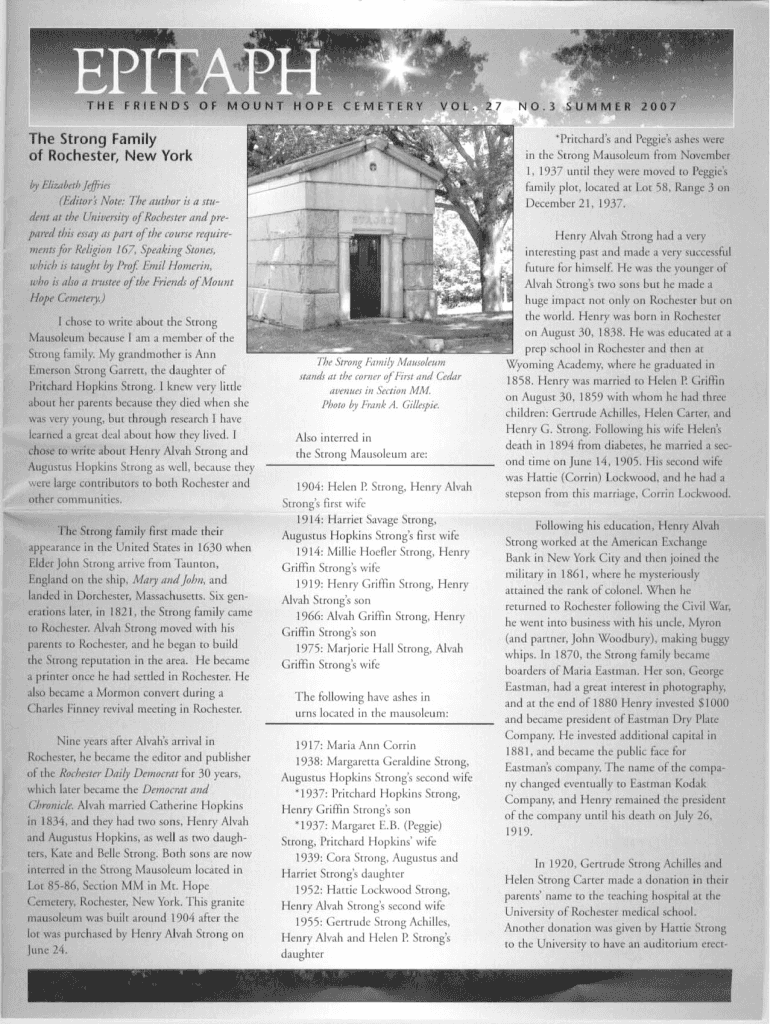
The Strong Family form is an informational guide that delves into the historical roots and significant contributions of the Strong family from Rochester, New York. The content serves to highlight the family's impact on their local community, detailing notable figures such as Henry Alvah Strong and Augustus Hopkins Strong. It also includes narratives surrounding family members like Pritchard and Peggie Strong, whose tragic deaths brought attention to their lasting legacies in education and charity. This form comprehensively addresses the meaning and significance of the Strong family's ties to Rochester.
Steps to Complete the Strong Family Form
Completing the Strong Family form involves several steps designed to ensure thorough understanding and documentation of the family's history and accomplishments. Here is a step-by-step guide:
- Gather Background Information: Collect historical data about the Strong family, focusing on significant contributions to Rochester, New York.
- Identify Key Family Members: Highlight notable individuals such as Henry Alvah Strong and Augustus Hopkins Strong.
- Document Contributions: Record specific contributions in areas like education and charitable donations.
- Detail Family Anecdotes: Include personal stories, such as those of Pritchard and Peggie Strong.
- Compile Mausoleum Information: Provide details about their mausoleum in Mount Hope Cemetery.
- Address Cultural Context: Incorporate information about Jewish roots and Ukrainian heritage if applicable.
- Review for Accuracy: Ensure all data is accurate and reflects the family's historical impact on Rochester.
Important Terms Related to the Strong Family
Understanding the Strong Family form requires familiarity with several key terms and concepts that are central to the family's history:
- Mausoleum: A building constructed to house burial chambers, notably for significant family members of the Strong family.
- Charitable Donations: Contributions made by family members to support educational and community initiatives.
- Legacy: The lasting impact and influence of the Strong family on local and broader communities.
- Historical Figures: Key individuals such as Henry Alvah Strong, who played pivotal roles in both the family and the community.
Who Typically Uses the Strong Family Form
The Strong Family form is predominantly utilized by individuals and institutions interested in genealogy, historical research, and community heritage. Here are some typical users:
- Historians and Researchers: Individuals conducting studies on local history or genealogy might utilize this form to gather detailed family information.
- Educational Institutions: Schools and universities could use the form as case studies in courses related to American history and cultural studies.
- Cultural Organizations: Groups focusing on the preservation of community heritage might find the information beneficial.
- Family Descendants: Individuals descended from the Strong family may use the form to understand their ancestry better.


Legal Use of the Strong Family Information
The legal use of information contained within the Strong Family form is governed by regulations relating to historical documentation and privacy. Key aspects include:
- Historical Research Legitimacy: The information is primarily intended for educational and research purposes.
- Permission for Personal Use: Family members or authorized parties may seek to use the form for personal genealogical purposes.
- Privacy Compliance: Any data used must comply with privacy laws, ensuring sensitive information remains protected.
Key Elements of the Strong Family Form
Several critical elements are included in the Strong Family form to provide a comprehensive overview of the family's contributions and history:
- Biographical Details: Information about significant members of the Strong family.
- Community Contributions: Documentation of how the family has impacted Rochester’s social and cultural landscape.
- Personal Anecdotes: Narratives that provide insight into the family's personal lives and challenges.
- Cultural Heritage: Discussions surrounding the family's roots and heritage, including Jewish and Ukrainian backgrounds.
Examples of Using the Strong Family Form in Practice
The Strong Family form finds practical application in various contexts, each offering insights into family history and community impact:
- Research Papers: Historians may draft detailed research papers or articles using the data for academic purposes.
- Exhibitions and Displays: Museums or cultural centers might use the form to create informative displays about local history.
- Genealogical Projects: Families may embark on projects to trace their lineage and celebrate their heritage.
- Educational Materials: Teachers using the form to develop instructional content for courses on American history or cultural studies.
State-Specific Rules for Documenting Family History
While most of the rules involving historical and genealogical data are federally governed, some states, such as New York, may have specific guidelines that influence how such forms are used:
- Historical Data Regulations: Each state might have different requirements for the preservation and use of historical data.
- Public Access Rules: Guidelines regarding how and what historical information can be accessed by the public.
- Archival Practices: Regulations related to how historical documents should be archived and maintained for future use.
These state-specific nuances must be considered when gathering and utilizing data from the Strong Family form for thorough compliance and accuracy.




