







Definition and Meaning
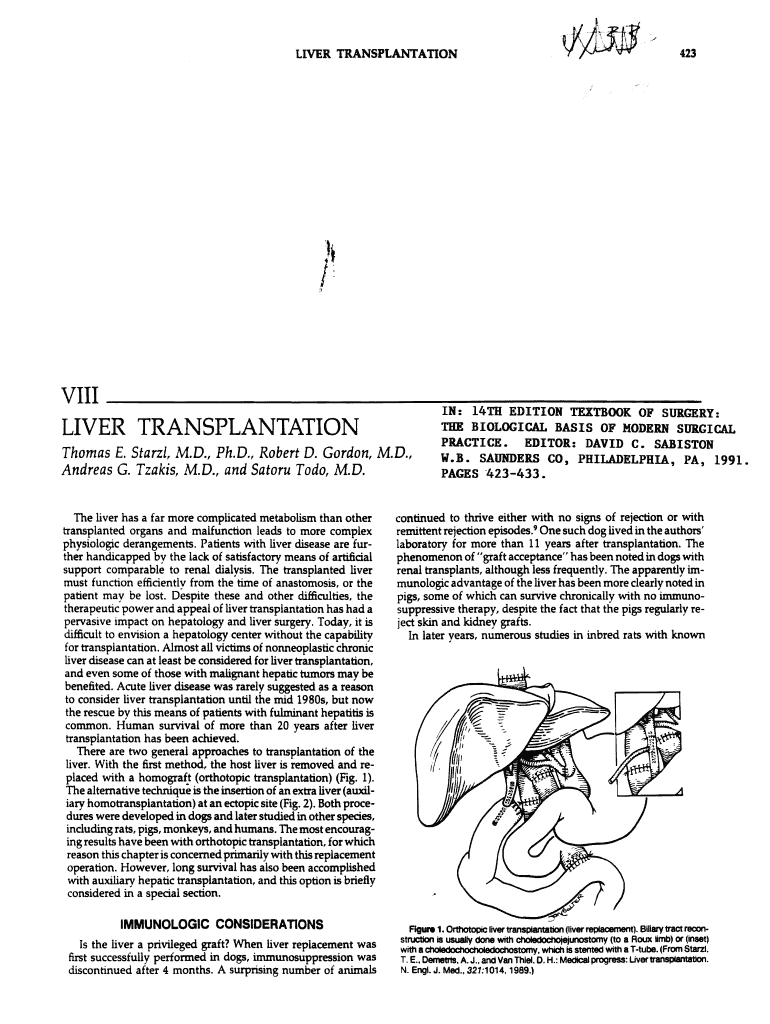
Liver transplantation is a critical surgical procedure involving the replacement of a diseased liver with a healthy one. The complexities of this procedure are rooted in the liver's intricate metabolism and the challenges of achieving immediate graft function. There are two primary methods of liver transplantation: orthotopic, where the patient's diseased liver is removed and replaced, and auxiliary, where the patient's liver is left in place, and the donor liver is added. The focus is usually on orthotopic transplantation due to its widespread use and effectiveness.
Who Typically Uses This Form
Individuals involved in academic research or clinical practice in the field of hepatology, particularly those focusing on liver transplantation, would typically use this form. Medical professionals preparing for surgery or publication, research scholars, and postgraduate students compiling data on transplant cases are common users. The document serves as a comprehensive guide to understanding the nuances of liver transplantation, including surgical techniques, complications, and advancements in immunosuppressive therapies.
Steps to Complete the LIVER TRANSPLANTATION VIII Form
- Gather Required Information: Collect all relevant patient data, including medical history, current health status, and previous treatments.
- Understand Surgical Requirements: Review the documented techniques and advancements specific to liver transplantation.
- Focus on Immunologic Considerations: Evaluate the unique resistance properties of the liver to rejection and adapt the surgical approach accordingly.
- Submit Required Forms: Ensure all necessary administrative documents are completed accurately for submission to relevant authorities.
- Coordinate with Medical Teams: Communicate with surgical, anesthetic, and post-operative care teams to align on procedural details.
- Review and Finalize: Double-check all entries and surgical plans for accuracy and completeness before proceeding with the surgery.
Key Elements of the Thomas E D-Scholarship Document
- Surgical Techniques: Detailed descriptions of procedural methodologies, including patient prep, liver extraction, and graft implantation.
- Immunologic Factors: Insights into how the liver's unique properties affect transplant rejection, with strategies to mitigate risks.
- Complications and Management: Comprehensive coverage of potential surgical complications and recommended management protocols.
- Immunosuppressive Advances: In-depth discussion of newer therapies improving graft survival rates and reducing rejection incidents.
Important Terms Related to Liver Transplantation
- Graft Function: The ability of the transplanted liver to perform necessary bodily functions post-surgery.
- Immunosuppressive Therapy: Medication regimes administered to prevent the immune system from rejecting the transplanted liver.
- Orthotopic Transplantation: The surgical replacement of a diseased liver with a donor liver in the same anatomical location.
- Auxiliary Transplantation: A surgical procedure where the donor liver is added without removing the patient's original liver.
Examples of Using This Form
In a real-world scenario, a surgical team preparing for a liver transplant might use this document to review state-of-the-art surgical techniques and immunological considerations. Similarly, a research scholar analyzing transplantation outcomes can reference it to support academic papers or borrowing established methodologies for further empirical studies.
Legal Use of the Liver Transplantation Document
Healthcare professionals and researchers in the United States should ensure the document's use complies with institutional and federal regulations concerning patient privacy and medical research ethics. This includes adherence to protocols outlined by medical boards and organizations like the American College of Surgeons.
State-specific Rules for Liver Transplantation
While federal regulations predominantly govern liver transplantation procedures, certain aspects may vary by state, including documentation requirements, waiting list policies, and licensing qualifications for surgeons. Professionals should verify any local legislative requirements applicable to their practice or research activities.
Software Compatibility and Integration
Although specific to a scholarly document, integrating insights from this document with electronic medical record (EMR) systems can streamline the documentation and monitoring processes post-transplantation. Moreover, researchers can use data analysis software to correlate findings from this document with broader datasets for enhanced research outcomes.




