






Definition and Meaning of a Bill of Sale
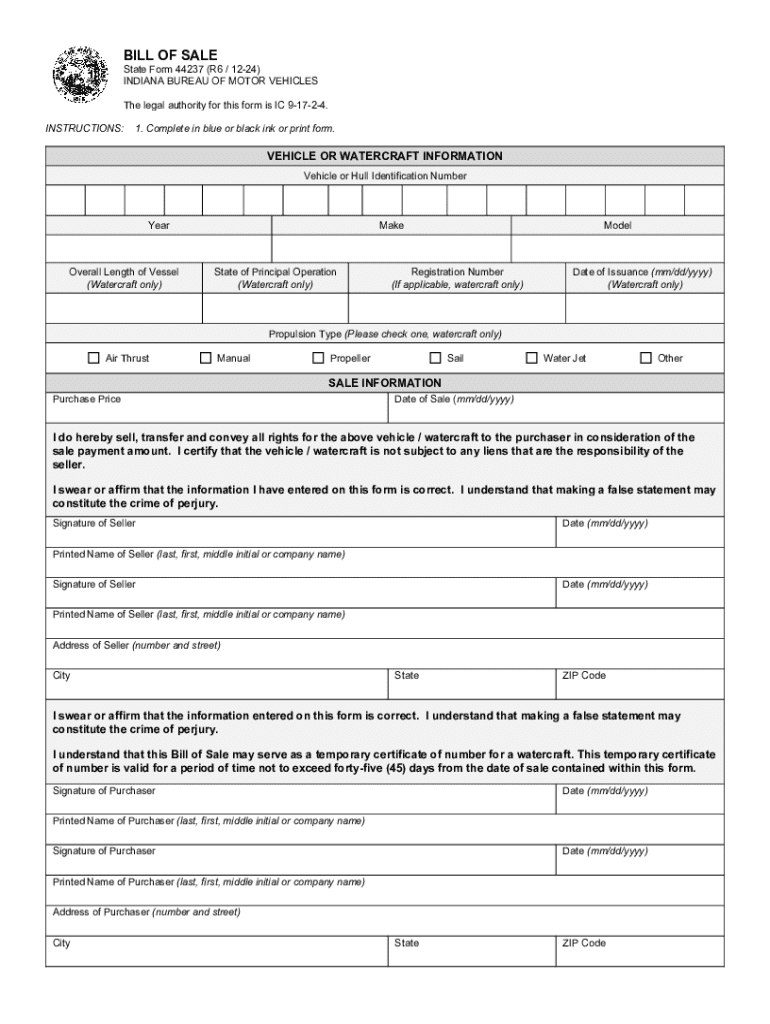
A Bill of Sale is a legal document that serves as evidence for the transfer of ownership of an item from a seller to a buyer. Used primarily in transactions involving vehicles, watercraft, and other significant personal property, this document details the specifics of the sale, including the identity of the item, the parties involved, and the agreed sale terms. In essence, it functions both as a sales receipt and a contract, formally recording the change of ownership. By verifying details such as the date of sale, purchase price, and item description, the Bill of Sale protects both buyer and seller in case of any future disputes.
How to Use the Bill of Sale
The primary use of a Bill of Sale is to document a transaction legally. After negotiating the sale terms, both parties should complete the document by filling in mandatory fields such as the description of the item, sale price, and date. The seller typically provides this form, but both parties must review its contents to ensure mutual understanding and agreement. Once complete, both seller and buyer sign the form, making it a legally binding agreement. Keeping a copy for personal records is advisable for both parties in case any issues arise post-sale, such as ownership or condition disputes.
Steps to Complete the Bill of Sale
-
Include Full Names and Addresses: Write down the full legal names and current addresses for both the buyer and the seller. These details confirm the identities of the parties involved in the transaction.
-
Detail the Item for Sale: Provide a comprehensive description of the item being sold. For vehicles and watercraft, include details like the make, model, year, VIN, or hull identification number.
-
State the Purchase Price: Clearly document the agreed purchase price, ensuring both parties have clarity on the financial terms of the transaction.
-
Set the Sale Date: Specify the exact date on which the sale is taking place, which might also serve as the transfer of ownership date.
-
Signatures for Authentication: Conclude the form with signatures from both the buyer and seller. Ensure these signatures are dated to accurately reflect agreement timing.
-
Obtain Witness or Notary Validation: In some jurisdictions, especially for high-value items, a witness or notarial record may be required for additional legal verification.
Key Elements of the Bill of Sale
- Identification Numbers: Essential for vehicles and watercraft, these serial numbers authenticate the item being transferred and help in identifying it uniquely.
- Condition of Item: Specifying the item's condition during the sale can mitigate future disputes over pre-existing issues.
- Payment Methods: Details about payment modes, such as cash, check, or bank transfer, should be included for record-keeping.
- Warranties or Disclaimers: Any warranties, or lack thereof, should be mentioned to set the buyer's expectations and limit the seller's liability post-sale.
Legal Use of the Bill of Sale
A properly executed Bill of Sale confirms that a transaction occurred and that the buyer is the new legal owner of the goods. For motor vehicles and watercraft, a Bill of Sale is often a prerequisite for titling and registration with the relevant state authorities. Moreover, it can serve as proof in legal contexts, such as disputes over ownership or compliance with the purchase terms. It is critical to ensure that the document complies with state-specific regulations, as this can affect its enforceability.
State-Specific Rules for the Bill of Sale
Different U.S. states have unique mandates regarding the use and format of a Bill of Sale. For instance, some states require notarization for vehicle sales, whereas others may have predefined forms provided by the state's motor vehicle department. It is essential for buyers and sellers to verify the specific requirements of their state to ensure the Bill of Sale is valid and meets local legal standards. Additionally, some states might impose taxes or fees based on the sale transaction, necessitating accurate documentation.
Required Documents for a Valid Bill of Sale
- Identification: Government-issued IDs for both buyer and seller to establish identity.
- Proof of Ownership: Seller's documents proving ownership, such as previous titles or registrations.
- Sale Agreement: Original or preliminary sale agreements, if any, detailing negotiated terms.
- Item Documents: Related documents, such as previous maintenance records or warranties available to the buyer.
Penalties for Non-Compliance
Failing to provide or use a Bill of Sale, when required, can lead to various penalties, including fines or legal disputes. For buyers, lacking this document can result in challenges in registering the vehicle or item in their name. For sellers, not issuing a Bill of Sale may open them to potential liabilities regarding disputes over ownership or the condition of the sale item. Legal penalties vary by state, emphasizing the importance of adhering to local laws and requirements for sales documentation.