




01. Edit your form online
Type text, add images, blackout confidential details, add comments, highlights and more.

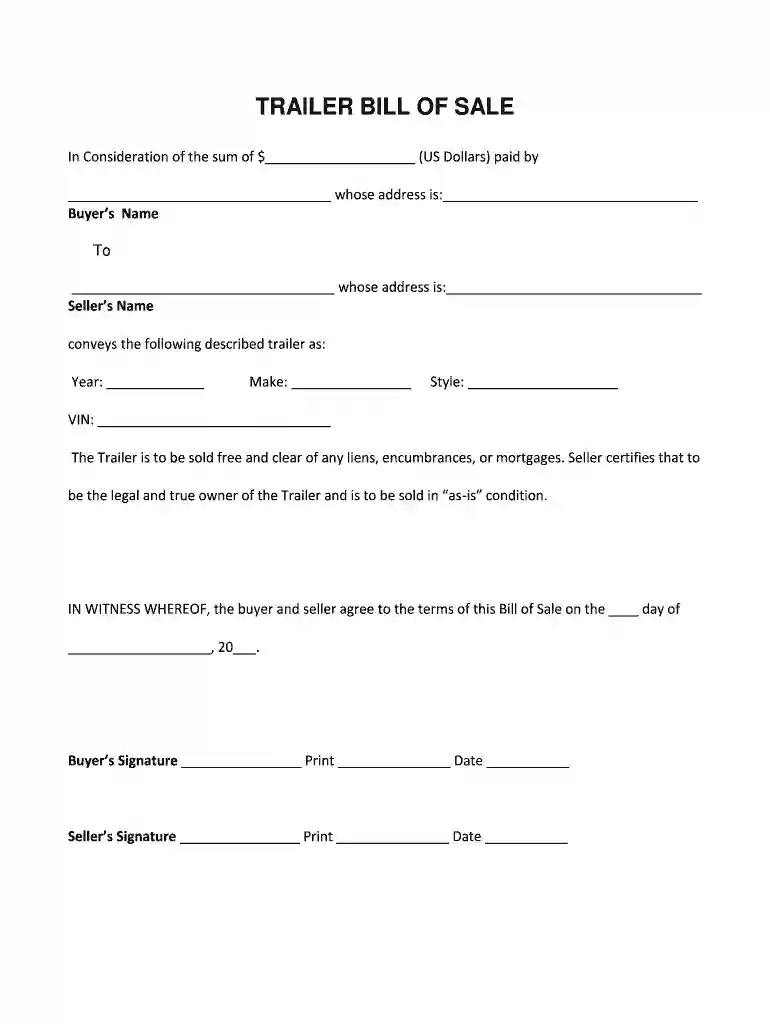
Type text, add images, blackout confidential details, add comments, highlights and more.

Draw your signature, type it, upload its image, or use your mobile device as a signature pad.

Send it via email, link, or fax. You can also download it, export it or print it out.
The term "Bill of Sale - Legal FormAllLaw" refers to a legally binding document that records the transfer of ownership of an item from a seller to a buyer. This form typically includes essential details such as the identities of both parties, the description of the item sold, the transaction date, and the sale price. By signing this document, both parties affirm they agree to the terms of the sale. The "Bill of Sale - Legal FormAllLaw" serves as proof of purchase and is crucial for resolving disputes, transferring titles, or registering items with authorities.
This bill of sale can be used in various transactions, including the sale of vehicles, trailers, or other personal property. To utilize the form effectively:
This process ensures both parties have a clear and legally acknowledged record of the sale.
Completing the form involves a series of steps to ensure accuracy and legality:
Each step enhances the document's validity and protects the interests of both parties involved in the transaction.
Different states may have unique requirements regarding bills of sale:
Consult with legal resources or local authorities to confirm any additional requirements specific to your state.
This document is commonly used by:
The form provides each of these users with a standardized method to document sales transactions accurately.


The legal significance of a bill of sale includes:
Understanding its legal use helps in preparing a comprehensive and enforceable bill of sale.
DocHub, the tool used for managing and editing the Bill of Sale - Legal FormAllLaw, offers extensive compatibility:
Users should ensure they utilize compatible tools for accessing and editing the document efficiently, ensuring smooth workflow integration.
Understanding terms associated with bills of sale aids in comprehension and compliance:
Familiarity with these terms facilitates a better grasp of the document's contents and purposes.
We've got more versions of the Bill of Sale - Legal FormAllLaw form. Select the right Bill of Sale - Legal FormAllLaw version from the list and start editing it straight away!
At DocHub, your data security is our priority. We follow HIPAA, SOC2, GDPR, and other standards, so you can work on your documents with confidence.


All law enforcement agencies must use this form for all vehicle impounds after June 30, 2001. an impound of sale or transfer
Minimum Fee tor each Lost Book is $50.00. UNIVERSITY OF ILLINOIS. FOR SALE BY THE SUPERINTENDENT OF DOCUMENTS ・ compounds, cable, cord, and wire, Judge


