




01. Edit your form online
Type text, add images, blackout confidential details, add comments, highlights and more.

Type text, add images, blackout confidential details, add comments, highlights and more.

Draw your signature, type it, upload its image, or use your mobile device as a signature pad.

Send it via email, link, or fax. You can also download it, export it or print it out.
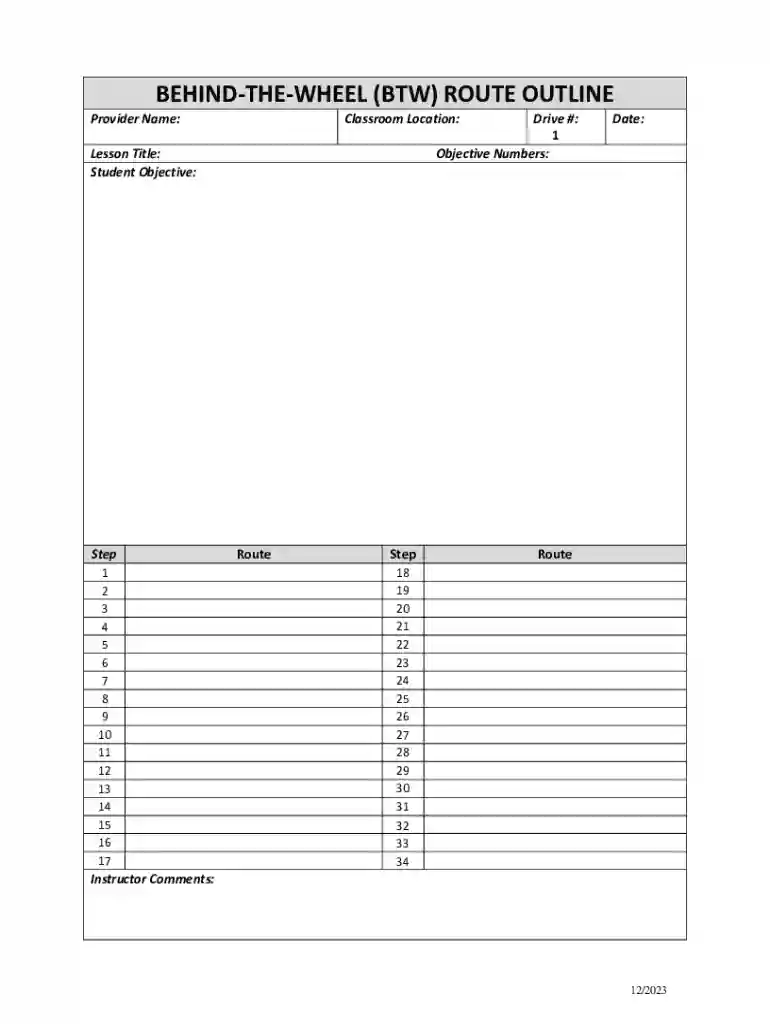
The Behind-the-Wheel (BTW) Instruction Outline is an essential component of driver education, particularly for instructing novice drivers in practical driving skills. Originating from formal driver education curricula, this outline serves as a structured guide for delivering effective behind-the-wheel training. It breaks down the necessary steps and teaching points that instructors should cover during driving lessons to ensure a comprehensive learning experience. Each outline typically incorporates crucial elements such as route plans, lesson objectives, and specific driving maneuvers meant to be taught during lessons.
To effectively utilize the Behind-the-Wheel Instruction Outline, it's crucial to understand its key components. These elements are designed to ensure a standardized approach and quality of driver training:
Completing a BTW Instruction Outline requires attention to detail and an understanding of the training process:
Different states have specific regulations concerning driver education, and the BTW Instruction Outline needs to reflect these rules:
The primary users of the Behind-the-Wheel Instruction Outline are:


Using the BTW Instruction Outline effectively can take various forms. Here are several scenarios:
Legal considerations are vital when using the BTW Instruction Outline:
Adapting to modern technology, the BTW Instruction Outline might be used alongside various software solutions:
While the standardized BTW Instruction Outline is widely utilized, there are variations or alternatives:
By understanding and effectively implementing the Behind-the-Wheel Instruction Outline, driving instructors and educational providers can enhance the quality and consistency of driver training programs, accommodating both standard and unique learning and regulatory needs.
We've got more versions of the Behind-the-Wheel (BTW) Instruction Outline form. Select the right Behind-the-Wheel (BTW) Instruction Outline version from the list and start editing it straight away!
At DocHub, your data security is our priority. We follow HIPAA, SOC2, GDPR, and other standards, so you can work on your documents with confidence.


Sep 26, 2025 Behind-the-Wheel Trainer Outline Information. Principles, concepts, and techniques of driving, inspecting, and managing passengers
behind-the-wheel (BTW) components. This Class A CDL training course is designed to only meet all theory (knowledge) requirements listed in The Code ofRead more


