Southend hospital discharge team 2026

Get Form
southend hospital discharge team Preview on Page 1

Here's how it works

01. Edit your southend hospital discharge team online
Type text, add images, blackout confidential details, add comments, highlights and more.

02. Sign it in a few clicks
Draw your signature, type it, upload its image, or use your mobile device as a signature pad.

03. Share your form with others
Send southend hospital discharge team via email, link, or fax. You can also download it, export it or print it out.

Understanding the Role of the Southend Hospital Discharge Team

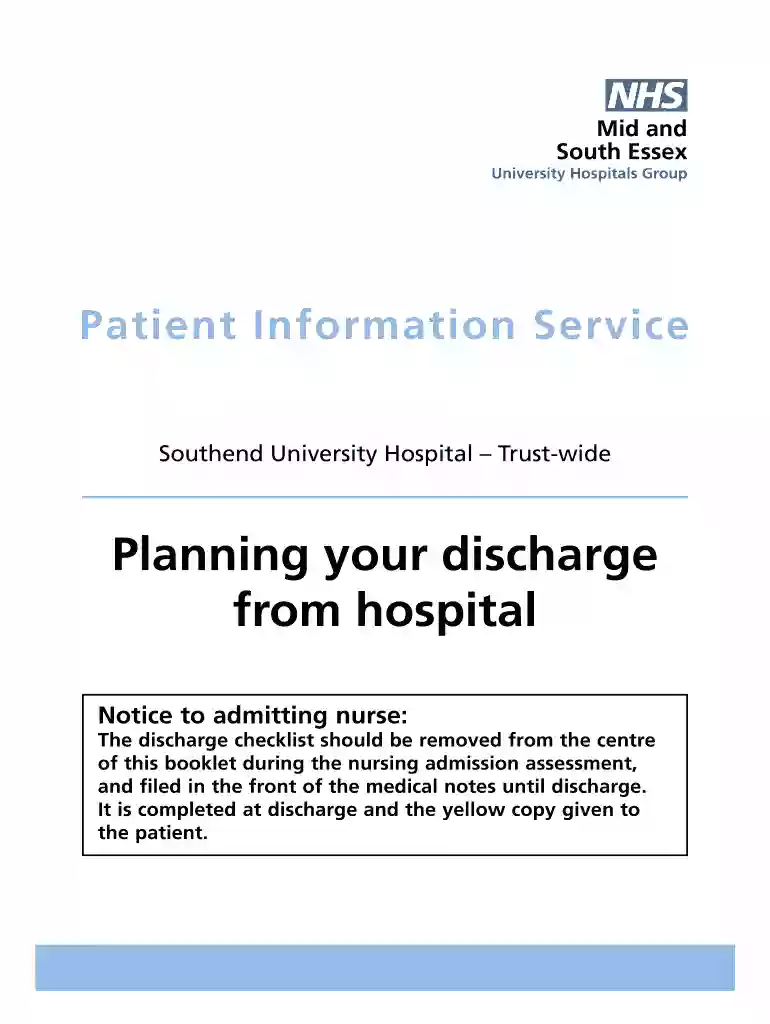
The Southend Hospital Discharge Team plays a vital role in ensuring a smooth transition for patients from the hospital back to their homes or alternate care facilities. This team is responsible for coordinating the necessary arrangements that facilitate a safe and timely discharge process. The core focus is on patient recovery and continuity of care, ensuring that all necessary medical and logistical needs are addressed.

The team consists of healthcare professionals including nurses, social workers, and care coordinators who work collaboratively to evaluate each patient's needs. They assess factors such as rehabilitation requirements, home care provisions, and follow-up appointments to tailor a personalized discharge plan. By doing so, they aim to enhance patient outcomes and prevent unnecessary readmissions.

How to Access the Services of the Southend Hospital Discharge Team

Patients and their families can access the services of the Southend Hospital Discharge Team during the initial stages of the patient's hospital stay. To initiate the process, patients can communicate with the hospital staff, who will connect them with the discharge team. It is advisable to reach out early to allow ample time for planning and addressing any potential issues.

Moreover, open communication with the healthcare provider overseeing the hospital stay is crucial. This dialogue ensures that the patient's condition and progress are promptly shared with the discharge team, facilitating seamless care transition. Patients can also request meetings with the discharge team to better understand the plans and voice any concerns.

Essential Steps in the Discharge Planning Process

The Southend Hospital Discharge Team follows a structured approach to discharge planning, ensuring every detail is meticulously arranged. Key steps in this process include:

  1. Initial Assessment: Conducting a comprehensive evaluation of the patient's health status and identifying specific needs.
  2. Discharge Planning Meeting: Collaborating with the patient, family, and healthcare providers to outline the discharge plan.
  3. Coordination of Services: Arranging home care services, medical equipment, or rehabilitation services if required.
  4. Medication Management: Planning for medication prescriptions and ensuring the patient understands the regimen.
  5. Follow-Up Appointments: Scheduling necessary follow-up visits with healthcare providers post-discharge.

These steps aim to create a cohesive discharge plan that supports the patient's recovery journey.

Key Elements of a Successful Discharge Plan

A successful discharge plan crafted by the Southend Hospital Discharge Team will typically include several critical components:

  • Personalized Care Approach: Tailoring the discharge plan to meet the individual needs and circumstances of the patient.
  • Comprehensive Communication: Maintaining open lines of communication among healthcare providers, patients, and caregivers.
  • Resource Identification: Identifying and mobilizing community resources and support networks to aid in recovery.
  • Education: Providing patient education on condition management, self-care strategies, and warning signs of potential complications.
  • Documentation: Ensuring all discharge instructions and plans are well documented and accessible for reference.

These elements collectively form the backbone for effective discharge planning, aimed at enhancing patient health outcomes.

Legal Considerations in the Discharge Process

The Southend Hospital Discharge Team is also guided by legal considerations to protect patient rights and ensure compliance with healthcare regulations. Key legal aspects include:

  • Patient Consent: Obtaining informed consent from the patient or authorized representative before proceeding with the discharge plan.
  • Confidentiality: Adhering to strict privacy laws and regulations to protect patient information throughout the discharge process.
  • Documentation Accuracy: Ensuring all patient records, discharge instructions, and follow-up care plans are accurately documented and updated.

These legal considerations help maintain ethical standards and promote trust between the patient and healthcare providers.

Who Uses the Southend Hospital Discharge Team Services?

The services of the Southend Hospital Discharge Team are primarily used by:

  • Patients: Individuals recovering from surgery, illness, or injury who require organized discharge planning.
  • Family Members and Caregivers: Relatives and caregivers involved in the patient's post-discharge care who need guidance and support.
  • Healthcare Providers: Physicians, nurses, and therapists who collaborate with the discharge team to ensure continuity of care.

These stakeholders work together to support a seamless discharge experience for patients transitioning from hospital care.

Common Challenges and Problem-Solving Strategies

Despite the comprehensive planning, challenges may arise during the discharge process. Common issues include:

  • Delayed Arrangements: Occasional delays in arranging necessary home care services or equipment.
  • Communication Barriers: Misunderstandings or inadequate communication between the healthcare team and the patient.
  • Resource Limitations: Limited availability of certain post-discharge services, especially in rural or understaffed areas.

Problem-solving strategies include proactive communication, flexible planning, and leveraging community resources to address these challenges effectively.

Scenarios Illustrating Southend Hospital Discharge Team Involvement

The value of the Southend Hospital Discharge Team is evident in various real-world scenarios, such as:

  • Post-Surgical Recovery: Assisting a patient who has undergone major surgery by arranging at-home nursing care and necessary physical therapy sessions.
  • Chronic Condition Management: Supporting an elderly patient with a chronic condition in obtaining necessary medical equipment and coordinating follow-up appointments.
  • Complex Family Dynamics: Navigating complex family dynamics to ensure a consensus on post-discharge care plans and responsibilities among family members and caregivers.

These scenarios highlight the team's role in delivering patient-centered care tailored to specific needs and circumstances.

Differences in State-Level Discharge Regulations

While the discharge process framework remains consistent, state-specific regulations can influence certain aspects of discharge planning. These differences may include:

  • Home Health Services Availability: Variation in the availability and scope of home health services covered by insurance in different states.
  • State-Specific Legal Requirements: Compliance with differing state laws regarding patient consent, documentation, and privacy protection.

Understanding these regulations helps the discharge team navigate state-specific challenges, ensuring comprehensive and compliant discharge planning.

be ready to get more

Complete this form in 5 minutes or less

Get form

Got questions?

We have answers to the most popular questions from our customers. If you can't find an answer to your question, please contact us.
Contact us
On the day youre ready to be discharged from hospital, your health team will discuss this process with you and take you to the discharge lounge. Most people should then expect to be discharged within two hours, although this may take longer if you have more complex requirements for post-discharge care.
Appointment SMS reminder service If you get a text message from the number 07488865118 this is not a scam, it is us reminding you of an upcoming appointment within the next 14 days.
In deciding whether or not to be discharged AMA, there are several things you should be aware of: If you want to leave, you most likely can. The only exception may be mental health patients for whom a discharge may place them or others at risk of harm. AMA discharges do not void the terms of your insurance.
Definition: The documented time (military time) the patient was discharged from acute care, left against medical advice, or expired during this stay.
The Integrated Discharge Team work within the Emergency Department and other urgent, short stay units. Their role is to assess a persons ability to manage safely with daily tasks, supporting their discharge or admission to hospital. This typically involves working together with community and hospital based services.

Security and compliance

At DocHub, your data security is our priority. We follow HIPAA, SOC2, GDPR, and other standards, so you can work on your documents with confidence.
Learn more
ccpa2
pci-dss
gdpr-compliance
hipaa
soc-compliance

People also ask

The Hospital Discharge Team supports people who are eligible under the Care Act 2014 to be discharged from hospital due to recent illness, disability, old age and frailty. The team is responsible for facilitating safe and timely discharge from hospital and works closely with hospital staff to make this happen.

Related links