Definition and Purpose of the Teacher Referral Form
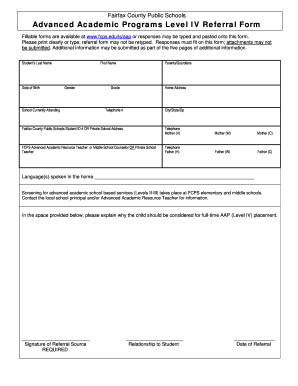
The Teacher Referral Form for Title I Pre-K and Kindergarten Students is a critical tool used to identify young learners who may benefit from additional academic support. Designed specifically for Pre-K and Kindergarten levels, this form serves as a formal mechanism through which educators can recommend students for Title I services. These services are part of federally funded programs aimed at supporting schools in providing high-quality education to meet the needs of at-risk students. The form evaluates different skill areas such as motor, math, language development, reading, and social-emotional development to determine which students might be eligible for supplementary educational interventions.
How to Use the Teacher Referral Form
Educators utilize the Teacher Referral Form by carefully assessing each student's competencies in various skill areas. The process begins with educators observing and documenting the student’s current abilities and challenges within the classroom environment. Teachers then complete the form by checking specific areas where students display the need for improvement.
- Assessment areas include:
- Motor Skills: Fine and gross motor skills that affect daily tasks and learning abilities.
- Math Skills: Understanding of basic math concepts suitable for Pre-K and Kindergarten levels.
- Language Development: Ability to understand and use language appropriately.
- Reading Skills: Recognition of letters, sounds, and reading comprehension.
- Social-Emotional Development: Interaction with peers and emotional regulation.
Steps to Complete the Teacher Referral Form
- Gather Preliminary Observations: Record initial observations on the student’s performance in various key areas.
- Use Assessment Tools: Administer standardized assessments if available to quantify the student's current abilities.
- Complete the Form Sections: Accurately fill out each section of the form based on observed and measured outcomes.
- Provide Detailed Comments: Include specific examples and anecdotes to support the checked assessment points.
- Submit the Form: Forward the completed form to the designated committee or administrator responsible for reviewing Title I service eligibility.
Key Elements of the Teacher Referral Form
The form includes various sections, each designed to capture detailed information about the student's skills and needs:
- Student Information: Basic details including name, date of birth, and grade level.
- Skill Assessment: Detailed checks for each evaluated area such as motor skills, math, language, and reading.
- Teacher Comments: A section for educators to provide additional insights and contextual information.
- Recommendations for Intervention: An area where teachers can propose specific Title I services for the student.
Who Typically Uses the Teacher Referral Form?
Primarily, the form is utilized by teachers in Pre-K and Kindergarten settings. Special education coordinators and school administrators may also be involved in the process. The collaborative use of this form helps ensure that students who might fall behind receive targeted interventions early in their academic journey.


Why You Should Use the Teacher Referral Form
Using the Teacher Referral Form ensures that no student is left behind due to unrecognized educational needs. Early identification and intervention are vital to help students meet educational benchmarks, and this form is crucial in that process. It facilitates the allocation of resources where they are most needed, ensuring a tailored approach to education that accommodates individual learning differences.
Examples of Using the Teacher Referral Form
Consider a scenario where a teacher notices a student's difficulty in following simple instructions during classroom activities. The educator uses the referral form to document these observations and recommend language development support. Another example could be a child displaying exceptional mathematical reasoning but struggling with peer interaction, prompting a referral for social-emotional development enhancement.
Obtaining the Teacher Referral Form
Schools typically provide access to the Teacher Referral Form to their educators. It can be distributed in paper format or digitally through the school's internal document management system. For schools utilizing platforms like DocHub, the form can be directly accessed, filled, and submitted online, streamlining the process and ensuring secure handling of student information.
Important Legal and State-Specific Considerations
While the Teacher Referral Form aligns with federal guidelines for Title I services, it’s important for educators to be aware of any state-specific requirements that might affect its use. Regulations may vary, impacting how assessments are conducted and how services are provided. Always consult with school administrators or educationally focused legal advisors to ensure compliance with state laws and guidelines.