Corporate Transparency Act and Disclosure of Beneficial 2026

Get Form
Corporate Transparency Act and Disclosure of Beneficial Preview on Page 1

Here's how it works

01. Edit your form online
Type text, add images, blackout confidential details, add comments, highlights and more.

02. Sign it in a few clicks
Draw your signature, type it, upload its image, or use your mobile device as a signature pad.

03. Share your form with others
Send it via email, link, or fax. You can also download it, export it or print it out.

Definition & Meaning of the Corporate Transparency Act

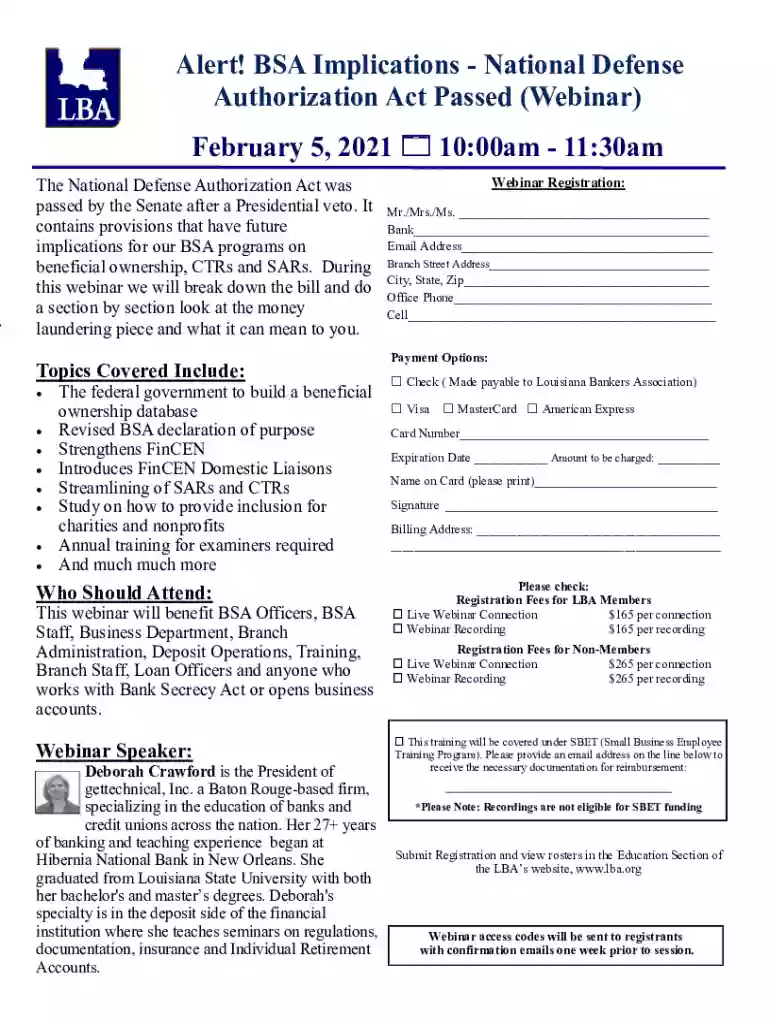
The Corporate Transparency Act (CTA) and Disclosure of Beneficial Ownership are legal frameworks established to ensure transparency in corporate operations within the United States. These regulations require corporations, LLCs, and similar entities to disclose details of their beneficial owners to the Financial Crimes Enforcement Network (FinCEN). The objective is to combat illicit activities such as money laundering and fraud by making ownership information accessible to law enforcement agencies. Understanding the implications of these regulations is crucial for compliance and for maintaining the integrity of corporate governance.

Key Components

  • Beneficial Owners: This refers to individuals with significant control or substantial economic benefits in the company.
  • Reporting Requirements: Entities must disclose names, addresses, and identifying documents of beneficial owners.

Steps to Complete the Corporate Transparency Act Requirements

Complying with the Corporate Transparency Act involves a structured process. Here’s a step-by-step guide to fulfilling the requirements:

  1. Identify Beneficial Owners: Evaluate who qualifies as a beneficial owner based on influence and ownership interest.

  2. Gather Required Information: Collect necessary details such as full legal names, residential addresses, and ID documents for the beneficial owners.

  3. Report to FinCEN: Prepare the disclosure form for submission to the Financial Crimes Enforcement Network.

  4. Verification: Ensure all information is accurate and up-to-date before submission to avoid penalties.

  5. Track and Update: Maintain records and update FinCEN promptly if there are changes in beneficial ownership or company structure.

Legal Use of the Corporate Transparency Act and Disclosure

Proper legal use of the Corporate Transparency Act and its disclosure requirements ensures compliance with U.S. federal law. The act serves as a tool to:

  • Prevent financial crimes by revealing the true owners behind anonymous shell companies.
  • Maintain an accurate database accessible to law enforcement and regulators to monitor suspicious activities efficiently.
  • Strengthen corporate governance by holding entities accountable for their beneficial ownership.

Compliance Guidelines

  • Accuracy: Ensure all submitted data is correct to prevent legal repercussions.
  • Timeliness: Submit information by the deadline to avoid fines.

Who Typically Uses the Corporate Transparency Act

The Corporate Transparency Act is utilized primarily by businesses and entities required to disclose ownership details. These include:


  • Corporations: Both domestic and foreign companies registered to do business in the U.S.
  • LLCs: Limited Liability Companies with ownership or operational structures falling under the disclosure criteria.
  • Partnerships: Partnerships that fit within the law's jurisdiction concerning beneficial ownership.
decoration image ratings of Dochub

Government Agencies

  • FinCEN: Centralized reporting to this agency supports the overall aim of preventing illicit financial activities.

Required Documents for Corporate Transparency Act Compliance

To adhere to the Corporate Transparency Act requirements, specific documentation is essential. These documents must be accurate and organized:

  • Identification Documents: Current government-issued IDs for beneficial owners to verify identity.
  • Proof of Residential Address: Utility bills or official correspondence confirming the residential address of beneficial owners.
  • Organizational Structure: Documents outlining the company’s ownership and control model.

Documentation Checklist

  • All identification and proof of residence documents should be clean and legible.
  • Keep original documents and submit copies to FinCEN along with the report.

Penalties for Non-Compliance

Failure to comply with the Corporate Transparency Act can result in significant legal and financial penalties. These penalties emphasize the importance of full compliance:

  • Monetary Fines: Entities may face substantial fines for incorrect or late submissions.
  • Criminal Charges: Knowing violations can lead to criminal charges, including imprisonment.

Case Studies

  • Companies found misrepresenting beneficial ownership have faced heavy fines and reputational damage.
  • Examples include high-profile cases where failure to report properly attracted regulatory scrutiny.

Examples of Using the Corporate Transparency Act

Real-world applications of the Corporate Transparency Act demonstrate the act’s importance:

  • Combating Fraud: Instances where disclosure requirements have helped uncover fraudulent practices within shell companies.

  • Law Enforcement Collaboration: Case studies show improved collaboration between corporations and law enforcement, leading to successful identification of illicit activities.

Benefits to Corporations

  • Enhanced corporate credibility and integrity.
  • Reduced risk of association with unlawful activities.

Disclosure Requirements under the Corporate Transparency Act

Understanding disclosure requirements is key to achieving compliance with the Corporate Transparency Act:

  • Information Disclosure: Precise and complete reporting of beneficial owner information.
  • Change Notification: Obligatory updates to FinCEN within specified time frames if beneficial ownership changes.

Practical Implications

  • Consistent updates and maintaining accurate records minimize risks of compliance issues.
  • Establish protocols to ensure timely updates and submissions to regulatory bodies.
be ready to get more

Complete this form in 5 minutes or less

Get form

Got questions?

We have answers to the most popular questions from our customers. If you can't find an answer to your question, please contact us.
Contact us
As defined by FinCENs final rule, a beneficial owner is an individual who either owns at least 25% of a companys ownership interest or exercises substantial control over the company.
Under the ownership prong, a beneficial owner is each individual, if any, who, directly or indirectly, through any contract, arrangement, understanding, relationship or otherwise, owns 25 percent or more of the equity interests of a legal entity customer.
What is the threshold for identifying a UBO? A UBO refers to identifying the individuals who ultimately own or control a legal entity. In this case, it is defined as being a person who owns more than 10% or 25% of the companys shares.
A beneficial owner is an individual who ultimately owns or controls an entity such as a company, trust or partnership. Owns in this case means owning 25% or more of the entity.
Pursuant to the Corporate Transparency Act (CTA), certain Regulated Entities must now file information concerning their beneficial ownership information (BOI) with the Financial Crimes Enforcement Network (FinCEN) so that the data can be accessed by law enforcement, the IRS, certain other agencies, and select

Security and compliance

At DocHub, your data security is our priority. We follow HIPAA, SOC2, GDPR, and other standards, so you can work on your documents with confidence.

Learn more
ccpa2
pci-dss
gdpr-compliance
hipaa
soc-compliance
be ready to get more

Complete this form in 5 minutes or less

Get form