




01. Edit your form online
Type text, add images, blackout confidential details, add comments, highlights and more.

Type text, add images, blackout confidential details, add comments, highlights and more.

Draw your signature, type it, upload its image, or use your mobile device as a signature pad.

Send it via email, link, or fax. You can also download it, export it or print it out.
The Barrow County Occupational Tax Regulatory Fee is a mandatory charge imposed on businesses operating within Barrow County, Georgia. It is designed to regulate and oversee the business activities within the county by requiring businesses to register and pay a fee based on specific criteria. This fee ensures compliance with local tax regulations and supports the administration of business activities within the county.
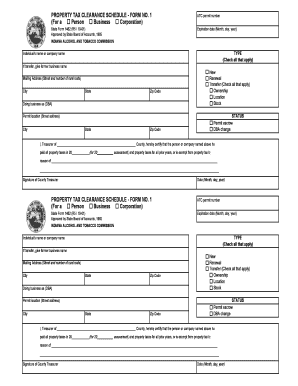
Businesses need to utilize the Barrow County Occupational Tax Regulatory Fee form to report relevant information accurately. The form requires detailed input on business identification, including the name, address, and type of business. Gathering this information helps ascertain the correct fee to be paid, which is calculated based on the number of employees and the type of business conducted.
To obtain the form, businesses can visit the official Barrow County government website or contact the local tax office. The form is available for download in PDF format, allowing businesses to fill it out digitally or print a copy for manual completion. Ensuring access to the latest version of the form is crucial for accurate compliance.
Compliance with the Barrow County Occupational Tax Regulatory Fee is essential for businesses operating within the region. Ensuring prompt and accurate filing helps avoid potential fines and penalties. Moreover, it aligns businesses with local tax laws, facilitating smooth operations and interactions with government entities.
The form is primarily used by businesses operating within Barrow County, regardless of their size or industry. It applies to small businesses, large corporations, partnerships, and self-employed individuals who conduct business activities in the area.


Failure to file or incorrectly filing the Barrow County Occupational Tax Regulatory Fee can result in penalties, which may include financial fines, interest charges, and administrative action against the business. Late submissions incur additional fines, further emphasizing the importance of timely and precise compliance.
Business owners have multiple options for submitting the completed form:
The Barrow County Occupational Tax Regulatory Fee applies to various business entities, including:
By understanding these key aspects and thoroughly completing the form, businesses ensure compliance and avoid unnecessary complications with local tax authorities.
At DocHub, your data security is our priority. We follow HIPAA, SOC2, GDPR, and other standards, so you can work on your documents with confidence.
Joint Dev Authority of Winder-Barrow County Tax Assessor CIP fee schedule and budget review schedule to departments. February 9, 2026.
Contact Barrow County Primary (770) 868-4222. Intake Center at 1-855-422-4453


