







Definition and Meaning
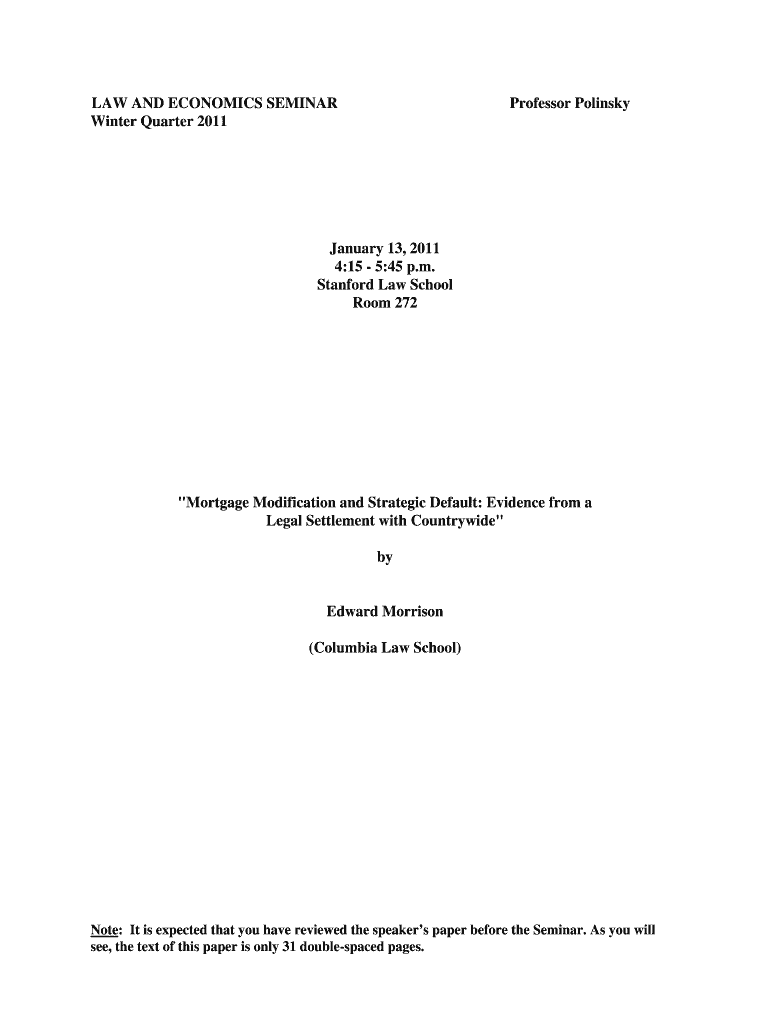
The form "Mortgage Modification and Strategic Default - Stanford Law School" examines the research by Professor Polinsky and others on mortgage modifications and strategic defaults. This academic study focuses on how homeowners respond to mortgage modification opportunities, particularly those offered by Countrywide Financial following a legal settlement. The primary goal is to explore patterns of strategic behavior among borrowers who might default to qualify for beneficial loan modifications. This paper contributes valuable insights into the complexities of mortgage modification policies and their unintended consequences.
Key Elements of the Study
The study delves into specific components of mortgage modification programs:
- Mortgage Modification: Refers to changes in the terms of an existing mortgage that benefit the borrower, often used to prevent default.
- Strategic Default: Occurs when a borrower deliberately chooses to stop paying a mortgage despite the ability to pay, aiming to trigger favorable modifications.
- Legal Settlement: In this context, a resolved dispute where Countrywide was required to offer mortgage modifications, impacting the study's focus.
Steps to Complete the Study
For those interested in replicating or extending the research:
- Collect Data: Gather data on mortgage payments, default rates, and borrower demographics.
- Analyze Patterns: Use statistical methods to identify changes in default rates post-settlement.
- Interpreting Findings: Consider economic incentives behind borrowers' decisions to default strategically.
Who Typically Uses the Findings
Academic researchers, policy analysts, financial institutions, and government agencies benefit from this study:
- Researchers: Use it as a foundation for further studies on mortgage markets.
- Policy Analysts: Assess the efficacy and design of modification programs.
- Financial Institutions: Understand borrower behavior to tailor financial products.
- Government Agencies: Craft regulations to minimize strategic defaults.


Legal Use of the Findings
The study examines the legal aspects of mortgage modification settlements:
- Compliance Requirements: Ensure programs meet legal standards.
- Ethical Considerations: Balance between helping borrowers and preventing exploitation of the system.
- Legal Precedents: Reference comparable cases for developing future strategies.
Impact of State-Specific Rules
State regulations can greatly impact mortgage modification strategies:
- Variations by State: Some states have more borrower-friendly regulations.
- Foreclosure Laws: These laws can influence the decision to strategically default.
- Impact on National Policy: The diversity in state laws showcases the challenges of implementing a one-size-fits-all policy.
Examples of Strategic Default Cases
Illustrative scenarios help to contextualize strategic defaults:
- Delinquent Borrower: Faces imminent foreclosure but defaults strategically to negotiate better terms.
- Timing of Defaults: Analyzes borrower actions immediately after modification announcements.
- Community Impact: Investigates neighborhood effects of default clusters.
Eligibility Criteria for Mortgage Modifications
Understanding who can apply and benefit from modifications is essential:
- Income Requirements: Must demonstrate inability to meet original mortgage terms.
- Property Use: Typically applies to primary residences.
- Current Debt Status: Eligibility often limited to those not currently in bankruptcy.

Application Process and Approval Time
Navigating the mortgage modification process involves several steps:
- Initial Evaluation: Lenders assess eligibility based on financial documents.
- Submission of Documents: Includes tax returns, pay stubs, and financial statements.
- Approval Timeline: Typically takes several weeks, with the possibility of expedited processing under specific circumstances.
This structure and content provide a comprehensive and detailed overview, making it a robust informational guide for the "Mortgage Modification and Strategic Default - Stanford Law School" research, its implications, and use cases.




