




01. Edit your psychology intake form template online
Type text, add images, blackout confidential details, add comments, highlights and more.

Type text, add images, blackout confidential details, add comments, highlights and more.

Draw your signature, type it, upload its image, or use your mobile device as a signature pad.

Send psychology intake form via email, link, or fax. You can also download it, export it or print it out.
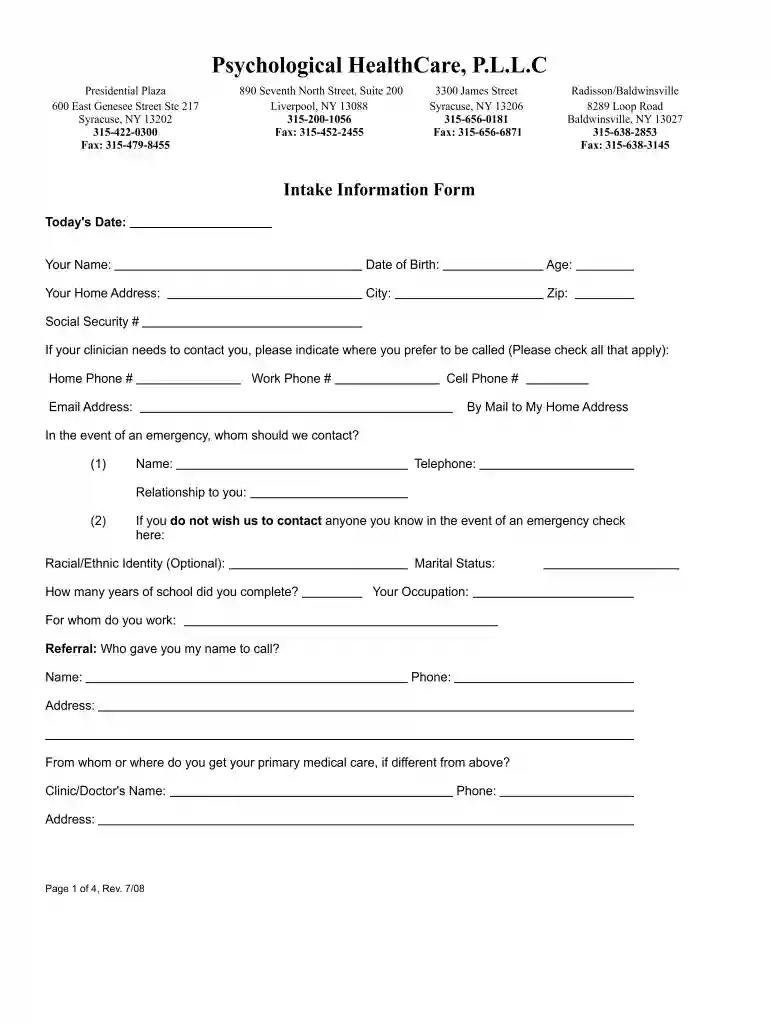
The psychological healthcare intake form is a comprehensive document designed to gather essential information from clients seeking psychological services. Its primary purpose is to facilitate an efficient assessment process by collecting detailed personal, medical, and psychosocial data that aids practitioners in offering tailored and effective care.
Personal Information: The form typically begins by asking for basic details such as the client's name, age, gender, contact information, and insurance details. This information is crucial for establishing a client profile.
Medical History: It includes sections that inquire about the client’s medical history, including past psychological treatment, medications, and any existing medical conditions. Understanding a patient’s medical background helps providers identify potential influences on mental health.
Substance Use and Abuse History: Clients are often asked about substance use, including alcohol and drugs. This section helps clinicians understand potential dependencies that could affect treatment strategies.
Family and Environmental Background: Information about family relationships and environmental factors is typically included. These details can shed light on the client’s support systems and potential stressors.
Legal Issues: Some forms also ask about any current or past legal issues, which may be relevant in assessing the overall well-being of the individual.
This intake form is an invaluable tool for professionals in the field of psychology; it is designed to ensure that all necessary background information is documented while emphasizing the importance of confidentiality.
Filling out the psychological healthcare intake form requires careful attention and accuracy. Here is a structured approach to ensure completion:
Gather Personal Information: Before you start filling out the form, gather basic personal details, such as your full name, date of birth, address, and contact information. Also, have any insurance information ready if applicable.
Medical History: Review your medical records to recall any significant medical or psychological conditions, treatments, or medications. It’s critical to be thorough in this section to aid in the assessment process.
Substance Use and Abuse History: Reflect on any history of substance use, both past and present. Answer truthfully to provide an accurate picture of areas that may require attention in your treatment.
Family and Relationships: Consider your family dynamics and relationships, as this will help professionals understand your support system and contextual challenges.
Review for Accuracy: Once all sections are completed, read through your responses carefully. Ensuring accuracy will facilitate a smoother intake process.
Completing the psychological healthcare intake form can feel extensive, but thoroughness is vital to receive the most effective care possible.
Key aspects of the psychological healthcare intake form are designed to capture a well-rounded view of the client. Important elements include:
Contact Information: Basic personal data including address, phone number, and emergency contacts are essential for establishing communication.
Insurance Details: Information regarding insurance can ease billing and payment processes, ensuring that clients understand their coverage for services.
Comprehensive Medical Background: The inclusion of past medical and psychiatric conditions, current medications, and any previous therapy experiences allows practitioners to create an informed treatment plan.
Assessment of Mental Health Symptoms: Clients may be asked to describe current mental health symptoms they are experiencing. This self-assessment aids in understanding the urgency and focus of treatment needed.
Consent for Treatment and Confidentiality: Most forms will contain sections that clarify the client’s consent for treatment, as well as information about how their data will be kept confidential.
These components work together not only to streamline the intake process but also to create an atmosphere of trust and professionalism in psychological healthcare.
Obtaining the psychological healthcare intake form can vary based on the provider's practice. Here are the typical methods:
Directly from the Provider: Many psychological practices provide forms directly on their websites for clients to download and fill out in advance. It’s common for first-time clients to receive the form via email or as a link to an online portal.
At the Office: Clients can usually obtain the intake form upon arrival for their first appointment. It's advisable to fill out the form in advance to maximize appointment time.
Specialized Software and Platforms: Some clinics may utilize specific platforms that allow clients to access and fill out forms digitally. These forms often include secure methods for data entry, streamlining the process for both clients and practitioners.
Customization Options: For larger mental health facilities, modifications may be made to the standard form to better suit specific populations, such as children or the elderly. In such cases, variants of the psychological healthcare intake form can be sought for optimal relevance.
Utilizing the appropriate channels is essential to ensure that clients complete their intake forms effectively and with adequate time to prepare for their appointments.
The psychological healthcare intake form is utilized by various professionals and settings within the field of psychology, including:
Psychologists: Licensed psychologists commonly use this form to gather background information prior to therapy sessions, ensuring an informed starting point for treatment.
Psychiatrists: These medical doctors also rely on detailed intake forms to evaluate clients for medication management and therapy.
Counselors and Therapists: Professionals in mental health counseling and therapy settings use the form to understand the specific needs of their clients, preferences, and treatment goals.
Clinical Social Workers: Social workers utilize psych intake forms to assess the mental health needs of individuals and families within social service contexts.
Psychological Testing Facilities: When clients come in for evaluations, these facilities use intake forms to track their medical histories and relevant psychological profiles.
The form serves a fundamental purpose in diagnosing, treating, and monitoring individuals in various mental health contexts, accommodating the unique needs of different specialized practitioners.
We've got more versions of the psychology intake form template form. Select the right psychology intake form template version from the list and start editing it straight away!
| Versions | Form popularity | Fillable & printable |
|---|---|---|
| 2008 | 4.8 Satisfied (231 Votes) |
Many software applications are available on the market for document editing and signing. DocHub is one of the most in-demand online solutions that comply with all security and compliance requirements and ensures your eSigned paperwork is legally enforceable. All you need to try it out is to sign up for an account, upload your psychology intake, provide the required information, and click Sign. Generate your eSignature by typing, drawing it, uploading its picture to your template, or scanning a unique QR code.
You can complete and eSign your psychology intake interview template online, even on a tight deadline. All you need to access high quality editing tools on any device is a DocHub account, that you can register in just a couple of moments. After you register, add your document or find what you are searching for in our catalog, complete it using the editing tools you need, and put your electronic signature on it at the end.
At DocHub, your data security is our priority. We follow HIPAA, SOC2, GDPR, and other standards, so you can work on your documents with confidence.
Jun 12, 2025 More than just a creative outlet, writing offers caregivers a powerful, cost-effective way to reduce stress, process emotions,Read more
To the best of your knowledge, please indicate conditions below that your first-degree relatives. (mother, father, siblings) have experienced. Depression.Read more
Welcome to the VA Behavioral Health Outpatient Clinic. Please complete the following questionnaire. While you will be interviewed by a mental health specialist,.Read more


