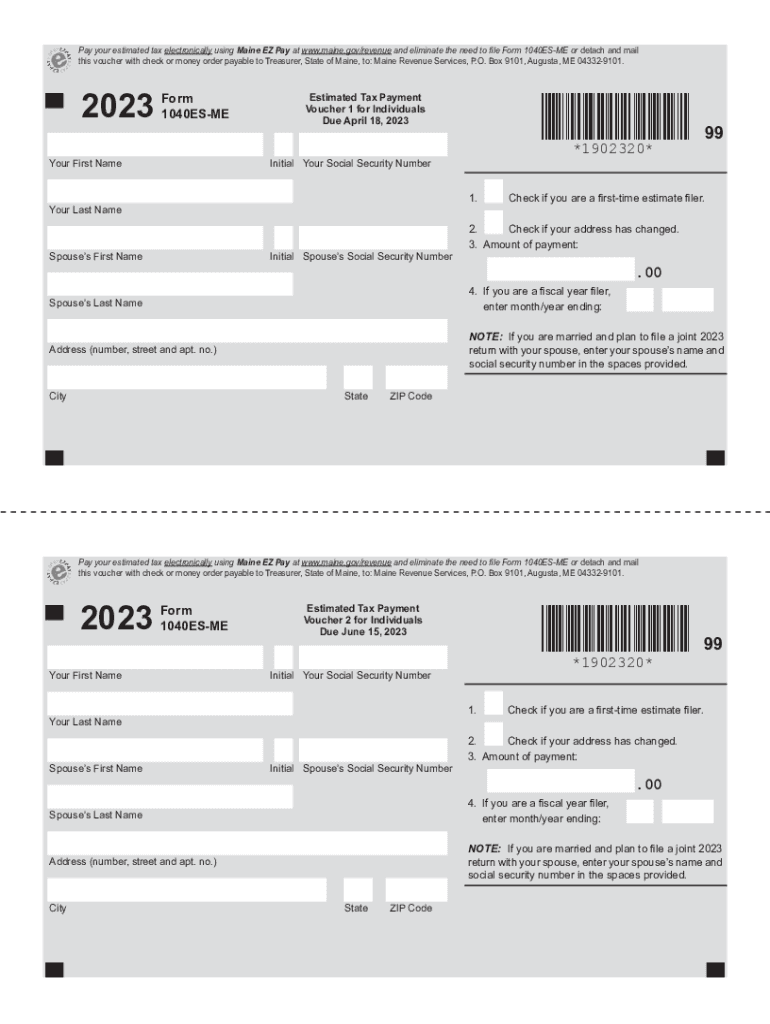







Understanding Form 1040ES-ME: State of Maine Estimated Tax for Individuals
The Form 1040ES-ME, known as the State of Maine Estimated Tax for Individuals, is a vital document for Maine residents who need to report and pay estimated taxes on income that isn't subject to withholding. This includes categories such as self-employment earnings or other non-wage income throughout the fiscal year.
Who Needs to Use Form 1040ES-ME
- Self-Employed Individuals: People who earn income through freelance work, consulting, or owning their own business.
- Individuals with Irregular Income: Those who might receive large sums at irregular intervals, such as stock dividends or rental income.
- Retirees: Retired individuals who receive significant income from pensions or investments.
Legal Implications of Form 1040ES-ME
Filing Form 1040ES-ME correctly is essential to adhere to state tax laws and avoid penalties. Failure to make adequate estimated payments can result in interest charges and other penalties. Taxpayers must ensure their quarterly payments are accurate and timely.
How to Use Form 1040ES-ME
Key Steps to Complete the Form
- Calculate Estimated Income: Determine your expected annual income that isn't subject to withholding.
- Compute Estimated Tax: Apply Maine's tax rates to your estimated income to figure out your total tax liability.
- Quarterly Payments: Divide the total estimated tax by four to determine the amount due each quarter.
- Submission Options: Pay via electronic transfer through Maine EZ Pay, or by mailing the payment with a voucher.
Important Dates for Form 1040ES-ME
- January 15: Last estimated payment for previous year
- April 15, June 15, September 15, January 15: Quarterly payment deadlines for the current tax year
How to Obtain Form 1040ES-ME
- Online Resources: Download the form from the Maine Revenue Services website.
- Mail Requests: Request a paper copy by contacting the state tax office directly.
- Tax Software: Calculate and file payments using approved tax software like TurboTax or QuickBooks.
Key Elements in Form 1040ES-ME
Required Documentation
- Income Records: Statements of income from various sources like 1099 Forms or investment statements.
- Prior Year’s Tax Return: Used to help estimate current-year taxes accurately.
- Deductions and Credits: Information on expected deductions and credits can affect estimated tax liability.
State-Specific Rules
Maine has specific laws that might affect your tax calculation, including deductions specific to residents and credits which can reduce taxable income. Familarize yourself with rate changes or updates to ensure compliance.
Penalties for Non-Compliance
Failing to file or pay the estimated tax can result in penalties:
- Interest Charges: Accrued on any overdue payment.
- Underpayment Penalties: Applies if you significantly underpay estimated taxes.
Practical Examples and Scenarios
Example 1: A Freelance Graphic Designer
A designer earns $60,000 annually. They estimated that 30% of their income will need to be paid in taxes, resulting in $18,000 in tax liability. Quarterly payments of $4,500 would need to be made.
Example 2: Retired with Pension and Investment Income
A retiree receives $40,000 annually in pension and $10,000 in investment income. They estimate owing $6,000 in taxes and thus, will make four payments of $1,500.
Use Cases and Variations
- Digital Submission: Offers convenience via online platforms, reducing potential errors associated with manual calculation.
- Paper Submission: Preferred by those who wish to maintain physical records.
Digital vs. Paper Form Versions
Both digital and paper versions of Form 1040ES-ME are available. The digital submission provides an efficient method, cutting down processing time and facilitating immediate delivery and receipt.
Conclusion
Utilizing Form 1040ES-ME is essential for self-employed individuals and those earning income not subjected to withholding. Understanding the required documentation, submission deadlines, and potential penalties ensures compliance with Maine tax regulations.