




Here's how it works
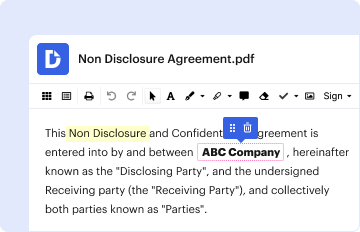
01. Edit your sample budget narrative for nonprofit online
Type text, add images, blackout confidential details, add comments, highlights and more.
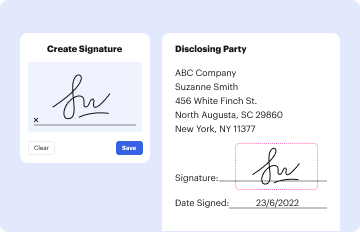
02. Sign it in a few clicks
Draw your signature, type it, upload its image, or use your mobile device as a signature pad.
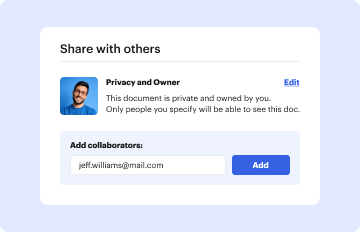
03. Share your form with others
Send simple budget narrative example via email, link, or fax. You can also download it, export it or print it out.
How to use or fill out sample budget narrative for nonprofit with our platform

- Click ‘Get Form’ to open the sample budget narrative for nonprofit in the editor.
- Begin by reviewing the introduction section, which outlines the purpose of your budget narrative. This is where you can provide context about your nonprofit's mission and objectives.
- Move on to the budget summary section. Here, input your total projected income and expenses. Ensure that each figure aligns with your organization's financial goals.
- Next, fill out the detailed budget breakdown. This section requires you to itemize each expense category, such as personnel costs, program expenses, and administrative costs. Use clear descriptions for each line item.
- Finally, review your document for accuracy and completeness. Utilize our platform’s editing tools to make any necessary adjustments before saving or sharing your completed form.
Start using our platform today to effortlessly complete your sample budget narrative for nonprofit!
Fill out sample budget narrative for nonprofit online
It's free
It's free
Got questions?
We have answers to the most popular questions from our customers. If you can't find an answer to your question, please contact us.
Contact us
What is the advantage of using a narrative budget?
A Narrative Budget is a visual way to tell the story of ministry in action in your congregation. It provides a vision of ministry, often not seen or possible through just a spreadsheet of line items. It reflects how the congregation spends its time, talent, and treasure rather than paying the bills.
What information will a budget narrative provide to the grant reviewers?
The narratives must describe the identified costs as well as their purpose and how they will assist with accomplishing project objectives.
How to write a budget brief?
How to create a budget proposal template Describe your project objectives. To introduce your project budget proposal, start with an overview of your project objectives. Summarize cost elements. Break down costs. Provide a cost summary. Submit for approval.
How do you write a budget example?
Five simple steps to create and use a budget Step 1: Estimate your monthly income. Step 2: Identify and estimate your monthly expenses. Step 3: Compare your total estimated income and expenses, and consider your priorities and goals. Step 4: Track your spending, and at the end of month, see if you spent what you planned.
What is the budget narrative in grant writing?
The budget narrative is the place to reinforce the story youve told in the body of the proposal. Its a detailed description of the line items in your budget, hopefully demonstrating how the things youll spend money on will allow your organization to accomplish what youve promised in the proposal itself.
Security and compliance
At DocHub, your data security is our priority. We follow HIPAA, SOC2, GDPR, and other standards, so you can work on your documents with confidence.
Learn more


People also ask
What key elements are required in the budget and budget narrative?
There must be enough specific budget details included in the narrative to enable OCED to: (1) clearly understand why the costs are essential to meeting the projects objectives; (2) verify the reasonableness and allowability of the cost; and (3) ensure the appropriate application of fringe benefits and indirect cost
How do you present a budget for a grant?
How to Write a Grant Budget in 6 Steps Implement Systems of Internal Control to Prove Financial Transparency. Understand Your Funders Requirements. 3 Work with Your Team to Estimate Realistic Costs. 4 Show The Funder Exactly What Their Grant Will Cover. 5 Compare Your Budget to Your Grant Narrative. 6 Check Your Work.
How do you write a budget narrative?
At a minimum, even for modest program budgets, its a good idea to describe each line item in the budget. Write a simple statement justifying why that expense is included. If you have a significantly larger expense item, one that sticks out from the rest, youll probably want to write a more thorough explanation.