







Definition and Meaning of Per Diem
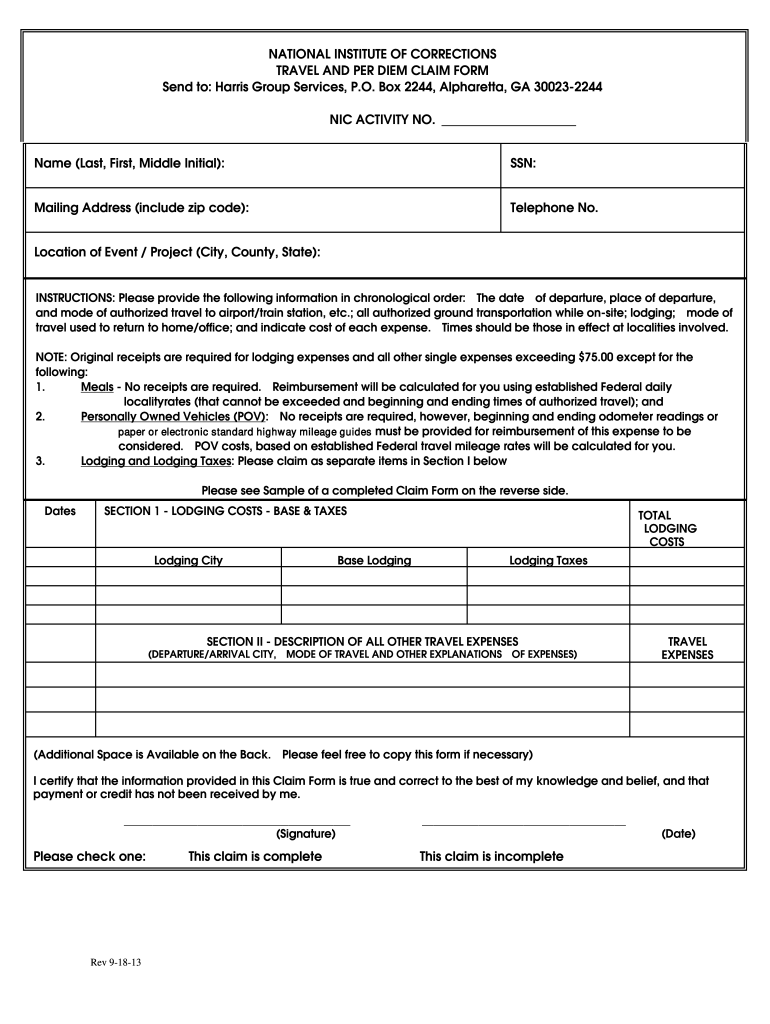
A per diem form template is a structured document used to outline and claim travel-related expenses incurred by an employee or contractor during business trips. In the context of United States employment practices, "per diem" translates to "per day," typically referring to a daily allowance given to employees to cover expenses such as meals, lodging, and transportation while traveling for work-related purposes. This form ensures that employees can receive reimbursement for their expenses efficiently and systematically.
The meaning of per diem often encompasses various aspects:
- Expense Coverage: This includes meals, lodging, and incidentals while traveling for business.
- Regulations: Different organizations and government entities may have specific guidelines regarding per diem rates and eligible expenses, often aligned with General Services Administration (GSA) rates for federal employees.
- Compliance: Use of a standardized per diem form template supports adherence to company policies and IRS regulations regarding travel reimbursements.
Key Elements of the Per Diem Form Template
The per diem form should include several crucial sections to ensure all necessary information is captured:
- Traveler's Information: Full name, employee ID, and contact details.
- Trip Details: Dates of travel, destination, and purpose of the trip.
- Expense Breakdown: Clear delineation of daily allowances claimed, including:
- Meal expenses (breakfast, lunch, dinner)
- Lodging costs
- Miscellaneous expenses
- Receipts and Documentation: Guidelines on required attachments, as well as any receipts needed for non-per diem expenses.
- Signatures: Place for both the employee's and the supervisor's signatures for approval.
Completing these key elements helps facilitate a transparent reimbursement process.
Steps to Complete the Per Diem Form Template
-
Gather Necessary Information:
- Collect your travel details, including destination and purpose of travel.
- Note the dates of the trip.
-
Detail Your Expenses:
- Use the per diem rates applicable to your destination.
- Break down daily expenses accurately to reflect actual costs.
-
Complete Sections of the Form:
- Fill in personal and trip information.
- List claimed expenses corresponding to each day of travel.
-
Attach Required Documentation:
- Gather original receipts for any additional expenses outside of per diem (like airfare and hotel invoices).
-
Submit for Approval:
- Ensure the form is signed by both you and your supervisor before submission.
Following this process can speed up approval times and ensure compliance with company policy.
Common Misunderstandings About Per Diem Claims
Misinterpretations can lead to processing delays or rejected claims. Some misconceptions include:
-
Non-Compliance with Limits: Employees might assume they can claim any amount without adhering to their organization’s specified limits. Understanding personal accountability for adhering to these guidelines is crucial.
-
Tax Implications: Many believe all per diem claims are tax-free; however, if employees claim more than the allowed limits, the excess may be subject to taxation.
-
Documentation Requirements: Employees may mistakenly think that submitting a form alone suffices to claim per diem reimbursement. In reality, necessary documentation usually includes receipts and detailed accounts of expenses.
Bridging these knowledge gaps ensures a smoother reimbursement experience.
Best Practices for Submitting Per Diem Requests
Implementing best practices can enhance the efficiency of the reimbursement process:
- Keep Accurate Records: Maintain a detailed log of your expenses alongside receipts for easy reference.
- Follow Submission Deadlines: Be aware of your company’s timeline regarding submission of per diem forms to avoid late claims.
- Clarify Any Doubts: If unclear about specific per diem policies or rates, reach out to HR or your finance department for assistance before submitting your form.
By observing these best practices, you help assure that your claims process runs smoothly, minimizing potential complications.
Examples of Per Diem Rates and Calculations
Understanding how per diem rates function in practical examples can clarify expectations and calculations:
-
GSA per diem rates might indicate a daily meal allowance of $66 for a specific city while traveling. If your trip spans five days, multiply $66 by five to determine the total amount of $330 for meals.
-
If lodging rates in a location are capped at $180 per night and the trip includes three nights, then the lodging portion would total $540.
Calculating total reimbursement amounts requires consideration of both meal and lodging expenses, combined for a complete view of per diem claims.
Explanation of Per Diem Policies Across Different Employers
Different organizations may adopt varying per diem policies, guided by:
-
Industry Standards: For instance, government employees often adhere to GSA rates, while private-sector employers may set their own based on budgetary constraints.
-
Position-Specific Guidelines: Higher-ranking employees may receive greater allowances compared to entry-level positions.
-
Travel Type Considerations: Long-duration travel may have different requirements compared to short-term trips, affecting how per diem claims are evaluated.
Understanding the policies specific to your employer can ensure that you align with internal expectations when making claims.
Legal Considerations Related to Per Diem Reimbursement
Per diem payments and claims can raise several legal considerations for both employees and employers:
-
IRS Regulations: The Internal Revenue Service stipulates that only reasonable per diem rates are deductible. Employers should ensure that their policies comply with these guidelines to avoid penalties.
-
Record-Keeping Requirements: Employing proper documentation can protect both employees and employers during audits conducted by tax authorities.
-
State-Specific Laws: Some states may have additional requirements concerning reimbursement practices, necessitating awareness of local legislation alongside federal rules.
Employers and employees alike should familiarize themselves with relevant legal considerations to avoid compliance issues.




