
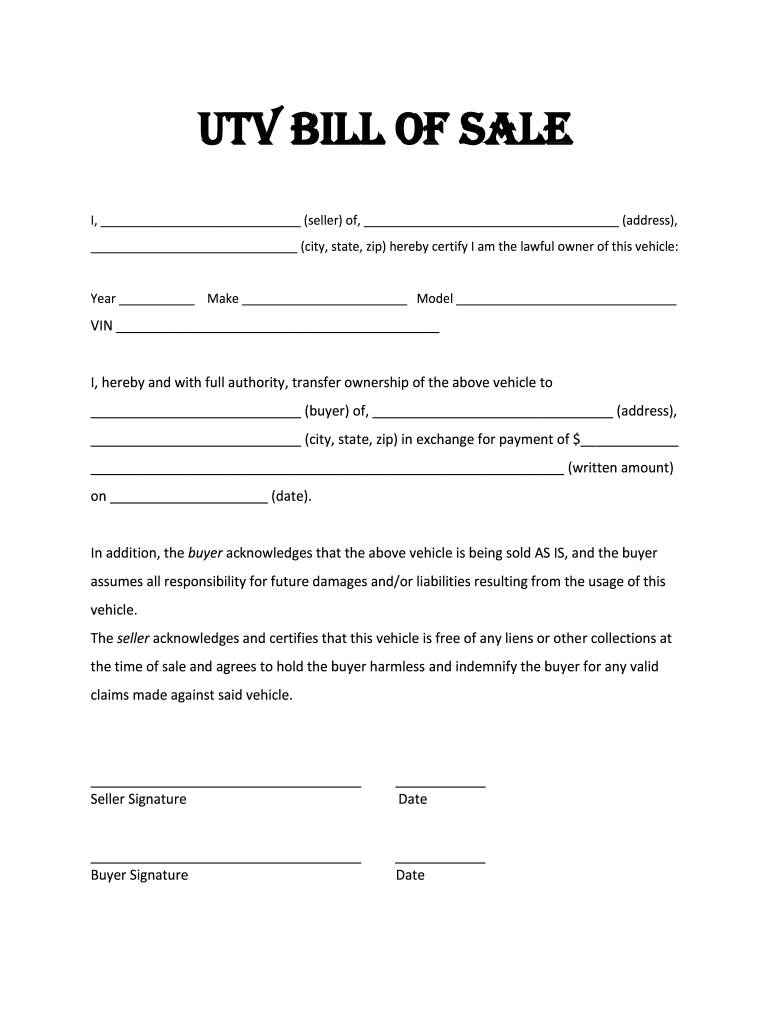







Definition & Meaning of the UTV Bill of Sale
The UTV Bill of Sale is a legal document that serves as evidence for the transfer of ownership of a Utility Task Vehicle (UTV) from the seller to the buyer. This document outlines essential details about the transaction, ensuring that both parties are protected and have a clear understanding of the agreement. Key components typically included in a UTV Bill of Sale are:
- Buyer and Seller Information: Names, addresses, and contact details.
- Vehicle Details: Year, make, model, Vehicle Identification Number (VIN), and any unique features or modifications.
- Sale Price: The amount agreed upon for the sale of the UTV.
- Date of Sale: When the transaction took place.
- 'AS IS' Clause: Generally indicating that the buyer accepts the vehicle in its current condition, along with any potential liabilities that may arise after the sale.
- Liens: Confirmation that the vehicle is free of any legal claims or debts.
A UTV Bill of Sale is not only important for the buyer to prove ownership, but it also helps the seller to protect against future claims related to the vehicle.
Key Elements of the UTV Bill of Sale
When drafting a UTV Bill of Sale, it is crucial to ensure that the document includes specific key elements to avoid disputes and ensure compliance. These elements typically encompass:
-
Identification of Parties:
- Full names and addresses of both the buyer and the seller.
- Driver's license numbers or other identification, if applicable.
-
Vehicle Specifications:
- Detailed description of the UTV, including year, make, model, and VIN.
- Odometer reading at the time of sale, if applicable.
-
Financial Details:
- The exact sale price, including any applicable taxes or fees.
- Payment method (cash, check, financing) and any deposit received.
-
Terms and Conditions:
- The "AS IS" statement, detailing that the vehicle is sold without warranty.
- A clause indicating whether either party agrees to indemnify the other in case of future ownership disputes.
-
Signatures:
- Both parties should sign the document to validate the agreement.
These elements form the backbone of a well-structured UTV Bill of Sale, ensuring clarity and legal protection for both buyer and seller.
Steps to Complete the UTV Bill of Sale
Completing a UTV Bill of Sale involves a series of straightforward steps that both the seller and buyer should follow to ensure a smooth transaction. Here’s a breakdown of the process:
-
Gather Necessary Information:
- Collect all relevant details regarding the buyer and seller, as well as the UTV.
-
Draft the Document:
- Use a UTV Bill of Sale template or create a document that includes all necessary elements discussed earlier.
-
Complete the Document:
- Fill in the gathered information accurately. Ensure that every detail is clear and correct to prevent misunderstandings.
-
Review the Document:
- Both parties should read through the document carefully and ensure that all terms and conditions are satisfactory.
-
Sign and Date the Bill of Sale:
- Both the buyer and seller need to sign and date the document. Depending on state requirements, you may also need witnesses or notarization.
-
Provide Copies:
- After signing, ensure both parties receive a copy of the signed document for their records.
-
File with Relevant Authorities (if applicable):
- Depending on state laws, submit the UTV Bill of Sale to your local Department of Motor Vehicles (DMV) or equivalent authority to officially transfer ownership.
By following these steps, the transaction can be recorded properly, ensuring that ownership is legally recognized.
State-Specific Rules for the UTV Bill of Sale
It is essential for buyers and sellers to understand that the rules governing a UTV Bill of Sale can vary significantly from state to state. Key considerations include:
- Registration Requirements: Some states may require the bill of sale to be submitted to the DMV as part of the registration process, while others might not necessitate it.
- Sales Tax Obligations: Depending on the jurisdiction, sales tax may be applied to the transaction, and both parties must understand their liabilities in this regard.
- Specific Language: Certain states mandate that specific language or clauses be included in the bill of sale to comply with local regulations.
- Notarization: In some states, notarization of the bill of sale is required to validate the transfer of ownership.
For example, in Texas, the UTV Bill of Sale must include state-specific wording and be filed with the DMV to finalize registration. Conversely, a state like Colorado might have more lenient requirements. Always check with local regulations to ensure compliance.
Legal Use of the UTV Bill of Sale
The UTV Bill of Sale is not just a simple sale document; it carries significant legal weight that provides protection to both parties. Legally, the UTV Bill of Sale serves several important functions:
-
Proof of Ownership Transfer: The document acts as a formal record that the seller has relinquished ownership of the UTV, protecting the buyer against any future claims or liabilities arising from the seller.
-
Potential Evidence in Disputes: Should any disputes arise regarding the sale, the bill of sale can serve as crucial evidence in legal discussions, showcasing the terms agreed upon by both parties.
-
Financial Records: This document can also be beneficial for tax purposes. In many jurisdictions, tax authorities might require proof of transaction for any sales taxes due.
-
Liability Protection: The “AS IS” clause helps to mitigate legal repercussions for sellers, as it indicates that buyers accept the vehicle's current condition and assume responsibility for any potential issues arising post-sale.
Understanding the legal implications can help both buyers and sellers navigate the transaction smoothly while safeguarding their interests.




