




01. Edit your special education eligibility flowchart online
Type text, add images, blackout confidential details, add comments, highlights and more.

Type text, add images, blackout confidential details, add comments, highlights and more.

Draw your signature, type it, upload its image, or use your mobile device as a signature pad.

Send iep flow chart via email, link, or fax. You can also download it, export it or print it out.
The Individualized Education Program (IEP) flow chart is a visual representation of the processes involved in developing and implementing an IEP for students with disabilities. It outlines critical steps and considerations, making it easier for educators, parents, and specialists to navigate the special education system effectively.
The IEP flow chart encompasses several key components that ensure the student's educational needs are met.
Eligibility Determination: This initial step assesses whether a student qualifies for special education services. Eligibility is based on specific criteria set forth by federal and state laws, including the Individuals with Disabilities Education Act (IDEA).
Evaluation Procedures: Comprehensive assessments are conducted to understand the student’s strengths and weaknesses. Evaluators may use standardized tests, teacher observations, and parental input.
Development of the IEP: Once eligibility is established, an IEP team, which includes caregivers and educators, collaborates to create a tailored plan defining the student's needs, goals, and the specific services required to support their education.
Implementation: The IEP must be delivered as designed. This phase involves regular communication among teachers, parents, and the student (when appropriate), ensuring everyone is aware of the student’s goals and progress.
Review and Revision: Progress toward IEP goals is monitored continuously, with formal reviews occurring at least annually. Updates to the plan may be necessary based on the student’s evolving needs.
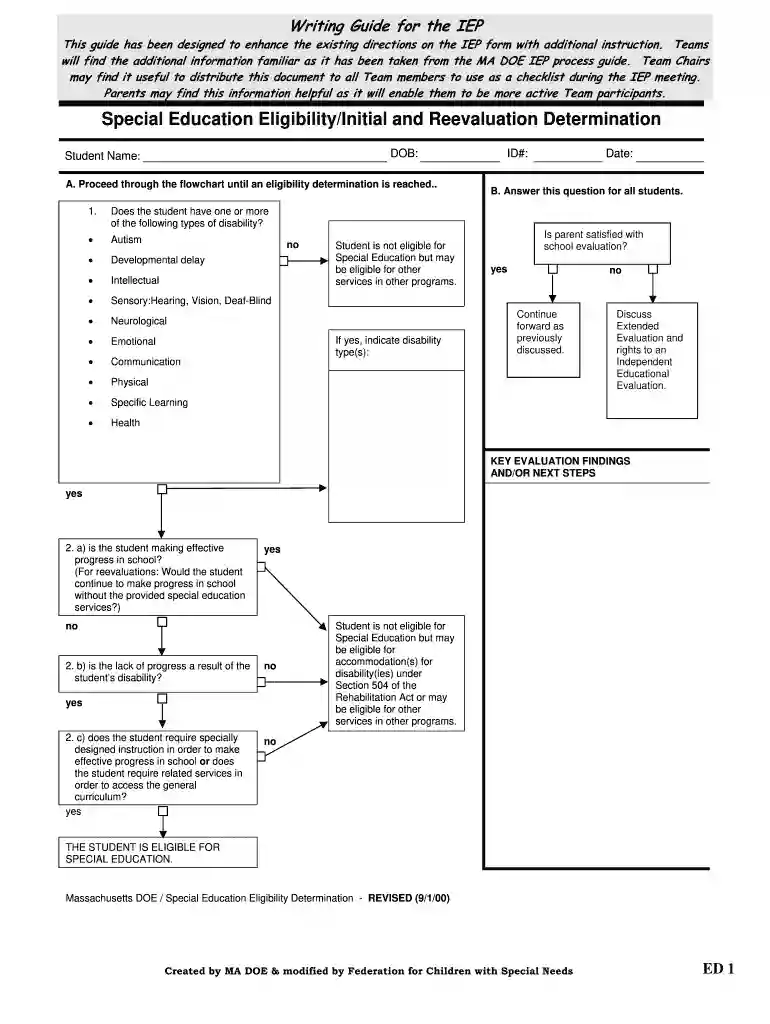
One crucial aspect of the IEP flow chart is the special education eligibility flowchart. This document provides a step-by-step guide through the evaluation and eligibility process, ensuring compliance with local regulations and federal mandates.
Initial Referral: Parents, teachers, or other professionals can refer a student suspected of needing special education services.
Consent for Evaluation: Before any evaluation, parental consent must be obtained, allowing the school to assess the student’s abilities and needs.
Assessment: Appropriate tests are administered by qualified professionals to determine eligibility.
Eligibility Determination: Post-assessment, a determination is made regarding the student’s eligibility based on collected data and assessments.
IEP Development: If eligible, the IEP team meets to formulate the IEP, including specific accommodations and goals tailored to the student's unique needs.
Parental involvement is a fundamental element of the IEP process and is emphasized throughout the flow chart. Parents are encouraged to participate actively in every stage, including:
Providing input during evaluations: Parents can offer critical insights into their child's history, strengths, and areas requiring support.
Collaborating on goal setting: Parents help define realistic and measurable goals for their child’s IEP, ensuring the plan reflects their expectations and concerns.
Monitoring progress: Engaging with teachers to discuss their child's advancement allows parents to remain informed and proactive.
Despite its structured approach, navigating the IEP process can present challenges.
Misunderstanding Eligibility: Some parents may not fully comprehend the criteria for eligibility, leading to frustration during initial referrals or evaluations.
Communication Breakdown: Effective collaboration among all parties can be hindered by poor communication, potentially impacting the IEP’s implementation.
Resource Availability: Variations in available resources can affect the services a student receives, with some districts having more comprehensive support than others.
The IEP flow chart also provides a helpful timeline that outlines significant milestones in the IEP process.
Referral to Evaluation: Typically, schools must conduct evaluations within a given timeframe (often 60 days) after a referral is made.
Development and Approval of the IEP: Following eligibility determination, the IEP must usually be developed and agreed upon within a specified period, requiring all team members to align on goals and strategies.
Annual Reviews: IEPs must be reviewed at least once a year. However, the timeline could be adjusted if significant changes in the student's performance occur, necessitating a reevaluation.
With comprehensive understanding and adherence to the IEP flow chart, stakeholders can enhance the educational outcome for students requiring special education services, ensuring they receive the support necessary to succeed.
We've got more versions of the special education eligibility flowchart form. Select the right special education eligibility flowchart version from the list and start editing it straight away!
| Versions | Form popularity | Fillable & printable |
|---|---|---|
| 2000 | 4.9 Satisfied (41 Votes) |
At DocHub, your data security is our priority. We follow HIPAA, SOC2, GDPR, and other standards, so you can work on your documents with confidence.
Evaluation Flowcharts: Initial Evaluation Process - Agency Referral, Initial Evaluation Process - Parent Referral, Reevaluation Process.Read more
The following pages contain the Monitor program listing, main program flow charts, and pertinent memory maps. The source is written STD mnemonics, andRead more
This flow chart illustrates the IEP referral process. Start at the top and follow the arrows downward to guide you through the different phases in theRead more


