







Definition & Meaning
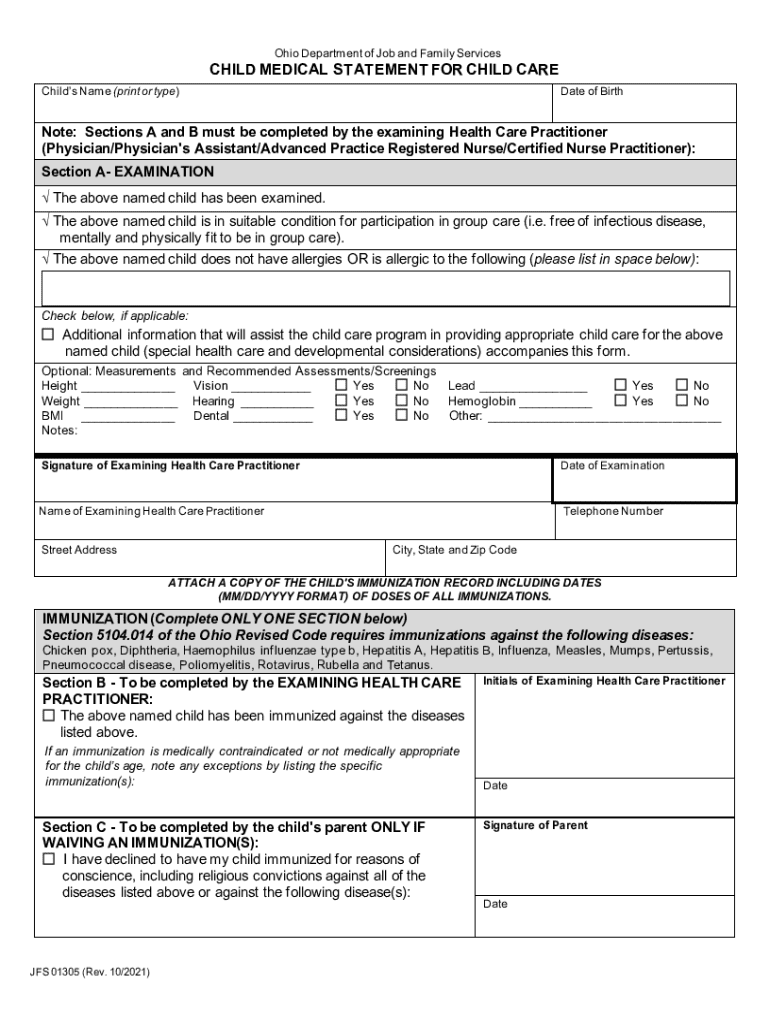
The "Child Medical Statement for Child Care" is a crucial document mandated by the Ohio Department of Job and Family Services that verifies the health status of children attending child care programs. This statement is completed by a qualified health care practitioner to ensure that the child meets the necessary health requirements for participation in group care settings. It includes detailed sections covering examination results, immunization records, and optional health information. The form plays a vital role in affirming a child's fitness for child care environments, safeguarding both the child and the community by outlining essential health standards that must be met.
How to Obtain the Child Medical Statement for Child Care
To obtain the Child Medical Statement for Child Care, caregivers or parents need to contact their child's health care provider, who will typically have access to the form. Alternatively, the form can be downloaded directly from the Ohio Department of Job and Family Services website. Here are common methods to acquire the form:
- Healthcare Provider: Many healthcare facilities and pediatricians are familiar with the requirements and can provide the form during a child's medical examination.
- Official Websites: The Ohio Department of Job and Family Services offers the document for download, making it easy for caregivers to print and fill in.
- Child Care Facilities: Some child care centers may provide the form to parents upon enrollment to streamline the process.
- Community Health Clinics: These clinics often offer resources and support for completing state-required forms.
Steps to Complete the Child Medical Statement for Child Care
Completing the Child Medical Statement involves collaborating with a healthcare professional to ensure all necessary information is accurately captured. Follow these steps:
- Schedule a Health Examination: Make an appointment with a qualified health care practitioner for your child.
- Complete Child Information: Fill out basic identification details, including the child's name, date of birth, and address.
- Conduct Medical Examination: Have the healthcare practitioner perform a thorough health check-up, noting physical assessment results.
- Document Immunizations: Record all the immunizations the child has received, ensuring compliance with state requirements.
- Optional Health Information: Provide additional health notes or waivers if necessary, especially regarding any exempted vaccines.
- Sign the Form: Ensure that the healthcare provider signs the document to validate the information.
- Submit to Child Care Provider: Deliver the completed statement to the child care center for review and record-keeping.
Key Elements of the Child Medical Statement for Child Care
Understanding the key components can help parents and practitioners ensure a complete and accurate form:
- Examination Results: Detailed notes on the child's overall health status, including any identified conditions.
- Immunization Status: A comprehensive list of required vaccinations along with the dates they were administered.
- Health Care Provider's Certification: A section for the practitioner's signature and credentials, confirming the information's accuracy.
- Parental Acknowledgment: Space for parent or guardian consent, acknowledging the health assessment.
- Additional Health Information: Optional space for noting special health needs or vaccine exemptions.
Why Should You Use the Child Medical Statement for Child Care
The Child Medical Statement is essential not only for compliance but also for maintaining a safe environment in child care settings. The benefits include:
- Ensuring Child Safety: Validates that children meet health criteria, reducing contagious diseases in group settings.
- Legal Compliance: Aligns with state regulations, avoiding potential fines or exclusion from care programs.
- Peace of Mind: Provides assurance to both parents and caregivers that health standards are upheld.
State-Specific Rules for the Child Medical Statement for Child Care
While this content focuses on Ohio's requirements, it's important to recognize how rules can vary:
- Variation in Required Immunizations: States may have different vaccine mandates.
- Health Examination Frequency: Some regions may require more frequent updates.
- Exemptions and Waivers: Policies on religious or medical vaccine exemptions can differ.
Important Terms Related to Child Medical Statement for Child Care
Familiarity with relevant terminology enhances understanding and completion of the form. Key terms include:
- Immunization Schedule: A timetable outlining the vaccines a child should receive.
- Health Care Practitioner: A licensed individual qualified to conduct health assessments, such as a pediatrician.
- Exemption Waivers: Documentation allowing a child to abstain from certain vaccines due to specific criteria.
Legal Use of the Child Medical Statement for Child Care
Legal compliance with the Child Medical Statement is mandatory in Ohio to ensure the health and safety of children within care programs. The form is used legally to:
- Verify Fitness for Child Care: Legally confirms that the child is healthy and up-to-date with required medical evaluations.
- Document Health Exceptions: Officially records any medical or religious exemptions related to immunizations.
- Serve as Legal Proof: Provides evidence of adherence to state regulations, helpful in audits or inspections conducted by child care licensors.
Understanding these facets of the Child Medical Statement ensures a thorough and compliant approach, supporting the well-being of children and adherence to state laws.




