
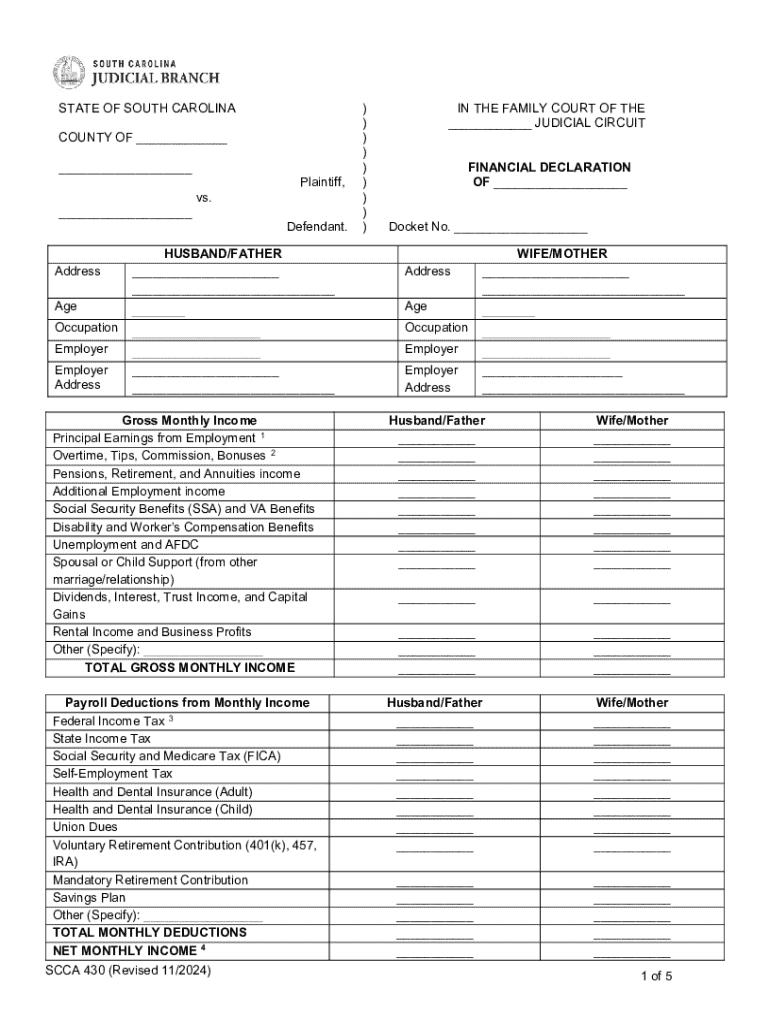







Definition & Meaning
The "SC Tax Forms Fillable - Fill Online, Printable, Fillable, Blank" are standardized forms designed for taxpayers in South Carolina to report their income and calculate state taxes. These forms offer a user-friendly approach to tax reporting by being fillable online, printable, and available as blank templates. Such forms streamline the tax filing process, reducing errors by guiding taxpayers on how to report income, deductions, and credits accurately.
Purpose and Utility
- Tax Reporting: Provides a structured means for reporting state income and calculating tax obligations.
- User-Friendly Design: Fillable forms simplify data entry, minimizing manual input errors.
- Accessibility: Available online, these forms offer easy access for all South Carolina residents.
How to Use the SC Tax Forms Fillable
Understanding how to use these forms effectively is crucial for accurate tax filing. Here’s a step-by-step guide:
- Access the Form: Download from the South Carolina Department of Revenue's website or online platforms offering tax forms.
- Gather Necessary Information: Prepare personal identification details, income statements, and receipts for deductions and credits.
- Fill Out the Form: Use an online editor to input data in the designated fields. Ensure thorough data entry for accuracy.
- Review the Form: Double-check all entries for correctness, especially calculations.
- Submit the Form: Depending on the method (online or paper), either mail it to the Department of Revenue or submit it electronically.
Important Terms Related to SC Tax Forms
Understanding the terminology used in these forms is essential for proper completion.
- Adjusted Gross Income (AGI): Total income before state-specific deductions.
- Deductions: Specific expenses that can be deducted from AGI to reduce taxable income.
- Credits: Amounts that directly reduce tax liability.
- Exemptions: Deductions from taxable income for each dependent claimed.
Key Elements of the SC Tax Forms
Filling out SC Tax Forms involves several key sections that require attention:
- Personal Information: Basic information including name, address, and social security number.
- Income Details: Comprehensive entry of all income sources, including wages, dividends, and self-employment earnings.
- Deductions and Credits: Detailed list and calculation of applicable deductions and credits to reduce taxable income.
- Tax Calculation: Final computation of tax due after applying deductions and credits.
Steps to Complete the SC Tax Forms
Ensure accurate completion by following these detailed steps:
- Compile All Documents: Gather necessary income documents such as W-2s, 1099s, and receipts for deductions.
- Start with Personal Details: Fill in basic information accurately to avoid identification mismatches.
- Enter Income Information: Accurately input all income sources, verifying each figure against official documents.
- Calculate Deductions & Credits: Carefully detail each deductible expense and eligible credit to maximize tax savings.
- Finalize the Tax Calculation: Use the form’s built-in calculations to determine total tax due.
- Validate Entries: Recheck all figures and entries to ensure no errors.
- Submit as Required: Either print and mail the form or submit it via an online platform.
Legal Use of the SC Tax Forms
SC Tax Forms Fillable are legal documents used to report income and pay taxes to the state. Compliance with legal requirements ensures smooth processing:
- Authenticity: All information must be truthful and backed by documents.
- Accuracy: Exactness in entries is crucial to avoid legal repercussions.
- Timeliness: Forms must be submitted by the prescribed deadline to prevent penalties.
Penalties for Non-Compliance
Failure to comply with filing requirements can result in:
- Fines: Monetary penalties for late submissions or incorrect reporting.
- Interest: Accrual of interest on unpaid tax dues after deadlines.
- Legal Actions: Consequences for fraudulent or misrepresented information.
Examples of Using SC Tax Forms
Practical scenarios highlight the application of these forms:
- Individual Filers: Single taxpayers filing their annual state income tax to determine obligations.
- Business Owners: Small businesses calculating state income tax liabilities separate from federal computations.
- Students: Part-time employees or scholarship recipients seeking tax relief on stipends or income.
Business Entity Types
Different business entity types may utilize specific form features:
- LLCs: Multi-member LLCs report state income differently from sole proprietors.
- Corporations: Must adhere to different taxable income calculations.
- Partnerships: Forms accommodate pass-through taxation specifics for partnerships.
State-Specific Rules for SC Tax Forms
Several nuanced rules are specific to South Carolina:
- Residency Requirements: Non-residents need to file separately under specific provisions.
- Deductions Specific to SC: Certain deductions apply uniquely to South Carolina residents.
- Tax Credits: State-offered credits that are not applicable elsewhere.
State-by-State Differences
Comparative tax analysis shows distinct differences:
- Neighboring States: Tax policies and form structures in North Carolina and Georgia may contrast with SC rules.
- Income Tax Rates: Comparison of South Carolina’s tax brackets with other states.
Digital vs. Paper Version
Understanding the benefits and limitations of each format:
- Digital Forms: Allow for expedited processing and reduced errors through automated calculations.
- Paper Forms: Still used by traditional filers who prefer manual submission and record-keeping.
Software Compatibility
Use with popular tax software to enhance user experience:
- TurboTax: Integration for seamless data import from fillable forms.
- QuickBooks: Compatibility for business filers organizing income and expense data.
Quick Facts
- Submission Deadline: Typically due by April 15th, aligning with federal tax deadlines.
- Filing Requirements: State-specific minimum income thresholds dictate the necessity of filing.
- Extensions: Available upon request, allowing additional time for submission without penalty on overdue taxes.
Key Takeaways
- Comprehensive Coverage: Ensure all income, deductions, and credits are accurately represented.
- Timely Submission: Adhere to deadlines to avoid penalties.
- Legal Implications: Accurate reporting protects against legal and financial repercussions.




