Definition and Purpose of the Letter to Patient with Positive Screening Result
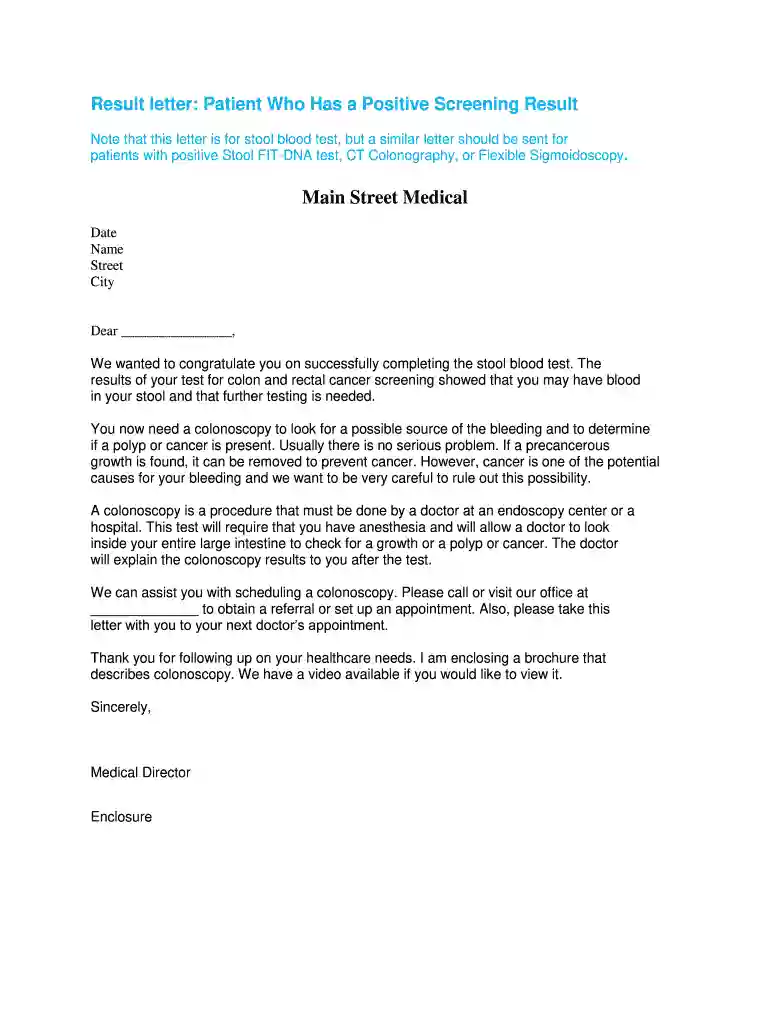
The "Letter to Patient with Positive Screening Result" is a formal communication sent to individuals who have undergone a medical screening and received a positive result. The primary purpose of this letter is to inform patients about the outcome of their screening, specifically indicating the presence of potential abnormalities, such as blood in stool tests. This form serves as an essential tool in patient management, ensuring that individuals are promptly and clearly informed about significant health findings that may require further diagnostic investigation.
Specific Scenarios Addressed
- Stool Blood Test Results: It commonly addresses positive results indicating potential blood in the stool, a sign that could warrant further investigation for conditions like colon cancer or polyps.
- Encouragement for Further Testing: The letter typically advises patients to undergo additional diagnostic procedures, such as a colonoscopy, to confirm or rule out serious conditions.
How to Use the Letter to Patient with Positive Screening Result
When using the letter, healthcare providers must ensure that the communication is clear and empathetic, offering guidance on the next steps the patient should take following their positive screening result.
- Detailed Explanation: Include a detailed explanation of the screening test conducted and what a positive result implies for the patient's health.
- Next Steps: Clearly outline recommended follow-up actions, such as scheduling a colonoscopy, and provide contact information for assistance in setting up this procedure.
- Resources and Support: Provide patients with resources to help them understand the potential conditions indicated by their test results and any lifestyle changes they may need to consider.
Essential Elements to Include
- Patient's Personal Information: Ensure the letter includes the patient’s full name, date of birth, and the date of the screening test to avoid any confusion.
- Clear Instructions: Offer clear, step-by-step instructions on how patients can arrange further tests and who to contact for more information.
Steps to Complete the Letter to Patient with Positive Screening Result
Completing the letter involves several crucial steps to ensure comprehensive communication with the patient.
- Gather Relevant Information: Collect all necessary data, including the type of screening test, the date of the test, and the specific results that require further action.
- Template Customization: Use a standardized template but tailor it with specific patient details and test results to personalize the communication.
- Review and Approve: Have a healthcare professional review the contents for accuracy and completeness to avoid misinformation or oversight.
Language and Tone Recommendations
- Empathetic Communication: The tone should be supportive, professional, and non-alarming, providing reassurance while emphasizing the importance of follow-up.
- Clarity and Simplicity: Use straightforward language, avoiding complex medical jargon where possible, to ensure that patients of all backgrounds can understand.
Key Elements of the Letter to Patient with Positive Screening Result
Key elements ensure that the letter serves its purpose effectively and meets the needs of both healthcare providers and patients.
- Health Condition Explanation: Describe the potential conditions indicated by the positive result, such as cancer or benign polyps, in understandable terms.
- Follow-Up Test Instructions: Provide detailed instructions on how to schedule and prepare for follow-up tests like a colonoscopy.
- Contact Information: Include contact details for scheduling further diagnostic procedures and offer options for patients to reach out with questions or concerns.
Examples and Practical Scenarios
- Case Example: A patient receives a letter following a fecal occult blood test, instructing them to arrange further investigation.
- Multiple Follow-Up Options: Allow patients to schedule appointments via phone, email, or an online portal to accommodate varying preferences and capabilities.
Legal Use and Considerations
The letter must comply with applicable healthcare regulations within the United States, emphasizing confidentiality and patient rights.
- HIPAA Compliance: Ensure that all patient information is protected under the Health Insurance Portability and Accountability Act (HIPAA) regulations.
- Accurate Representation: Avoid any statements that could be misinterpreted as definitive diagnoses before confirmatory tests are completed.
Examples of Using the Letter to Patient with Positive Screening Result
In practice, this letter can be invaluable in various healthcare scenarios:
- Routine Screening Programs: Utilized after standard screenings to identify patients needing further diagnostic follow-up.
- Specialized Clinics: Deployment in gastroenterology clinics where screenings for digestive tract issues are common.
- Research Studies: Employed in studies requiring follow-up diagnostics after initial positive results in field collections.
Diverse Case Studies
- Early Detection Strategy: In a colon cancer early detection initiative, patients receiving positive hemoccult tests might receive such letters with subsequent colonoscopy instructions.
- Networked Health Systems: Large health systems issue these letters via electronic health records (EHR) systems, integrating seamlessly with patient portals for digital scheduling.
By comprehensively understanding these aspects, healthcare providers can effectively communicate with patients who receive positive screening results, ensuring they are well-informed and have a clear path forward for further diagnosis and care.