




01. Edit your form online
Type text, add images, blackout confidential details, add comments, highlights and more.

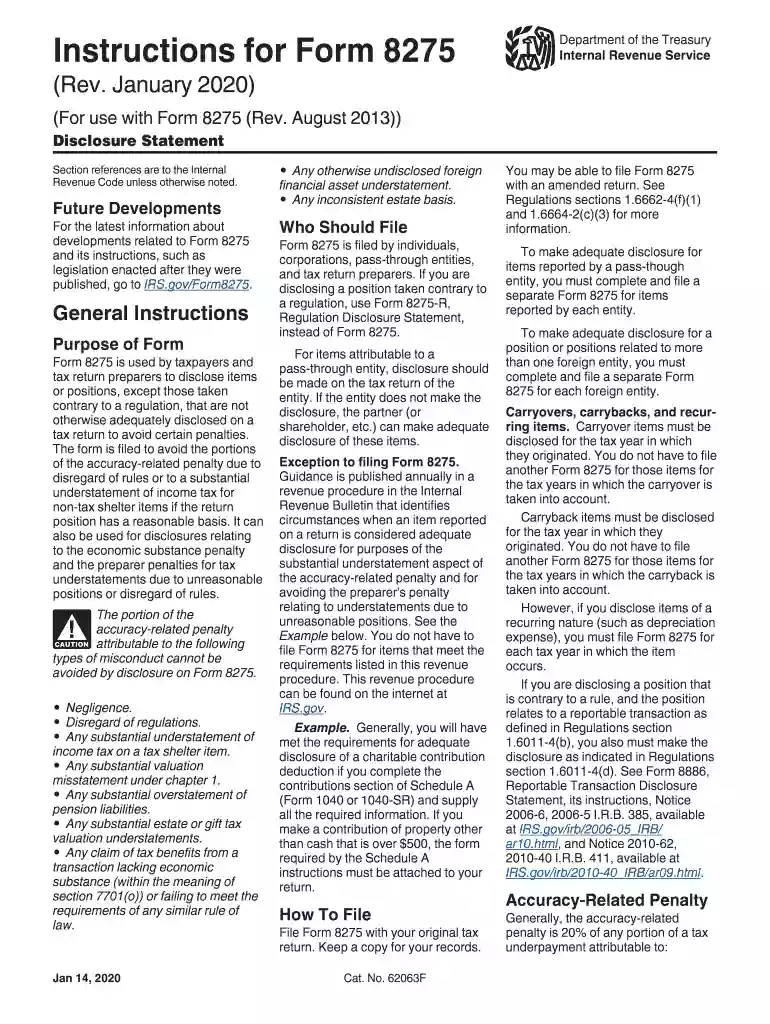
Type text, add images, blackout confidential details, add comments, highlights and more.

Draw your signature, type it, upload its image, or use your mobile device as a signature pad.

Send it via email, link, or fax. You can also download it, export it or print it out.
Form 8275, known as the Disclosure Statement, is utilized by taxpayers and tax preparers to disclose items or positions not adequately reported on tax returns. By filing this form, taxpayers can potentially avoid accuracy-related penalties, which are often levied when positions are not adequately disclosed. This form plays a crucial role in the tax filing process as it allows individuals to report positions that could otherwise be subject to penalties, ensuring compliance with IRS regulations.
Filing Form 8275 involves several critical elements that taxpayers must understand to complete it accurately. The form requires the disclosure of specific items or positions that have not been reported on the tax return. Key elements include:
Taxpayers must carefully fill out these sections, as errors or omissions can lead to penalties.
The process for completing Form 8275 is detailed and requires careful attention. Here's a step-by-step guide:
Following these steps ensures that the form is completed correctly and helps avoid potential penalties.
Filing Form 8275 is essential for taxpayers who take positions on their tax returns that may not have substantial authority. This step helps mitigate risks associated with underreporting and non-compliance. Reasons for filing include:
Understanding these reasons will help taxpayers make informed decisions about whether to file Form 8275.
Following IRS guidelines is crucial when using Form 8275. These guidelines dictate when and how the form should be filed. Important points to consider include:
Adhering to these guidelines helps maintain compliance and reduces the risk of penalties.
Form 8275 is commonly used in various scenarios to disclose taxpayer positions. Some examples include:
These examples highlight the form's flexibility and utility in maintaining accuracy.
Failure to file Form 8275 when necessary can lead to significant penalties. The most common penalties include:
Understanding these penalties underscores the importance of timely and accurate filing.
Taxpayers have various options for submitting Form 8275, which include:
Choosing the right submission method can streamline the filing process and ensure timely compliance.
A thorough understanding of specific terms is essential for accurately completing Form 8275:
Familiarity with these terms aids in the accurate and compliant filing of Form 8275.
We've got more versions of the About Form 8275, Disclosure StatementInternal Revenue form. Select the right About Form 8275, Disclosure StatementInternal Revenue version from the list and start editing it straight away!
At DocHub, your data security is our priority. We follow HIPAA, SOC2, GDPR, and other standards, so you can work on your documents with confidence.


Form 8275-R is used by taxpayers and tax return preparers to disclose positions taken on a tax return that are contrary to Treasury regulations.
Form 8275 is used by taxpayers and income tax return preparers to disclose items or positions, except those taken contrary to a regulation, that are not.Read more


