




01. Edit your form online
Type text, add images, blackout confidential details, add comments, highlights and more.

Type text, add images, blackout confidential details, add comments, highlights and more.

Draw your signature, type it, upload its image, or use your mobile device as a signature pad.

Send it via email, link, or fax. You can also download it, export it or print it out.
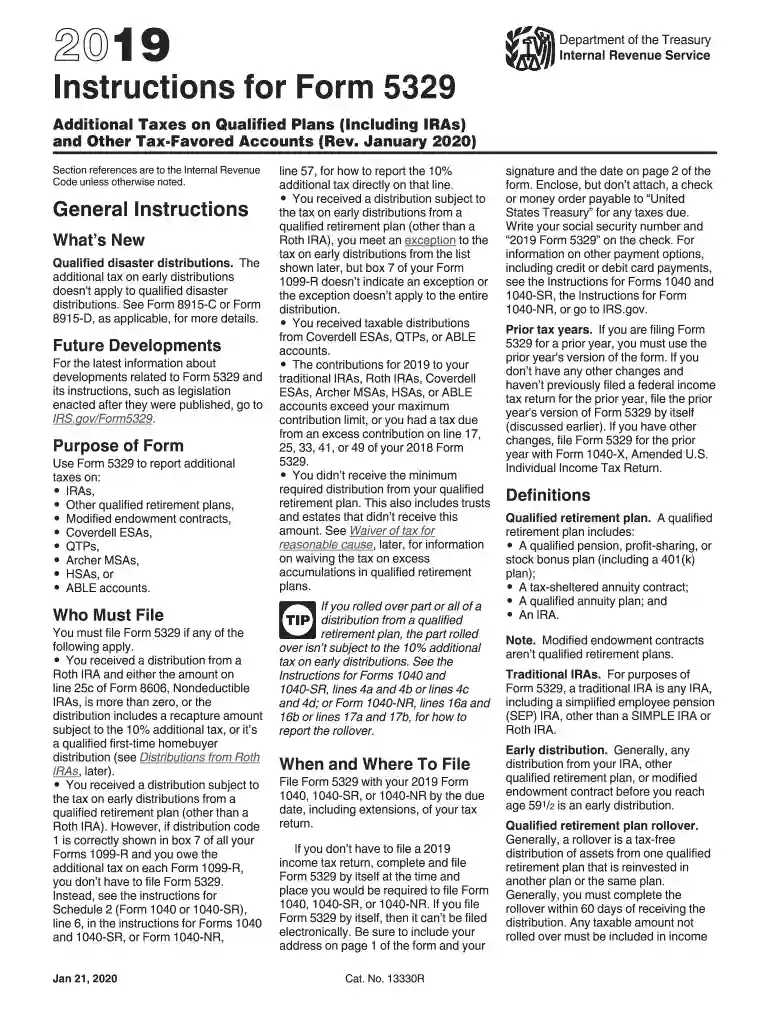
The 2019 Instructions for Form 5329 from the Internal Revenue Service provide detailed guidance on reporting additional taxes on early distributions from tax-favored accounts. These accounts can include IRAs and qualified retirement plans. Understanding the rules and requirements for Form 5329 is crucial, as it informs taxpayers about their obligations regarding additional taxes incurred when certain retirement account distributions are made before the age of 59.5.
To navigate the 2019 Instructions for Form 5329 efficiently, follow these general guidelines:
The IRS guidelines for Form 5329 cover who must file, how to calculate additional taxes, and exceptions that apply. The instructions detail reporting requirements for early distributions and excess contributions. Key updates in 2019 emphasized rules for qualified disaster distributions, which may allow taxpayers to avoid penalties.
Form 5329 should be filed by the tax return due date, typically April 15. Filing late or failing to include the form with your tax return can result in penalties. Extensions are available upon request, providing additional time to file but not to pay taxes owed.
Failure to accurately complete Form 5329 or omitting the form altogether can lead to penalties. These include fines for underreporting income or incorrect calculations of taxes owed. The IRS may also apply additional charges for unpaid taxes when distributions do not meet qualifying exceptions.
Form 5329 is often applicable to various taxpayer scenarios, such as:


Taxpayers can choose to complete Form 5329 digitally or by paper. Many tax preparation software programs, like TurboTax and QuickBooks, offer filing assistance. The digital route can expedite processing, reduce errors, and ensure timely filing, while paper filings require manual mailing and are suitable for those uncomfortable with digital tax submissions.
By understanding these aspects of the 2019 Instructions for Form 5329, taxpayers can ensure compliance with IRS requirements and potentially avoid unnecessary penalties.
We've got more versions of the 2019 Instructions for Form 5329 - Internal Revenue Service form. Select the right 2019 Instructions for Form 5329 - Internal Revenue Service version from the list and start editing it straight away!
At DocHub, your data security is our priority. We follow HIPAA, SOC2, GDPR, and other standards, so you can work on your documents with confidence.
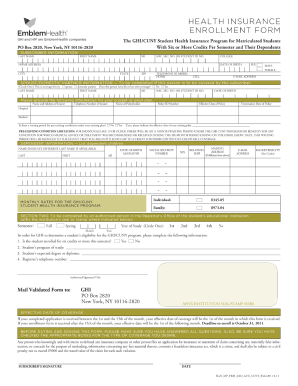


Instructions for Form 5329, Additional Taxes on Qualified Plans (Including IRAs) and Other Tax-Favored Accounts Revision
by S No Cited by 1 Additional tax on IRAs, other qualified retirement plans, and other tax-favored accounts. Attach Form 5329 if required . 7a Household employment taxes. Enter


