01. Edit your general medical records release copy online
Type text, add images, blackout confidential details, add comments, highlights and more.

Type text, add images, blackout confidential details, add comments, highlights and more.

Draw your signature, type it, upload its image, or use your mobile device as a signature pad.

Send it via email, link, or fax. You can also download it, export it or print it out.
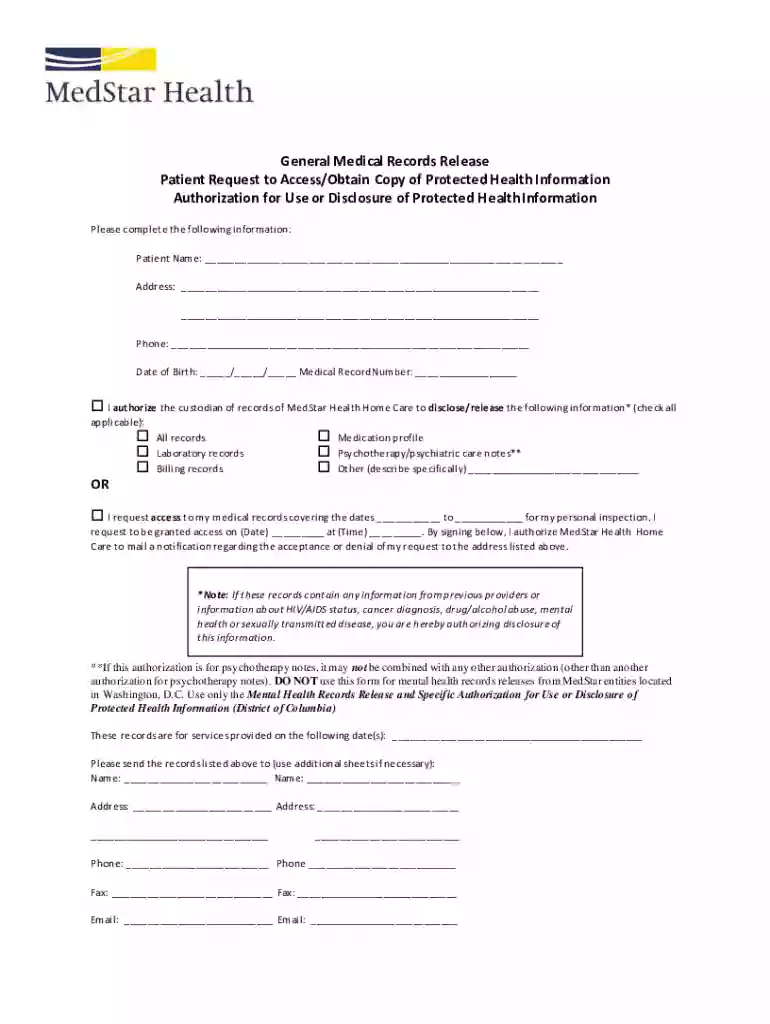
A Medical Records Release Form is a legal document used to authorize the disclosure of an individual's health information. This form plays a crucial role in maintaining the privacy and security of personal health data. By completing this form, a patient gives explicit permission to healthcare providers, such as MedStar Health Home Care, to share specific medical records with a designated individual or organization. The form outlines the scope of the information to be released, ensuring compliance with privacy laws such as the Health Insurance Portability and Accountability Act (HIPAA).
Patient Identification: Start by providing the patient's full name, date of birth, and contact information. This ensures that the correct individual's records are accessed and shared.
Specify Records: Clearly indicate the types of medical records to be released. This could include general health records, treatment plans, medication history, or specific test results.
Purpose of Disclosure: State the reason for the release of records. Common purposes include continuity of care, legal reasons, or transferring medical files to a new provider.
Expiration Date: Provide an expiration date for the authorization. This date determines how long the document is valid and can vary depending on the circumstances.
Sign and Date the Form: The patient or their legal representative must sign and date the form to validate it. In some cases, a witness may be required.
The Medical Records Release Form complies with the ESIGN Act and HIPAA regulations, ensuring electronic signatures are legally binding and the data shared adheres to privacy standards. This legal compliance is critical to safeguarding patient information while allowing necessary disclosures.
Requirements for medical records disclosure can vary by state. Some states have additional privacy protections that dictate stricter guidelines on the release of certain types of information, such as mental health or genetic information. It is essential to be aware of these local regulations to ensure compliance.
Each of these users benefits from the structure and security provided by a properly executed Medical Records Release Form, ensuring accurate and lawful sharing of sensitive health data.


We've got more versions of the general medical records release copy form. Select the right general medical records release copy version from the list and start editing it straight away!
At DocHub, your data security is our priority. We follow HIPAA, SOC2, GDPR, and other standards, so you can work on your documents with confidence.