




01. Edit your alsup online
Type text, add images, blackout confidential details, add comments, highlights and more.

Type text, add images, blackout confidential details, add comments, highlights and more.

Draw your signature, type it, upload its image, or use your mobile device as a signature pad.

Send alsup skills via email, link, or fax. You can also download it, export it or print it out.
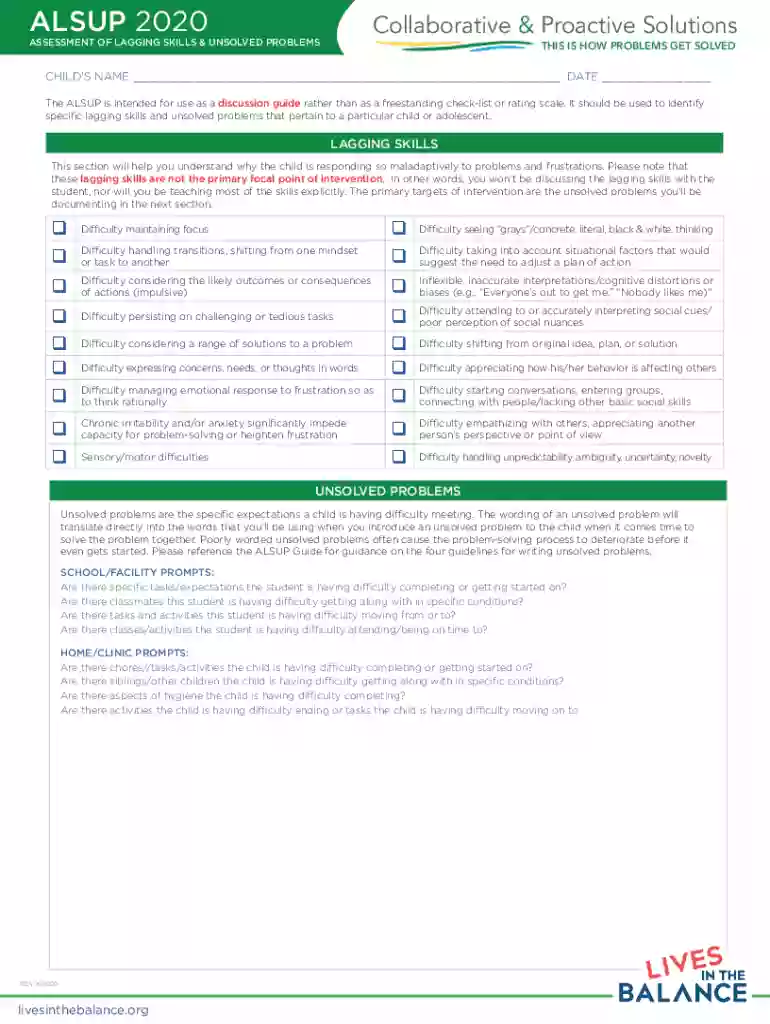
The "Assessment of Lagging Skills and Unsolved Problems" (ALSUP) is a structured instrument designed to help educators, parents, and clinicians identify and understand the cognitive and emotional skills a child or adolescent may be struggling with. Rather than focusing merely on the symptoms of maladaptive behaviors, the ALSUP seeks to uncover the underlying skill deficits that contribute to such behaviors. The form prompts detailed discussions on specific unsolved problems that occur in various settings, such as school, home, and community, allowing for a comprehensive view of the child's difficulties. This approach not only aids in identifying problem areas but also in tailoring intervention strategies that drive more effective problem-solving.
Using the ALSUP involves a collaborative effort among caregivers, educators, and mental health professionals to discuss and analyze a child's challenges. The process starts with listing observed problems and then examining the lagging skills that might be causing these difficulties. Practically, this involves:
Examples include a teacher noticing a student’s difficulty with transitions, prompting a deeper look into skills like adaptability and frustration tolerance.
Completing the ALSUP requires a methodical approach:
For example, if a child has difficulty initiating tasks, participants might pinpoint issues with task management or motivation, resulting in targeted support plans.
The ALSUP form includes several critical components:
These elements are essential to understanding the child's challenges holistically and developing tailored interventions.
Utilizing the ALSUP can significantly enhance understanding and support for children with behavioral and emotional difficulties. Its benefits include:
For instance, a child having frequent altercations with peers might benefit from interventions focused on improving emotional self-regulation and communication skills.
Real-world applications of the ALSUP illustrate its versatility:
These examples show how identifying specific skills leads to actionable plans that are situationally appropriate.
Familiarity with relevant terminology is vital:
These terms form the foundation of discussions during the ALSUP process, enabling precise communication and understanding.
The ALSUP is widely used by:
By focusing on collaborative problem-solving, these users can leverage the ALSUP to foster more supportive environments for children.


Though the ALSUP is a universal tool, adhering to state-specific regulations concerning interventions for children with special needs is crucial. This includes compliance with state education guidelines and mental health regulations. For example:
Considering these rules ensures that the ALSUP is implemented legally and ethically within various jurisdictions.
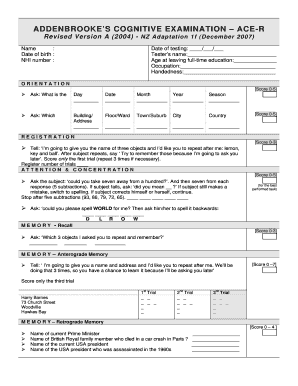
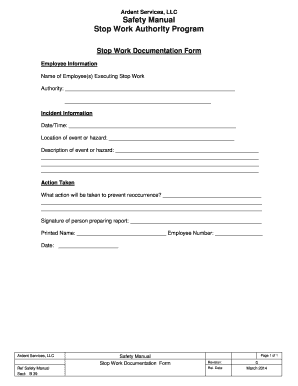
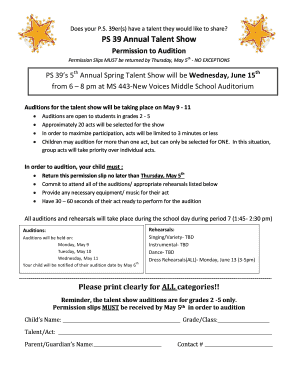
We've got more versions of the alsup form. Select the right alsup version from the list and start editing it straight away!
At DocHub, your data security is our priority. We follow HIPAA, SOC2, GDPR, and other standards, so you can work on your documents with confidence.


The ALSUP (Assessment of Lagging Skills and Unsolved Problems) is a discussion guide created to assist caregivers in identifying a childs lagging skills andRead more
by BB Maddox 2017 Cited by 51 This study focused on the lagging skills component of CPS. According to the transactional and reciprocal CPS framework, a childs lagging skillsRead more


