




01. Edit your ds 86 fillable form online
Type text, add images, blackout confidential details, add comments, highlights and more.

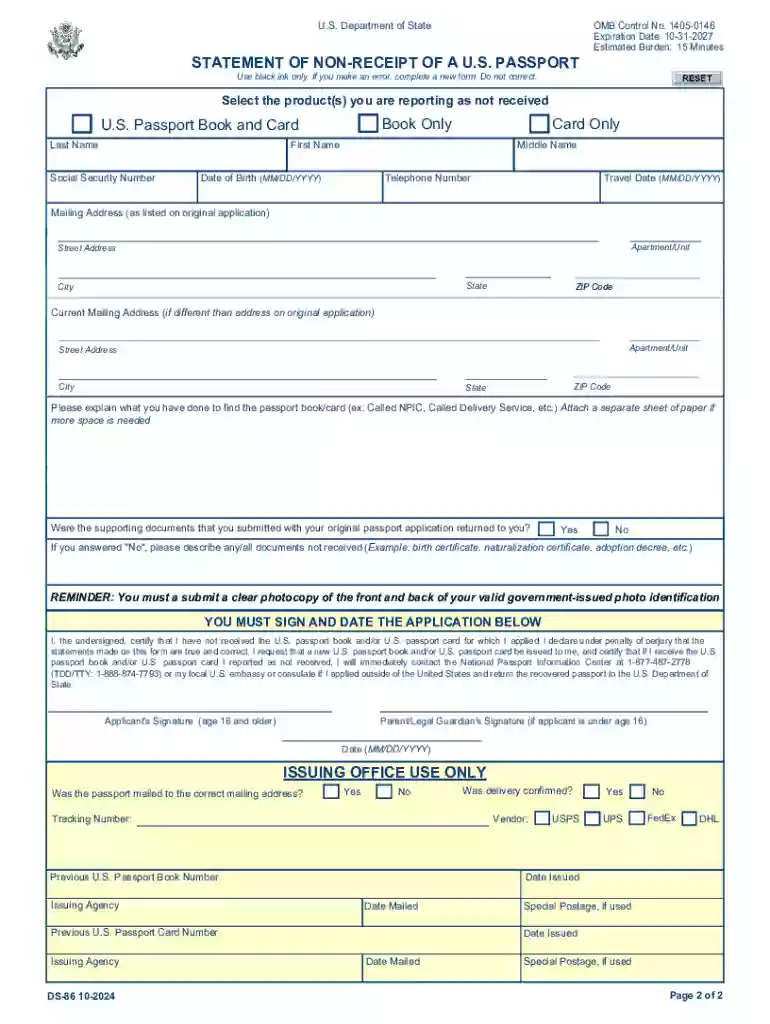
Type text, add images, blackout confidential details, add comments, highlights and more.

Draw your signature, type it, upload its image, or use your mobile device as a signature pad.

Send form ds 86 via email, link, or fax. You can also download it, export it or print it out.
The DS-86 form, officially titled "Statement of Non-Receipt," is a document used by U.S. citizens who have not received their passport within 120 days of its issuance. This form is critical in reporting the non-receipt of a passport, preventing identity theft, and initiating a replacement process.
The primary goal of completing the DS-86 form is to notify the State Department of the non-receipt of a passport. By doing so, individuals safeguard themselves against potential misuse of their original passport, which could lead to severe consequences such as identity theft or unauthorized travel conducted under their name.
Review the Form Instructions: Familiarize yourself with the document's sections and the information required. This ensures that all necessary data is ready before filling out the form.
Gather Identification Documents: Collect relevant identification such as your passport application receipt and personal ID. These documents are crucial as they verify your identity when submitting the DS-86.
Fill Out Personal Information: Complete sections with your full name, date of birth, and the passport details as provided in your application.
Indicate Non-Receipt Reason: Specify whether the passport was never received or if it was lost. Providing accurate information helps in expedient processing.
Check Application Status: Before submitting, use the passport application status checker available on the State Department's website to confirm the current status of your application.
Submit the Form: The DS-86 can be submitted online via a secure portal or mailed directly to the address specified in the instructions, along with copies of supporting documents.
When completing the DS-86, accurate and truthful responses are required. False statements can result in legal consequences, including fines or additional review of future passport applications.
Proof of Identity: A government-issued ID, such as a driver’s license, providing legitimacy to your claims of non-receipt.
Passport Application Details: Original application receipt or a letter from the State Department regarding your passport issuance.
Supporting Documentation: Any correspondence received during the passport application process, especially any indicating potential issues in delivery.
The DS-86 form is primarily used by individuals who have applied for and should have received a passport, yet did not. Scenarios include:
Lost in Mail: The passport was sent but potentially lost within the postal system.
Incorrect Delivery Address: If the passport was mailed to an inaccurate address, updating mailing records is vital.
Suspected Theft: When there is a belief that the passport might have been intercepted, immediate reporting is crucial for protection.
While the DS-86 is a federal form, certain states might have additional filing recommendations or resources to assist residents in securing their documents. It's advisable to check local guidelines for more precise information.
Failing to report a lost or undelivered passport can lead to:
Increased Risk of Identity Theft: Unreported passports can be used illicitly, causing considerable personal and financial distress.
Potential Legal Consequences: Misuse of an undelivered passport that could have been mitigated through timely reporting may result in liability issues.
Mailing Addresses: Ensure the form and accompanying documents are sent to the correct address to avoid delays in processing.
Receipt of Submission: Always send documents via certified mail to obtain a delivery receipt.
The DS-86 form serves as a critical tool for U.S. citizens to remediate the absence of a passport following its issuance. By ensuring careful completion and submission of this form, individuals can protect themselves against identity fraud and uphold the integrity of their travel documentation.
We've got more versions of the ds 86 fillable form form. Select the right ds 86 fillable form version from the list and start editing it straight away!
At DocHub, your data security is our priority. We follow HIPAA, SOC2, GDPR, and other standards, so you can work on your documents with confidence.

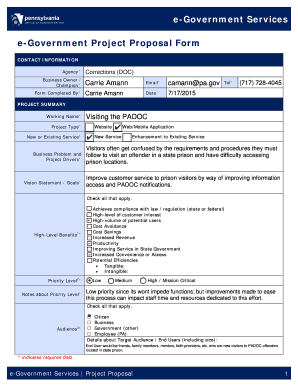
DS-86 10-2024. Page 1 of 2. This form is used when you do not receive your U.S. passport in the mail. You have 120 days from the date that your U.S. passport.Read more
DS-86: Statement You Did Not Receive Your U.S. Passport. Form DS-86 (PDF). Adult Passport Renewals. You can renew your adult passport online if you qualify.Read more


