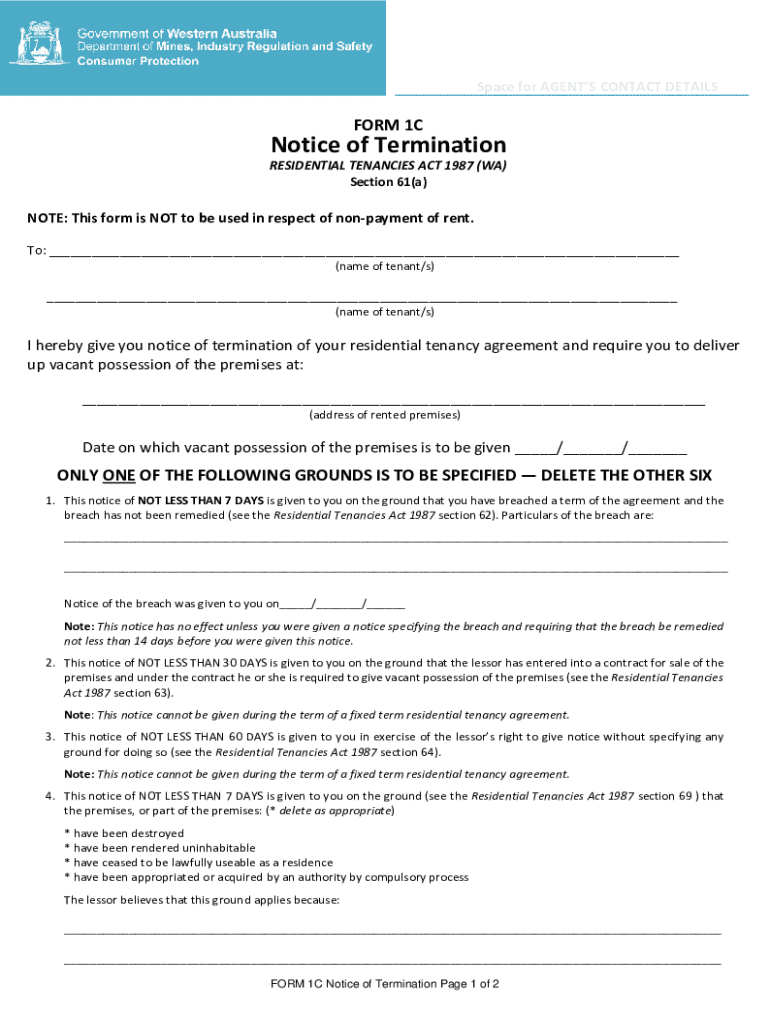







Definition and Meaning of Form 1c Notice of Termination
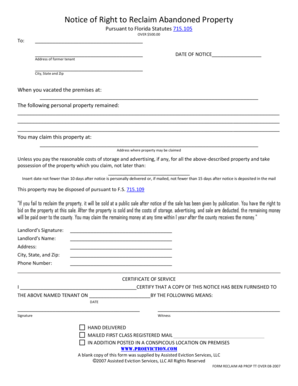
Form 1c Notice of Termination is a document used under the Residential Tenancies Act 1987 (Western Australia), which formally informs tenants about the termination of their residential tenancy agreement. This notice outlines the specific grounds upon which the termination is based, which can include breaches of agreement, the sale of premises, or eligibility for social housing. These grounds are crucial to ensuring the termination process is legally compliant and transparent.
Key Elements of the Form
The key components of Form 1c include:
- Tenant Details: Information such as the tenant's full name and the address of the leased property must be accurately recorded.
- Landlord or Agent Information: The name and contact details of the landlord or managing agent issuing the notice.
- Notice Date: Clearly indicate the date on which the notice is served to the tenant.
- Termination Date: The date by which the tenant is expected to vacate the premises, adhering to the notice period.
- Grounds for Termination: A detailed description of the reason for termination, aligned with the statutory provisions.
- Notice Period: Based on the grounds for termination, the document should specify the legal notice period that the tenant must be given.
How to Use the Form 1c Notice of Termination - Fill Online, Printable
Utilizing the online filling and printing option for Form 1c offers convenience and efficiency. Here’s a guide on effectively using this form:
- Access the Form: Visit a platform like DocHub for a downloadable and fillable version of Form 1c.
- Fill Online: Use the editable fields to enter necessary details directly onto the form. Digital tools often allow you to save progress and return later.
- Verify Information: Ensure all entered data is accurate. Cross-check tenant and landlord details, dates, and legal grounds for termination before submitting the form.
- Print the Document: Once completed and verified, print the document for physical delivery to the tenant, adhering to local legal requirements.
Why Use Form 1c Notice of Termination Online
Using the online version of Form 1c provides several advantages:
- Accessibility: Access the form from various devices, including mobile phones and desktops.
- Time-Efficient: Quickly fill out, save, and print the form without manual paper processes.
- Error Reduction: Digital platforms reduce errors by guiding the input process with digital validation checks.
Steps to Complete Form 1c Notice of Termination - Fill Online, Printable
When filling out Form 1c Notice of Termination online, follow these essential steps:
- Download or Access the Form: Navigate to a document management platform, such as DocHub, to either download or directly access the online form.
- Enter Tenant and Property Information: Include the tenant's full name, the leased property address, and contact details.
- Provide Landlord Details: Add information about the landlord or authorized agent issuing the notice.
- State the Grounds for Termination: Clearly describe why the tenancy agreement is being terminated, following regulatory terms.
- Set the Important Dates: Fill in the notice and termination dates, ensuring compliance with statutory notice periods.
- Review and Validate: Double-check the form for accuracy and completeness before finalizing.
- Save and Print: Save the completed form digitally for your records, then print a physical copy for the tenant.
Importance of Form 1c Notice of Termination
Understanding the importance of Form 1c Notice of Termination is crucial because:
- Legal Compliance: Ensures that landlords comply with the Residential Tenancies Act regulations, avoiding potential legal complications.
- Tenant Rights Protection: Provides tenants with clear information about their situation and the steps they need to take.
- Clarity in Communication: Establishes a transparent process where both parties understand their rights and obligations, reducing disputes.
When to Use the Form
This form is applicable:
- Upon Sale of the Property: When tenancy needs to be terminated due to property sale.
- Breach of Agreement: If a tenant breaches the lease terms, such as non-payment of rent.
- Eligibility Changes: Changes in tenant eligibility for social housing can trigger the need for this form.
State-Specific Rules for Form 1c Notice of Termination
While Form 1c is specific to Western Australia, the application and enforcement can vary slightly between Australian states based on local regulations:
- Notice Period Length: The required notice period for termination can differ. In Western Australia, it depends on the grounds for termination but should be specified within the form.
- Document Delivery Methods: Acceptable methods for delivering the notice may vary. Typically, registered post or in-person delivery are common.
Western Australia Specifics
- Breach of Agreement: Requires a more immediate notice period compared to terminations due to property sales.
- Form Variations: Ensure you use the correct form variant for Western Australia, as jurisdictional differences apply.
Legal Use of Form 1c Notice of Termination
Legal use of Form 1c is guided by adherence to:
- Statutory Requirements: All grounds for termination and notice periods must comply with the Residential Tenancies Act 1987.
- Proper Issuance: Only landlords or authorized agents can issue this notice, and they must adhere to proper notification procedures.
Ensuring Compliance
- Regular Updates: Keep informed about changes in legislation to ensure ongoing compliance.
- Legal Advice: Consider consulting a property lawyer to validate your use of the form and process.
Examples of Using the Form 1c Notice of Termination
Practical examples help illustrate the application of Form 1c:
- Example 1: A tenant fails to pay rent for three consecutive months. The landlord uses Form 1c to issue a notice based on this breach of agreement.
- Example 2: A landlord decides to sell the rental property. Form 1c is used to legally end the tenancy, providing the tenant with the requisite notice period.
- Example 3: The tenant is reassessed and found ineligible for social housing. The landlord issues Form 1c to manage the change in housing qualifications.
These scenarios highlight the utility of Form 1c in a range of real-world tenancy termination situations, ensuring both parties proceed within the legal framework.