
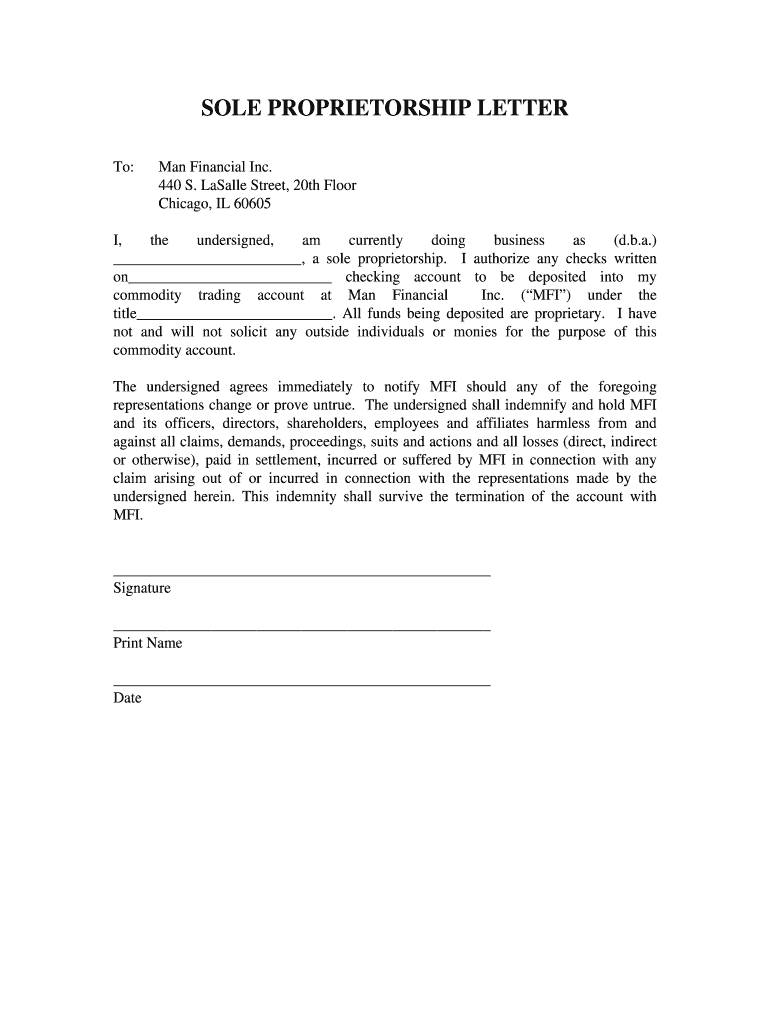







Definition & Meaning
A "letter on sole proprietorship to unlimited liability" typically refers to a document that outlines the transition of a business entity from a sole proprietorship to a form that implies unlimited liability, such as a sole trader or some partnership structures. This transition affects how the business owner is personally liable for the debts and obligations of the business. In essence, the letter serves as a notification or agreement to recognize and accept the implications of this shift in liability.
Steps to Complete the Letter on Sole Proprietorship to Unlimited Liability
-
Gather Required Information: Include details about your current business, such as its name, address, and your name as the sole proprietor.
-
Formal Statement of Intent: Clearly state the intent to transition the business structure and acknowledge the implications of unlimited liability.
-
Include an Indemnity Clause: Protect the receiving party from claims related to the information provided in the letter.
-
Signatures and Notarization: Ensure the document is signed and, if necessary, notarized to authenticate the transition legally.
-
Notification of Changes to Other Parties: Mention that other stakeholders (e.g., clients, banks) will be duly informed about the change.
Key Elements of the Letter on Sole Proprietorship to Unlimited Liability
-
Introduction of the Current Business Structure: Clearly state that the business is currently registered as a sole proprietorship.
-
Acknowledgement of Unlimited Liability: Accept and highlight that, under the new structure, personal assets are at risk to cover business debts.
-
Authorization for Transition: Grant permission to third parties, such as financial institutions, to take necessary actions concerning the change.
-
Details on Change Implementation: Provide a timeline and plan for how and when the transition will be completed.
-
Concise Legal Terminology: Use clear terms to ensure all parties understand the implications without needing further legal consultation.
Legal Use of the Letter on Sole Proprietorship to Unlimited Liability
This letter acts as both a legal notice and a binding document. It should be drafted to comply with relevant statutes and regulations, serving as a formal record that an individual or business accepts the increased liability. This document is particularly crucial in states that require formal acknowledgment when changing business structures.
Who Typically Uses the Letter on Sole Proprietorship to Unlimited Liability
-
Sole Proprietors contemplating restructuring their business to access new market opportunities or financial arrangements.
-
Financial Institutions or trade partners who need to be aware of and consent to changes in liability terms.
-
Legal Advisors drafting or reviewing business documents for compliance and risk assessment purposes.


Important Terms Related to Letter on Sole Proprietorship to Unlimited Liability
-
Unlimited Liability: Personal responsibility for business debts beyond invested capital.
-
Indemnity Clause: A provision that secures the recipient against potential losses due to misrepresented facts.
-
Notarization: Authentication of the document to enhance its legal standing.
-
Transition: The process of changing a business's operational or legal status.
Examples of Using the Letter on Sole Proprietorship to Unlimited Liability
-
New Bank Arrangements: When altering bank accounts or credit agreements to reflect the new liability status.
-
Client Notifications: Informing key clients of changes that may impact contractual obligations.
-
Vendor and Supplier Agreements: Restructuring terms to acknowledge the owner's increased personal liability.
State-Specific Rules for the Letter on Sole Proprietorship to Unlimited Liability
Each state may have unique requirements regarding documentation and filing processes. Some states might require filing with a registrar or that the letter includes specific language to be legally recognized. It's crucial to consult state-specific resources or legal counsel to ensure compliance.
Penalties for Non-Compliance
Ignoring the formalities in documenting changes to business liability could result in:
-
Legal disputes over personal vs. business asset claims.
-
Inaccurate financial reporting with potential tax implications.
-
Contractual breaches if partners or creditors are not properly informed.
Adhering to legal requirements and maintaining up-to-date records is critical to safeguarding against such risks.




