Definition & Meaning
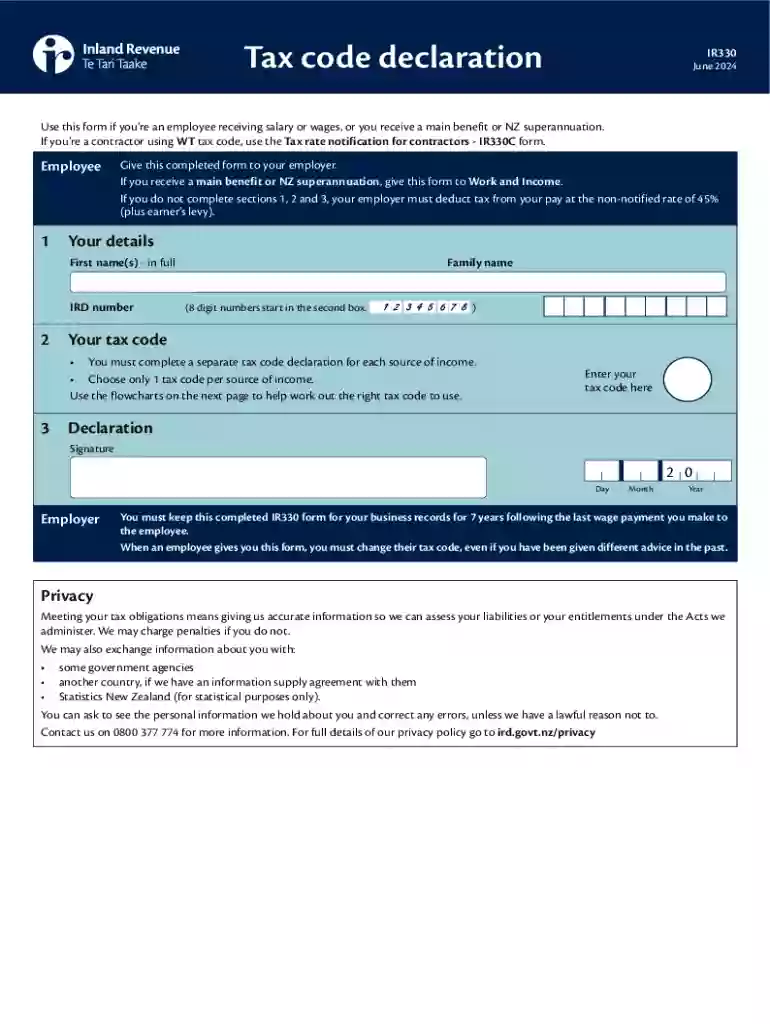
A tax code declaration is a crucial document used to inform the appropriate authorities, such as the IRS, about an individual's or entity's tax responsibilities based on their income sources. It serves as a formal statement of one's applicable tax code, which dictates the rate at which income should be taxed. This document helps ensure accurate tax deductions and provides guidelines for individuals on determining their correct tax code based on their unique financial circumstances.
Purpose of the Tax Code Declaration
- Accurate Tax Deductions: Ensures that taxpayers are subjected to the correct tax rate and minimizes the risk of overpayment.
- Guidance on Tax Codes: Assists individuals in selecting the appropriate tax code according to their income type, such as salary, wages, or benefits.
- Compliance: Facilitates adherence to tax regulations by clearly outlining tax obligations.
How to Use the Tax Code Declaration
Understanding how to utilize the tax code declaration is vital for proper compliance and tax planning. Here is a step-by-step guide to help you effectively use this form:
- Identify Income Sources: Start by listing all your income sources, like wages, dividends, or rental income.
- Choose the Correct Tax Code: Based on your income categories, select the appropriate tax code that aligns with IRS guidelines.
- Complete the Declaration Form: Accurately fill out all requested information, ensuring all details match your records to avoid discrepancies.
- Review and Confirm: Double-check your entries to ensure the accuracy of the declared information before submission.
Practical Tips for Usage
- Keep Copies: Always maintain a copy of the completed tax code declaration for personal records.
- Consult a Tax Professional: If uncertain, seeking advice from a tax consultant can help make informed decisions about the correct tax codes to use.
Steps to Complete the Tax Code Declaration
Completing a tax code declaration accurately is essential to avoid potential issues with tax compliance. Follow these steps to navigate this process effectively:
- Gather Necessary Information: Ensure you have all personal and financial details ready, including social security numbers and tax identification numbers.
- Fill Personal Details: Include basic information such as your name, address, and contact details on the form.
- Declare Income Types: Specify all sources of income and their corresponding types clearly.
- Select Tax Codes: Choose the correct tax code for each type of income based on IRS criteria.
- Provide Signatures: Sign the declaration to confirm that all information provided is true and accurate.
- Submit the Form: Follow the prescribed method for submission, such as online or via mail, as required by the IRS or relevant authority.
Common Mistakes to Avoid
- Incomplete Information: Ensure no sections are left blank unless they do not apply to your situation.
- Incorrect Tax Codes: Verify that selected codes align with IRS guidelines to avoid penalties or overpayment.
Key Elements of the Tax Code Declaration
The tax code declaration form comprises several key components that are critical for proper completion. These elements include:
- Personal Information: Name, social security number, and address.
- Income Source Details: Breakdown of all income streams and associated codes.
- Correct Tax Codes: Accurate selection of tax codes relative to income types, ensuring compliance with IRS standards.
- Signatures: Signatory validation is necessary for form legitimacy.
Detailed Breakdown of Components
- Income Source Details: A precise description of each income type to ensure appropriate classification and taxation.
- Tax Code Selection: Clear guidance on selecting codes aligning with tax obligations relevant to tax brackets.
Legal Use of the Tax Code Declaration
Comprehending the legal use of a tax code declaration is fundamental in maintaining compliance with tax laws and regulations. The legal purposes of this declaration include:
- Ensuring Compliance: Enables individuals and businesses to meet tax liabilities accurately.
- Avoidance of Penalties: Proper declarations prevent penalties stemming from incorrect tax filings.
Legal Implications
- Record-Keeping Requirements: Maintain copies for audit trails, as they provide legal proof of compliance in financial reviews or disputes.
- Privacy Rights: Declaration forms must uphold confidentiality standards to protect sensitive information in line with data protection laws.
Important Terms Related to Tax Code Declaration
Familiarizing oneself with terminology associated with tax code declarations is invaluable for understanding their application and importance. Key terms include:
- Tax Bracket: The rate of tax applicable to the declared income level.
- Gross Income: Total earnings before deductions, critical in determining the applicable tax code.
- Withholding Tax: Tax held by the employer on behalf of the employee, aligned with the employee's tax code declaration.
Glossary of Terms
- Deductions: Reductions from gross income for specific eligible expenses.
- Exemptions: Specific conditions that might relieve liability from certain tax obligations.
IRS Guidelines
The IRS guidelines serve as a blueprint for completing a tax code declaration accurately. These guidelines help individuals understand and execute their tax obligations:
- Code Selection Guides: Detailed instructions on choosing the correct codes based on income type and marital status.
- Filing Instructions: Step-by-step directions for completing and submitting the form.
IRS Resources
- Publications and Notices: Official IRS documents that provide comprehensive guidance on tax codes and forms.
- Helpline and Support: IRS offers direct assistance for queries related to tax code declarations and filing procedures.
Filing Deadlines / Important Dates
Awareness of critical dates related to tax code declarations ensures adherence to IRS timelines, preventing late submissions and associated penalties:
Key Filing Deadlines
- Annual Tax Season: Typically falling on April 15, unless specified otherwise by IRS notices or exceptional circumstances.
- Amendments and Extensions: Deadlines for submitting amended forms or requesting extensions, usually involving a shorter window.
Consequences of Missing Deadlines
- Interest and Penalties: Potential financial charges incurred from delayed submissions.
- Delayed Refunds/Credits: Affecting financial liquidity due to postponed resolutions of tax returns.