




01. Edit your free return to work form online
Type text, add images, blackout confidential details, add comments, highlights and more.

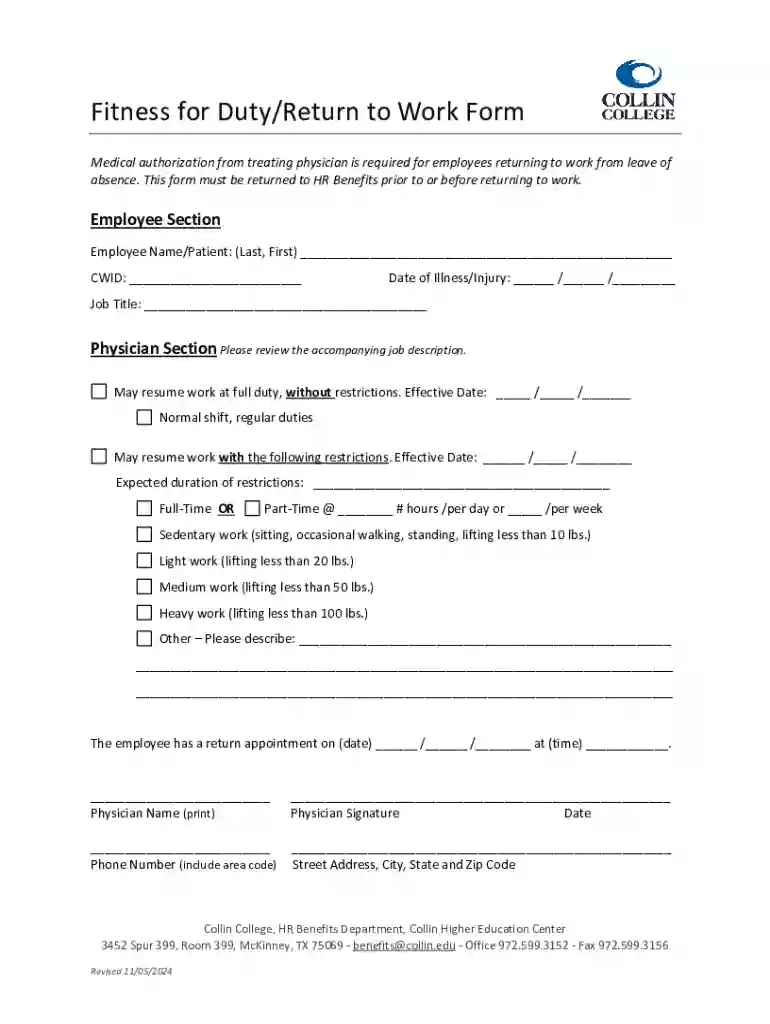
Type text, add images, blackout confidential details, add comments, highlights and more.

Draw your signature, type it, upload its image, or use your mobile device as a signature pad.

Send it via email, link, or fax. You can also download it, export it or print it out.
A return to work doctor's note is a crucial document required by employers to verify that an employee is fit to resume work after a leave of absence, typically due to health reasons. This note serves as medical authorization from a licensed physician, confirming that the employee has recuperated sufficiently to perform their job duties without risking their health or the safety of others.
This detailed structure ensures that the document fulfills both medical and organizational requirements, providing clarity and supporting a smooth transition back to the workplace.
Obtaining a return to work doctor's note involves a straightforward process that emphasizes both medical assessment and employer requirements.
Return to work doctor's notes can arise in several contexts, each requiring specific documentation based on the circumstances of the employee's absence.
Each situation necessitates particular attention to detail in the note to support the employee's transition and address any remaining workplace concerns.
Understanding the legal implications of return to work doctor's notes is essential for both employees and employers to ensure compliance with applicable laws and regulations.
Employers should familiarize themselves with relevant laws to protect employee rights and maintain regulatory compliance when handling these documents.
Providing a template or example of a return to work doctor's note can clarify what both employees and employers should expect in terms of format and content.
[Physician's Letterhead] [Date]
To [Employer's Name/Company], This letter is to confirm that [Employee's Name] has been under my care from [start date] to [end date]. After a thorough examination, I confirm that they are fit to return to work as of [return date].
Please feel free to contact me at [Physician's Contact Information] if you have any further questions.
Sincerely,
[Physician's Name and Signature]
[Medical Provider's Information]
Using this structured approach ensures that the note provides clear, essential information to facilitate the employee's return to work.
Employers increasingly integrate various features into the handling of return to work doctor's notes to streamline processes and enhance compliance.
Incorporating these features promotes a professional approach to managing return to work doctor's notes while safeguarding the interests of both employees and employer.
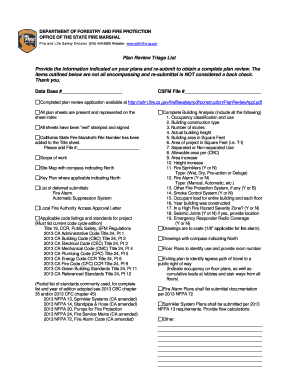
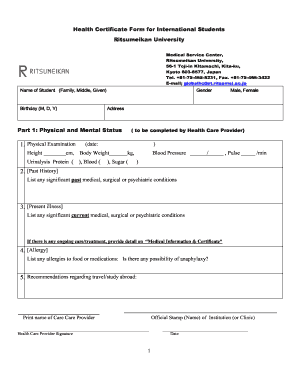
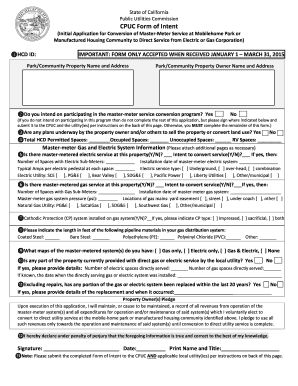
We've got more versions of the free return to work form form. Select the right free return to work form version from the list and start editing it straight away!
At DocHub, your data security is our priority. We follow HIPAA, SOC2, GDPR, and other standards, so you can work on your documents with confidence.



by K Stone 2013 17 Policies that look to an employees capacity to return to work rather than inquiring into the nature or general diagnosis of an employees illness avoid theRead more
by J Story 2021 Cited by 1 For example, a certification may explain an illness and state that this employee should not be terminated or, commonly in the era of COVID-19, this employeeRead more
Mar 22, 2021 You may be asked to provide evidence that you received the vaccine, in the form of a medical practitioners note. Once you receive the vaccine,Read more


