Definition and Purpose of 2024 Form CT-1040ES
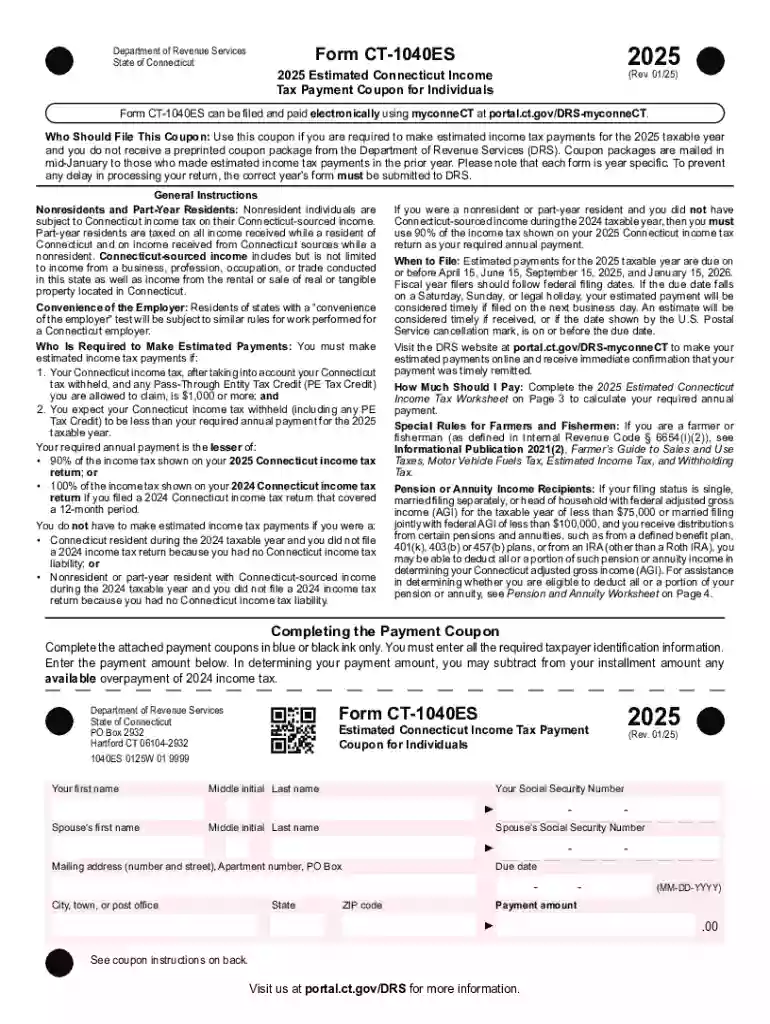
The 2024 Form CT-1040ES is a critical document for Connecticut residents required to make estimated income tax payments. This form serves as an estimated tax payment coupon, helping taxpayers accurately report and pay their projected income tax liabilities over the year. It is typically used by individuals who do not have taxes withheld directly from income sources, such as self-employed professionals, retirees with non-wage income, or part-year residents earning income in Connecticut.
Key Elements of the Form
- Estimated Tax Payments: Allows taxpayers to report and pay three equal installments of estimated taxes.
- Income Details: Requires an accurate estimate of annual income and applicable deductions.
- Payment Vouchers: Provides detachable coupons for each payment period.
- Personal Information: Includes fields for taxpayer's name, address, and Social Security Number.
Steps to Complete the 2024 Form CT-1040ES
- Estimate Your Income: Calculate your total anticipated income for 2024, including wages, self-employment income, and any additional sources.
- Determine Deductions and Credits: Identify deductions and credits that can reduce your taxable income, such as educational expenses or medical deductions.
- Calculate Tax Liability: Use current tax rates to compute your estimated tax liability.
- Complete Payment Coupons: Fill out each of the detachable payment vouchers included in the form with calculated payment amounts and due dates.
- Recordkeeping: Maintain copies of completed forms and payment receipts for your records.
Important Deadlines and Payment Methods
- Due Dates: Estimated payment deadlines are generally set quarterly, aligning with federal estimated tax payment schedules.
- Online and Offline Submission: Payments can be made online using the Connecticut Department of Revenue Services portal or by mailing the vouchers with checks.
Who Uses the 2024 Form CT-1040ES
Use Scenarios
- Business Owners: Use to manage personal tax liabilities separate from business tax obligations.
- Freelancers: Ensure compliance with state tax laws by prepaying taxes on freelance income.
Legal Considerations and Compliance
IRS and State Guidelines
- Adherence to IRS and state-specific guidelines is crucial for accurate filing.
- Incorrect submission can lead to penalties, so understanding these requirements is vital.
Penalties for Non-Compliance
- Underpayment Penalties: Charges may apply for late or insufficient estimated payments.
- Strategies to avoid penalties include precise calculations and timely submissions.
Form Variants and Alternatives
Related and Older Versions
- Taxpayers may encounter prior versions of Form CT-1040ES; ensure use of the 2024 version for current year submissions.
Variants
- Digital Forms: Available for download and completion online.
- Pre-Printed Forms: Traditionally mailed forms that could be a preference for some users.
Special Situations
- Farmers and Fishermen: Special provisions or deadlines may apply.
- Taxpayers With Significant Tax Credits: May adjust estimates to reflect anticipated credits.
State-Specific Regulations
- Connecticut-Specific Rules: Variations exist in tax treatment for non-residents and those with multiple properties or income sources in-state.
Software Compatibility and Digital Options
Use of Technology
- Compatible with popular tax software like TurboTax or QuickBooks for seamless integration.
- Online platforms like DocHub automate filling, managing, and submitting forms.
Benefits
- Reduces errors through digital calculations.
- Offers secure methods for storing and sharing your tax documents.