




01. Edit your form online
Type text, add images, blackout confidential details, add comments, highlights and more.

Type text, add images, blackout confidential details, add comments, highlights and more.

Draw your signature, type it, upload its image, or use your mobile device as a signature pad.

Send it via email, link, or fax. You can also download it, export it or print it out.
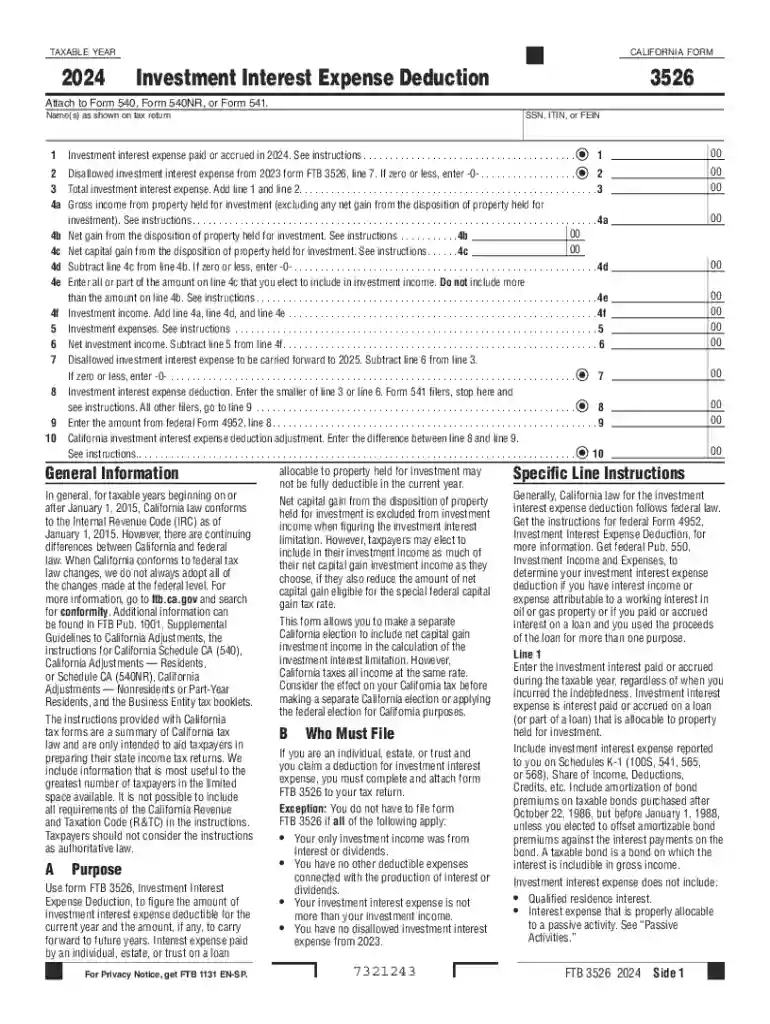
Form 540, the California Resident Income Tax Return, is a mandatory document for California residents to report their income and calculate taxes owed to the state. It collects detailed personal and financial information to determine the individual's tax liability or refund for the year 2024. This form ensures compliance with California's tax regulations, differentiating itself from federal tax forms by catering specifically to state tax codes and allowances.
Understanding key terminology is crucial for accurately completing Form 540. Some of the primary terms include:
To utilize Form 540 effectively, follow these steps:
Completing Form 540 involves detailed steps:
Meeting deadlines is essential to avoid penalties:
Filing Deadline: April 15, 2024, is the standard deadline for submitting Form 540 for most taxpayers.
Extension Requests: An automatic six-month extension may be granted if requested by April 15.
Penalty for Late Filing: Failing to file by the deadline can result in additional fees and interest on any taxes owed.
You can acquire Form 540 through several means:
Online: Download from the California Franchise Tax Board (FTB) website.
Mail: Request a paper copy by calling the FTB customer service.
In-Person: Obtain physical forms at designated tax assistance centers throughout California.
Software Integration: Many tax preparation software programs, like TurboTax and QuickBooks, also incorporate Form 540, streamlining the process for digital filers.
Determining eligibility is vital for form selection:
California Residency: Must be established as a resident for the entire tax year.
Income Thresholds: Filing is generally required for those with incomes above a specified state threshold, which varies based on filing status and dependency claims.
Special Conditions: Part-year and non-residents must use Form 540NR instead, tailored for those with mixed residency status.


Multiple submission options are available to accommodate different preferences:
E-File: The most efficient method, allowing for faster processing and potential electronic refunds.
Mail: Traditional submission for those preferring paper filing, involving sending completed forms to the FTB mailing address.
In-Person: Available at certain FTB regional offices, providing an opportunity for personal assistance but subject to office hours and locations.
Digital vs. Paper: Electronic filing is recommended for faster processing and verification, while paper-based submissions may experience delays.
We've got more versions of the 2024 Form 540 California Resident Income Tax Return form. Select the right 2024 Form 540 California Resident Income Tax Return version from the list and start editing it straight away!
At DocHub, your data security is our priority. We follow HIPAA, SOC2, GDPR, and other standards, so you can work on your documents with confidence.

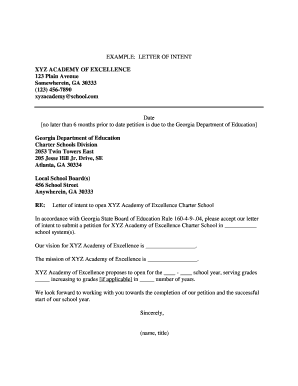




Mar 24, 2026 Form 540 NR. California Nonresident or Part-Year Resident Income Tax Return. Use Form 540 NR to report income as a California part-year residentRead more
Year Resident Income Tax Return ・ 2024 Form 540 Resident Tax Return Forms and Instructions ・ contains useful information regarding treaties and filing status.


