







Definition and Purpose of the Form IT-6-SNY
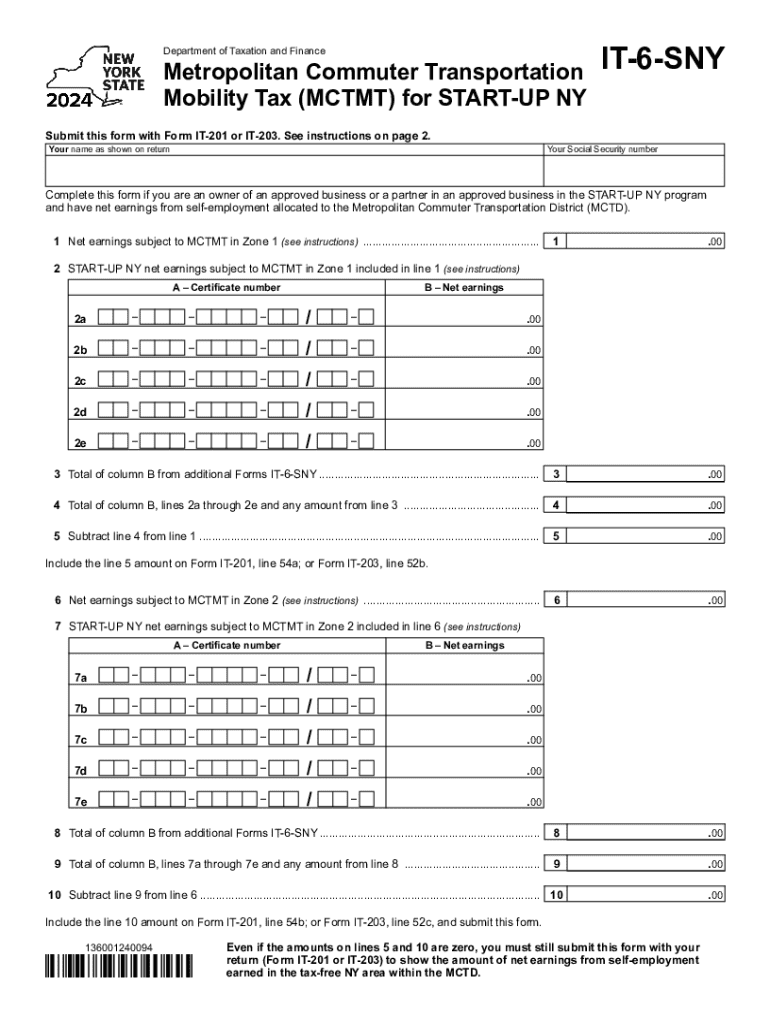
The Form IT-6-SNY Metropolitan Commuter Transportation Mobility Tax (MCTMT) for START-UP NY Tax Year 202 is a specialized tax document used to report Metro Commuter Transportation Mobility Tax obligations for participants in the START-UP NY program. It is essential for self-employed business owners or partners to declare their net earnings related to the Metropolitan Commuter Transportation District (MCTD). The form ensures compliance with state tax laws and outlines exemptions for approved businesses within designated zones pursuant to START-UP NY guidelines.
Steps to Complete the Form IT-6-SNY
-
Gather Required Documents:
- Obtain Form IT-201 or IT-203 if applicable.
- Compile records of net earnings from business activities within MCTD.
-
Fill Out Personal and Business Information:
- Enter personal details, including name and taxpayer identification number.
- Provide business information relevant to START-UP NY participation.
-
Calculate Net Earnings:
- Deduct eligible expenses and exemptions from total income.
- Ensure exemptions for START-UP NY-designated zone activities are properly considered.
-
Complete Exemption and Earnings Sections:
- Detail amounts exempt under START-UP NY qualifications.
- Specify taxable net earnings that fall under MCTMT.
-
Review and Submit:
- Cross-check for accuracy.
- Ensure form alignment with main tax return documents.
-
Submit via Preferred Method:
- Choose submission method: online, mail, or in-person as dictated by state requirements.
Legal Implications and Compliance for Form IT-6-SNY
Usage of Form IT-6-SNY complies with both state and federal tax obligations for businesses within New York. Participants in the START-UP NY program must use this form to accurately report MCTMT-related earnings, ensuring adherence to legal and financial responsibilities. Non-compliance, inaccuracies, or late submissions may result in penalties and interest charges. Thus, understanding specific legal regulations surrounding this form is crucial for maintaining good standing with tax authorities.
Instructions for Obtaining Form IT-6-SNY
To obtain Form IT-6-SNY, individuals can:
- Visit the official New York State Department of Taxation and Finance website for download.
- Contact a local tax office for physical copies.
- Use authorized tax preparation software which includes MCTMT forms.
Filing Deadlines and Important Dates
- Annual Deadline: Aligns with New York State tax return due date, typically by April 15.
- Extensions: Possible through formal request procedures, matching federal taxation extension requests.
- Quarterly Estimates: If estimated payments are required, remit by relevant due dates throughout the year.
Who Typically Uses Form IT-6-SNY
Primarily, the form is utilized by self-employed individuals, sole proprietors, and partnerships within the START-UP NY initiative. These entities often operate within designated zones offering tax incentives, intending to fuel regional economic growth while adhering to specified fiscal obligations.
Key Elements of Form IT-6-SNY
Important sections to focus on:
- Business Identification: Identifying information crucial for validation.
- Exemption Clauses: Details on START-UP NY qualifications and exemptions.
- Earnings Calculation: Guidelines for accruing and reporting qualifying income.
- Signature: Legal affirmation by taxpayer or authorized representative.
Software Compatibility for Form IT-6-SNY
The form generally integrates seamlessly with major tax preparation software such as TurboTax and QuickBooks. This interoperability assists stakeholders in managing their tax documents efficiently—streamlining data entry, reducing manual errors, and expediting the filing process.
Penalties for Non-Compliance
Failure to accurately complete or timely file the Form IT-6-SNY may result in several consequences:
- Late Filing Penalties: Financial penalties increase with delay.
- Interest on Underpayments: Imposed on any outstanding tax liabilities.
- Ineligibility for START-UP NY Benefits: Breach of filing compliance could potentially disqualify businesses from program benefits.
Being informed about these potential repercussions greatly emphasizes the meticulous processing of this tax form within deadlines and specified rules.




