






Definition & Meaning
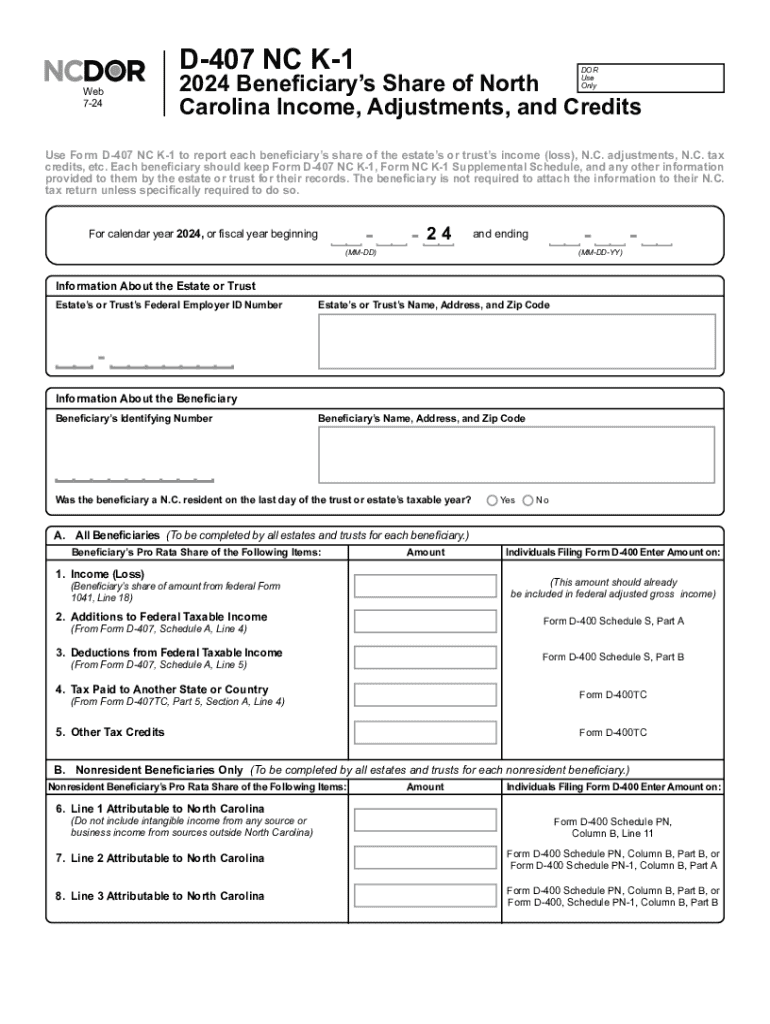
The NC D-407 form is utilized primarily for reporting the pro rata share of each beneficiary’s income, adjustments, and tax credits derived from an estate or trust. This form is significant for complying with the North Carolina state tax code and ensuring accurate accounting of financial obligations and entitlements. It serves as a crucial document in both the administration of an estate and the distribution of its assets.
Key Elements of the NC D-407 Form
- Beneficiary Information: Personal details of beneficiaries receiving income distributions.
- Estate/Trust Information: Includes identification numbers and basic data.
- Financial Distributions: Outlines various types of income such as capital gains, dividends, and interest.
- Adjustments and Credits: Details any tax credits or adjustments applicable to the distribution.
How to Use the NC D-407 Form
Using the NC D-407 form requires an understanding of its sections and purposes. Estate administrators or trustees must compile detailed financial data related to distributions.
- Gather the Necessary Information: Begin by collecting the relevant financial documents and beneficiary data.
- Complete Each Section Carefully: Fill in each area with accuracy, ensuring data entries reflect the correct computations from the estate or trust's financial records.
- Review for Accuracy: Double-check all entries for accuracy to ensure compliance with state tax codes.
Steps to Complete the NC D-407 Form
Completing the form entails several specific steps to ensure accurate reporting.
- Fill Out Beneficiary Information: Enter names, addresses, and Social Security numbers.
- Enter Estate or Trust Details: Include the name, identification number, and tax year.
- Report Income Types: Specify each beneficiary's share of income, accurately indicating types like interest or dividends.
- Include Adjustments and Credits: Document any applicable adjustments or tax credits.
- Verification and Signatures: Confirm all entries, and ensure the trustee or estate representative signs the form accordingly.
Who Typically Uses the NC D-407 Form
The NC D-407 form is predominantly used by trustees and estate administrators within North Carolina. It is particularly relevant for:
- Trustees managing estate assets that generate income subject to tax.
- Estate Administrators responsible for distributing income to beneficiaries.
- Beneficiaries who need to ensure their income is correctly reported for personal tax obligations.


Important Terms Related to NC D-407 Form
Understanding certain terms is essential when dealing with the form:
- Fiduciary: An individual with the legal responsibility to manage assets on another's behalf, such as a trustee.
- Pro Rata Share: The proportionate distribution of income or expenses among beneficiaries.
- Adjustments: Modifications made to gross income to achieve taxable income figures.
Legal Use of the NC D-407 Form
The NC D-407 form plays a key role in legal compliance for estates and trusts. It ensures that:
- Income earned by estates or trusts is taxed appropriately.
- Beneficiary distributions are correctly calculated and legally documented.
- Compliance with North Carolina state tax laws and regulations is maintained.
Filing Deadlines / Important Dates
Timeliness is critical when filing the NC D-407 form to avoid penalties:
- Due Date: This form must be filed along with the state tax return for the applicable calendar year, typically on April 15.
- Extensions: If a federal extension is granted, the same applies, allowing extra time to file the state tax return.
Required Documents
To complete the NC D-407 form accurately, a variety of supporting documents are required:
- Financial Statements detailing the estate or trust's income and distributions.
- Tax Forms such as federal K-1s, to ensure federal and state filings are aligned.
- Supporting Schedules outlining income types and allocation methods.
Understanding and using the NC D-407 form involves navigating its complexities with precision and adhering to legal requirements. Careful attention to detail and adherence to guidelines ensure beneficiaries and fiduciaries meet all tax obligations accurately.