







Definition and Purpose of Sales Tax on Telecommunications
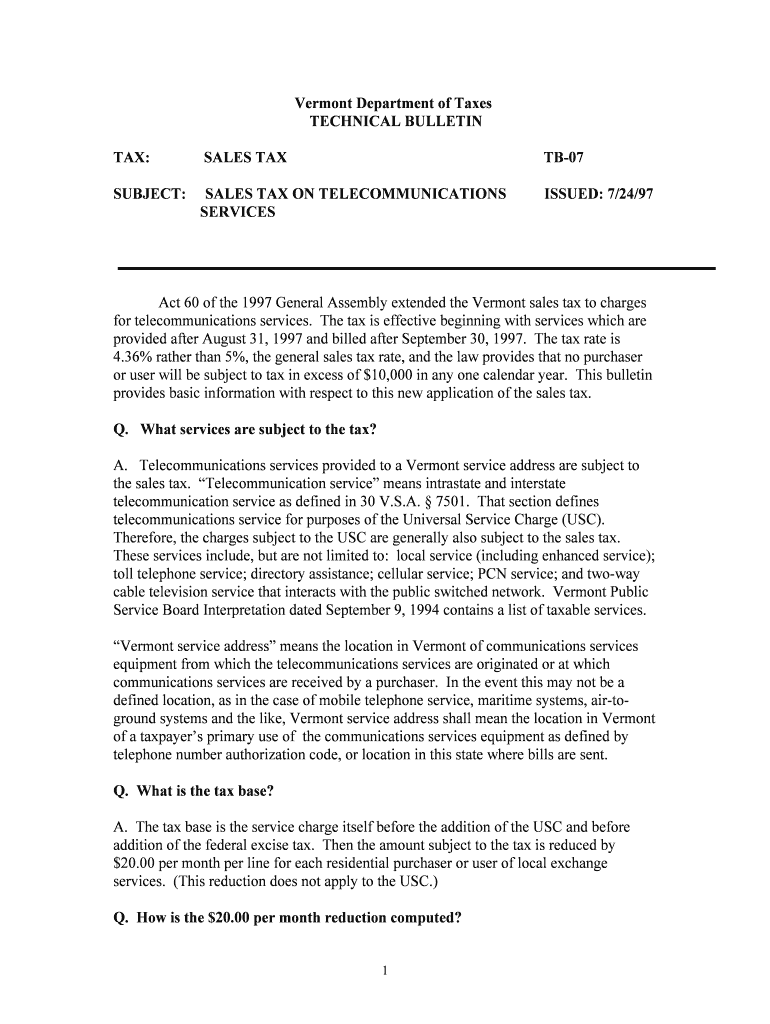
The sales tax on telecommunications, as implemented by the Vermont Department of Taxes, applies to various telecommunication services in the state. Introduced on September 1, 1997, it stands at a rate of 4.36%, with a maximum cap of $10,000 annually. This tax encompasses services like voice communication, messaging, and data transmission facilities. Exemptions are in place for certain non-profit organizations and government entities. For buyers, it establishes the guidelines for calculating the tax base and outlines how to apply for refunds when the paid tax surpasses the cap within a calendar year.
Key Elements of the Telecommunications Tax
The tax affects various telecommunications services, including:
- Voice and messaging services provided by telecommunications companies
- Data transmission networks that enable communication
- Internet services that fall under taxable categories per the Vermont Department provisions
Entities that qualify for tax-exempt status must maintain proper documentation and apply upon purchasing such services.
Steps to Complete and File the Telecommunications Tax Form
When completing the telecommunications tax form, adherence to the following procedure ensures accuracy and compliance:
- Form Access: Obtain the specific tax form from the Vermont Department of Taxes website or request a physical copy if required.
- Details Entry: Fill in the details regarding the telecommunications services received, including quantities, billing dates, and associated costs.
- Tax Calculation: Apply the 4.36% rate to determined service costs to calculate the payable tax.
- Exemption Verification: Include any relevant documentation if claiming exemptions.
- Filing and Submission: File the completed form online, if supported, or send it via mail to the Department as per the provided instructions.
Required Documentation
When filing, ensure the inclusion of:
- Invoices or contracts relating to the telecommunications services
- Proof of payment, if applicable
- Exemption certificates, if claiming an exemption
Who Needs to Use the Telecommunications Tax Form
The main users of this form encompass:
- Businesses and corporations providing telecommunications services
- Tax-exempt organizations purchasing telecommunications services
- Governmental agencies utilizing telecommunications within statutory exclusions
Individuals or entities involved in purchasing or providing these services in Vermont are principal users, needing to report and remit the applicable taxes.
Business Types that Benefit
This tax framework notably impacts:
- Telecommunications providers
- Internet Service Providers (ISPs)
- Data transmission companies
Understanding the tax process can yield significant benefits for these businesses through proper refund applications when applicable.
State-Specific Regulations and Differences
In Vermont, the sales tax rate is comprehensive, covering diverse telecommunication services that many other states may not include. The cap placed on the annual tax amount also provides an advantageous aspect for businesses with extensive telecommunications usage, permitting refunds when the cap is exceeded.
Exemption Criteria
Eligible entities for exemptions must comply with the Vermont tax rules and demonstrate specific conditions, such as non-profit status or governmental function. Documentation proving eligibility is essential during exemption applications.
Legal Considerations and Compliance
Ensuring compliance with state-tax regulations encompasses:
- Adhering to accurate tax calculations
- Maintaining records of telecommunication services purchased
- Ensuring timely form submission and tax remittance
Failure to comply may lead to penalties, creating a necessity for businesses to incorporate detailed tracking and reporting systems.
Penalties for Non-Compliance
Negligence in filing or incorrectly reporting the telecommunication tax can result in fines or additional scrutiny from the Vermont Department of Taxes, emphasizing the importance of complete and accurate submissions.
Practical Examples and Scenarios
Corporate Telecommunications: A Vermont-based corporation utilizing data services across several branches claims the telecommunications tax exemptions due to its status. The company meticulously maintains service contracts and usage invoices, allowing a straightforward refund process post-cap completion.
Non-Profit Scenario: A registered non-profit organization qualifies for exemptions on telecommunications services used for its activities, owing to its documented status. The organization files the required form, attaching its exemption certificate to avoid unnecessary charges.
Real-World Applications
Several entities, including telecommunications giants and internet service providers, apply the Vermont-specific sales tax in their billing systems, ensuring compliance is seamlessly integrated with operations.
These scenarios illustrate feasible applications of the telecommunications tax across different business types and organizational settings, emphasizing its role in Vermont’s tax structure.




