
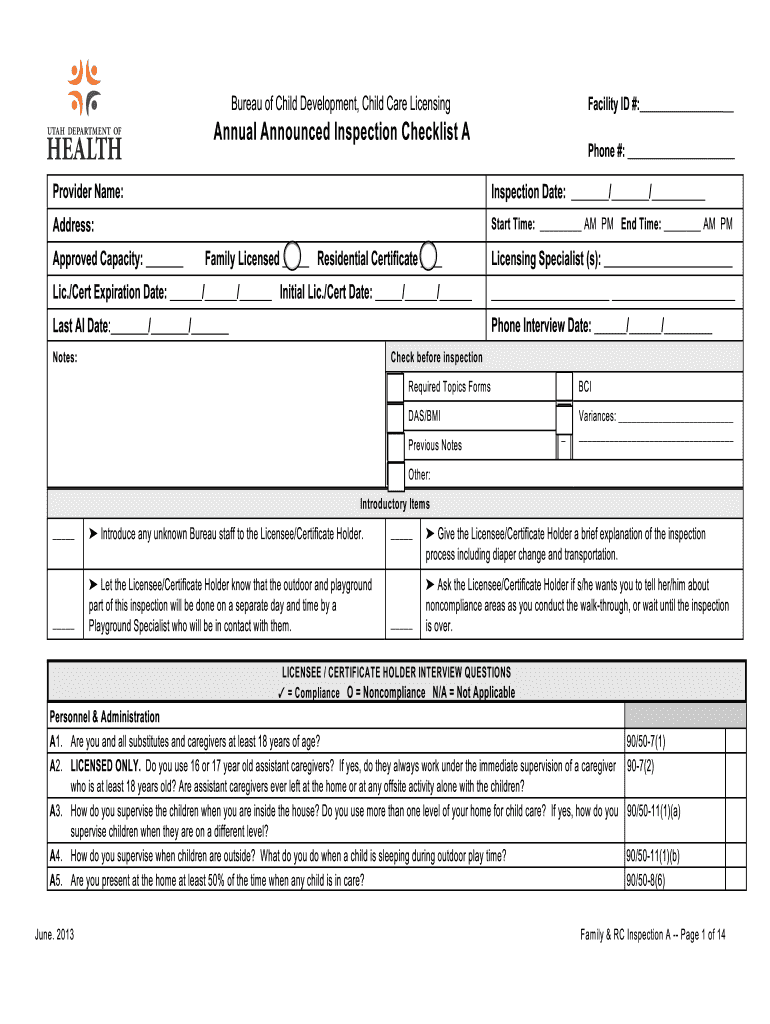







Definition and Purpose of the Center Inspection Checklists
The "Center Inspection Checklists - Child Care Licensing - Utah" is a detailed guideline utilized by child care facilities within Utah to ensure compliance with state licensing standards. Its main function is to assess child care environments, ensuring they meet specific regulations aimed at safeguarding children's well-being. This checklist helps monitor various aspects of daily operations, including personnel management, health protocols, and safety measures, maintaining high standards across all licensed child care centers.
Common Areas Reviewed
-
Personnel Administration: Assessment of staff qualifications, training adherence, and compliance with state-mandated background checks and clearances.
-
Supervision Practices: Evaluation of the adult-to-child ratios, staff supervision capabilities, and structured activities for all age groups.
-
Safety Protocols: Examination of emergency preparedness plans, equipment maintenance, and secure facility layouts to prevent accidents.
-
Health and Hygiene Standards: Scrutiny of cleaning practices, diapering procedures, and food safety regulations.
-
Records Management: Verification of detailed records on attendance, incident reports, and immunizations to ensure meticulous documentation.
How to Use the Center Inspection Checklists Effectively
The application of the "Center Inspection Checklists - Child Care Licensing - Utah" requires a systematic approach to guarantee thorough inspections and evaluations.
Step-by-Step Usage Instructions
-
Preparation: Before initiating an inspection, ensure your team is familiar with all sections of the checklist.
-
Site Walkthrough: Conduct a comprehensive walkthrough of the facility, using the checklist as a guide to inspect each area and process thoroughly.
-
Documentation: Record observations systematically, noting instances of non-compliance or areas needing improvement.
-
Review and Reporting: Post-inspection, review findings with the team and prepare a comprehensive report highlighting compliance levels and action areas.
-
Follow-Up: Develop an action plan for addressing any noted deficiencies and schedule a follow-up inspection to ensure all issues have been resolved.
Obtaining the Center Inspection Checklists
Accessing the "Center Inspection Checklists - Child Care Licensing - Utah" is a straightforward process, catering to child care providers across Utah.
Process for Checklist Acquisition
-
Online Access: The checklist is often available through state regulatory department websites in downloadable formats for ease of use.
-
State Licensing Offices: Contact local child care licensing offices in Utah for physical copies or guidance on obtaining the checklist.
-
Professional Associations: Many child care professional organizations provide access to regulatory checklists to their members as part of their resource offerings.
Completing the Center Inspection Checklists
Completing the "Center Inspection Checklists - Child Care Licensing - Utah" demands attention to detail and an understanding of regulatory expectations.
Key Steps
-
Familiarization: Begin by thoroughly reading the checklist to understand all requirements and benchmarks.
-
Systematic Assessment: Conduct the inspection methodically, ensuring all sections of the checklist are addressed.
-
Detailed Observations: Make comprehensive notes, detailing observations and providing examples where necessary.
-
Feedback Session: After the inspection, gather staff for a debriefing to discuss findings and plan corrective actions.
-
Documentation and Records: Maintain a record of completed checklists and related documentation for future reference and compliance audits.
Importance of the Center Inspection Checklists
Adhering to the "Center Inspection Checklists - Child Care Licensing - Utah" is crucial for ensuring children's safety and meeting legal compliance.
Reasons for Utilization
-
Regulatory Compliance: Ensures that child care facilities adhere to all mandatory state regulations, avoiding penalties or closures.
-
Safety and Well-Being: Promotes a safe, healthy environment for children, fostering trust among parents and guardians.
-
Operational Excellence: Enhances operational practices by providing a structured evaluation framework for regular self-assessment.
Typical Users of the Center Inspection Checklists
The checklist is primarily used by child care providers across Utah, but it also serves others within the ecosystem.
Primary Users
-
Child Care Facility Managers: Utilize the checklist for routine inspections and audits to ensure ongoing compliance.
-
State Inspectors: Conduct official evaluations to certify that facilities meet all required standards before renewing licenses.
-
Training Coordinators: Incorporate checklist use in training programs, educating staff on compliance expectations and practices.
Key Elements of the Center Inspection Checklists
Understanding the core components of the "Center Inspection Checklists - Child Care Licensing - Utah" is essential for comprehensive inspections.
Essential Components
-
Personnel Records: Verification of staff credentials, background checks, and training.
-
Operational Procedures: Assessment of daily operational practices for compliance and safety.
-
Physical Environment: Overview of the facility's physical setup to ascertain child safety and accessibility.
-
Emergency Protocols: Evaluation of emergency response readiness, including drills and equipment.
State-Specific Rules for Utah
While child care licensing can vary significantly between states, Utah has specific rules reflected in its inspection checklist.
Utah-Specific Requirements
-
Staff-to-Child Ratios: Utah mandates specific minimum ratios based on age groups to ensure adequate supervision.
-
Facility Licensing: Annual inspections are required to maintain license accreditation under Utah law.
-
Health Regulations: Adherence to stringent health and hygiene standards is mandated to ensure children's safety and well-being.
Utilizing the complexities of the "Center Inspection Checklists - Child Care Licensing - Utah" effectively depends on understanding its purpose, correct application, and specific state requirements.




