
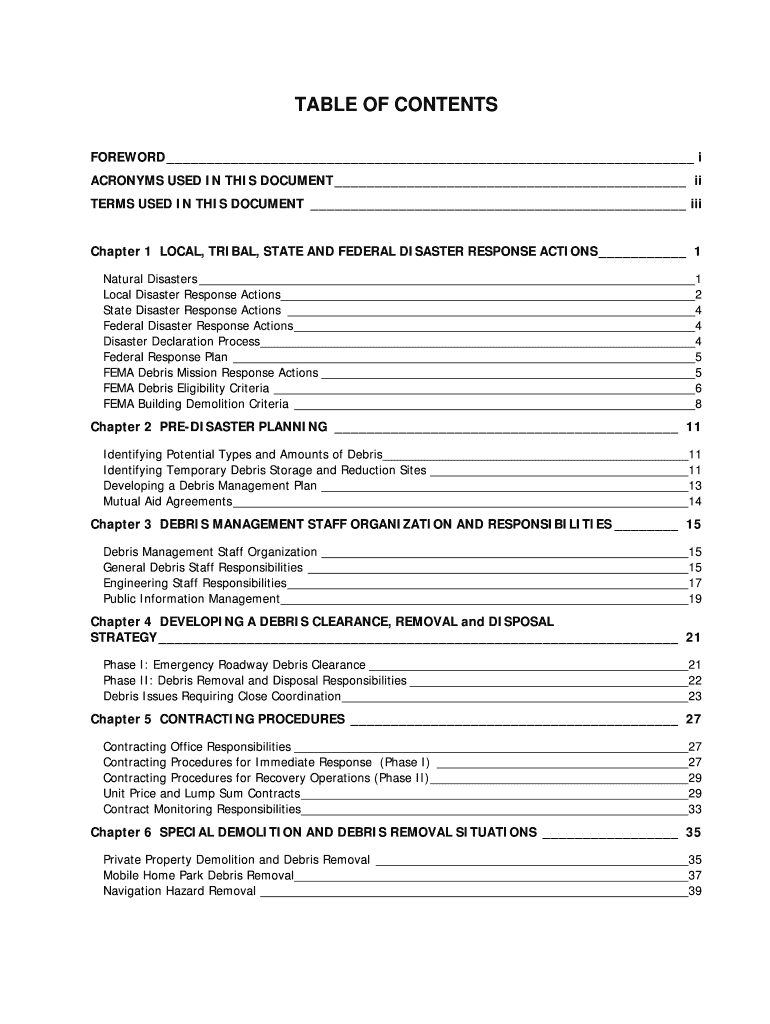







Definition & Overview of the Debris Management Guide
The Debris Management Guide is an essential document designed to aid local, tribal, state, and federal agencies in managing debris effectively following natural disasters. This guide outlines procedures for debris clearance, removal, and disposal, and emphasizes the importance of pre-disaster planning. It provides a detailed framework to coordinate efforts between various agencies, ensuring a streamlined approach to disaster response.
Importance of Pre-disaster Planning
- Coordination: The guide highlights the need for collaboration among different governmental levels and agencies.
- Resource Allocation: Provides strategies for allocating resources effectively before and after a disaster strikes.
- Risk Mitigation: Offers methods to minimize the impact of debris by identifying potential risks and preparing accordingly.
How to Use the Debris Management Guide
To effectively utilize the Debris Management Guide, users need to understand the comprehensive processes it outlines. Here's how you can navigate and apply its contents:
- Identify Needs: Determine which sections are relevant based on the type of natural disaster.
- Follow Processes: Adhere to the outlined steps for debris clearance and disposal.
- Engage Stakeholders: Involve all necessary parties from different jurisdictional levels.
- Implement Logistics: Apply logistical strategies for temporary debris storage and scheduling.
Example Scenarios
- A small community facing a tornado can refer to the guide for strategic cleanup operations.
- State agencies planning response actions for hurricane aftermaths can coordinate using the guide's protocols.
How to Obtain the Debris Management Guide
Acquiring the Debris Management Guide involves several straightforward steps:
- Official Request: Contact the South Dakota Department of Public Safety for official copies.
- Online Accessibility: The guide may be available on the department’s official website for download.
- Disaster Response Networks: Engage with federal or state disaster management agencies for distribution during disaster planning sessions.
Steps to Complete the Debris Management Processes
The guide provides a clear sequence of actions within each disaster response phase:
- Assessment: Conduct an initial assessment of the debris spread and volume.
- Planning: Develop a debris management plan tailored to the specific disaster.
- Coordination: Align efforts between local, state, and federal agencies for unified action.
- Execution: Implement debris removal operations according to the planned timeline.
Why Use the Debris Management Guide
The guide offers numerous benefits for governmental bodies and disaster management personnel:
- Efficiency: Streamlines debris management to restore affected areas quickly.
- Compliance: Ensures adherence to environmental and safety regulations.
- Resource Optimization: Helps make optimal use of available resources and personnel.
Key Elements of the Debris Management Guide
The key components of the guide include:
- Disaster Response Actions: Detailed protocols for immediate post-disaster steps.
- Staff Organization: Guidelines on team composition and responsibility allocations.
- Environmental Considerations: Emphasis on environmentally sound debris disposal methods.
State-specific Rules for the Debris Management Guide
Certain state-specific regulations might influence how the guide is implemented:
- South Dakota Compliance: Ensure all actions comply with South Dakota's environmental laws and local government regulations.
- Federal Coordination: Align with federal emergency management directives where applicable.
Important Terms Related to Debris Management
Understanding key terminology is crucial for effective application:
- Temporary Debris Storage: Designated areas for temporary holding of cleared debris.
- Contracting Procedures: Methods for engaging contractors for debris removal.
- Demolition Situations: Protocols for handling structures that pose a risk post-disaster.
Examples of Using the Debris Management Guide
Real-world applications demonstrate the guide's practical utility:
- Case Study: A city successfully coordinated multi-agency efforts for flood debris removal using the guide.
- Scenario Analysis: Rural areas used the guide to develop a sustainable debris disposal plan after a severe windstorm.
Who Typically Uses the Debris Management Guide
The guide primarily serves:
- Local Governments: Responsible for initial debris assessment and clearance.
- State Agencies: Oversee coordination across larger regions and ensure resource availability.
- Federal Bodies: Provide support and additional resources when local capacities are exceeded.


Legal Use of the Debris Management Guide
A robust understanding of legal implications is vital:
- Regulatory Compliance: Ensure all debris management activities meet legal requirements.
- Legal Protections: The guide provides frameworks to minimize legal exposure during disaster response.




