01. Edit your form online
Type text, add images, blackout confidential details, add comments, highlights and more.

Type text, add images, blackout confidential details, add comments, highlights and more.

Draw your signature, type it, upload its image, or use your mobile device as a signature pad.

Send it via email, link, or fax. You can also download it, export it or print it out.
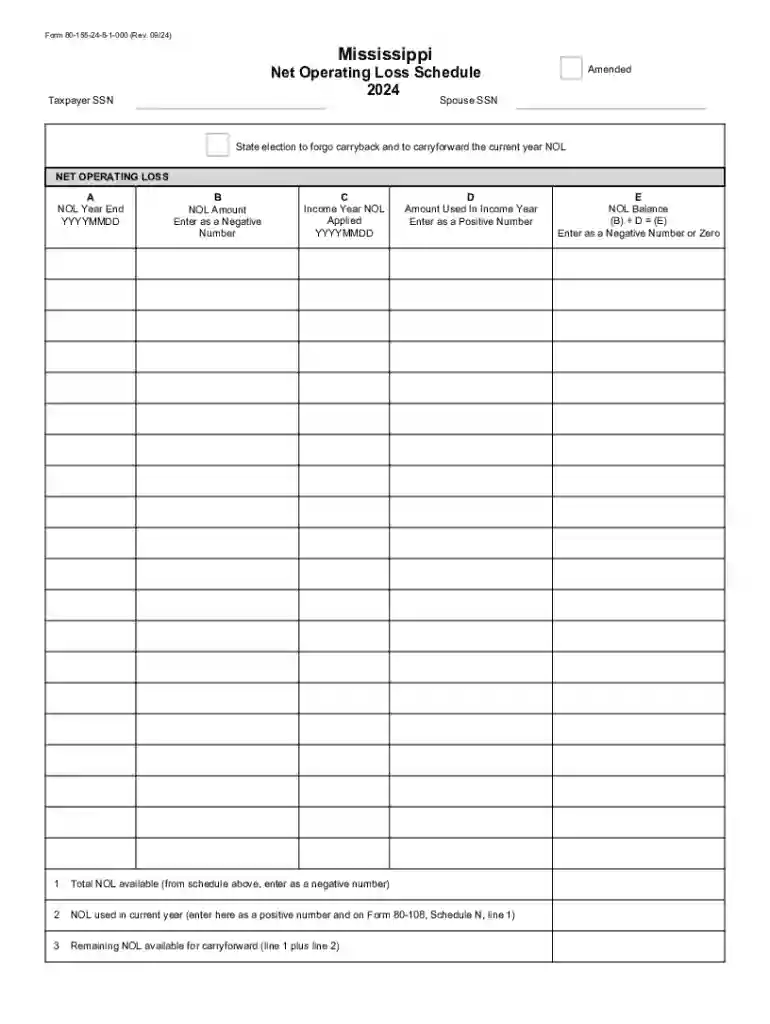
Form 80155248, officially known as the Net Operating Loss Schedule (Form 80-155-24-8-1-000) for Mississippi, plays a significant role in the tax filing process. This form is specifically designed to report and manage net operating losses (NOL) for businesses and individuals during the tax year 2024. Understanding the purpose of this form is crucial for taxpayers, as it allows them to document losses that can impact future tax liabilities and potentially reduce taxable income.
Form 80155248 contains several specific elements that users need to fill out accurately. It includes sections for:
Taxpayers must ensure they complete each section thoroughly to take full advantage of the form’s benefits.
Completing the 80155248 requires attention to detail and precision. Here are the necessary steps:
Understanding specific terminology is crucial for accurately completing the form:
Familiarity with these terms can aid taxpayers in making more informed decisions about managing their losses.
The legal framework surrounding the 80155248 ensures that taxpayers can manage their net operating losses within the structures allowed by Mississippi state law. Proper use of this form contributes to compliance with tax regulations and facilitates the legal reporting and carrying forward of net operating losses. Taxpayers must adhere to federal guidelines under the Internal Revenue Code, which sets the standards for NOL deductions.
Form 80155248 can be obtained through several methods:
It is advisable for taxpayers to regularly check for any updates to the form or instructions, as changes can impact how losses are reported.
Consider a business owner in Mississippi who has experienced a significant financial loss during the tax year. By accurately completing Form 80155248, they can report these losses and choose to carry them forward, potentially offsetting future earnings and reducing taxable income. This could result in a lower tax burden, offering financial relief in upcoming years.
Mississippi implements specific rules for the use of the 80155248, which can differ from other states. Taxpayers must be aware of these regulations to ensure compliance. For instance, Mississippi allows NOLs to be carried forward for a certain number of years, which can influence strategic financial planning. Consulting a tax professional familiar with Mississippi’s tax laws can provide tailored guidance for optimizing the use of NOLs.
We've got more versions of the 80155248 form. Select the right 80155248 version from the list and start editing it straight away!
At DocHub, your data security is our priority. We follow HIPAA, SOC2, GDPR, and other standards, so you can work on your documents with confidence.