
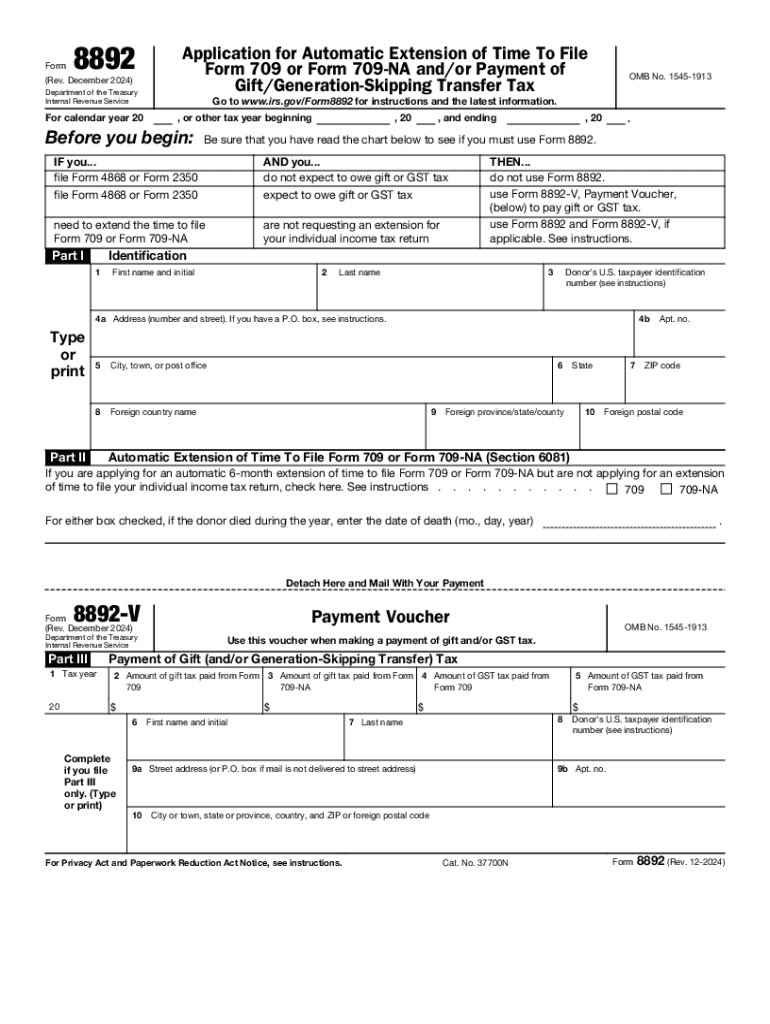







Definition and Purpose of Form 8892
Form 8892, revised in December 2024, is an application designed to request an automatic extension of time to file Forms 709 or 709-NA, which are related to gift and generation-skipping transfer taxes. Understanding the form's purpose can help filers avoid penalties associated with late submissions. Form 8892 allows individuals who need more time to gather the necessary documentation and information to extend their deadlines lawfully without incurring interest charges for delinquent tax payments. This form is essential for anyone expecting to be liable for these taxes but requiring more preparation time to ensure accurate reporting.
How to Use Form 8892
To efficiently utilize Form 8892, individuals should first determine whether they qualify for an extension. The form should be used when the taxpayer requires additional time to file Form 709 or 709-NA. Filing this form does not grant an extension for tax payment; taxes owed must still be paid by the original deadline to avoid penalties. However, it secures an additional six months to submit completed forms. It's crucial to fill out all the sections accurately, from the identification of the taxpayer to the specific request for extension, allowing the IRS to process the application smoothly.
Steps to Complete Form 8892
- Identification Details: Begin by entering your full name, address, and Social Security Number. Ensure all details match the records with the IRS to prevent any mismatches or processing delays.
- Identify Forms Needing Extension: Specifically indicate for which form (Form 709 or Form 709-NA) you are requesting an extension.
- Payment Sections: If you anticipate owing taxes, complete the payment voucher section and include a check or money order for the estimated tax amount due.
- Review and Sign: Once all information is accurately filled in, review the form thoroughly. Sign and date the application to validate your request.
- Mail the Form: Submit the completed form to the appropriate IRS address provided in the form instructions.
Filing Deadlines and Important Dates
Understanding filing deadlines is crucial to avoid penalties. Form 8892 must be filed by the original due date of Form 709, which typically falls on April 15th of the year following the taxable gift. However, specific dates may vary depending on holidays or weekends, in which case the deadline usually extends to the next business day. Given these deadlines, early preparation and submission of Form 8892 are advisable to ensure timely acceptance and processing.
IRS Guidelines for Form 8892
The IRS provides detailed instructions on how to complete Form 8892 correctly to facilitate processing. These guidelines emphasize the significance of adhering to instructions regarding taxpayer identification and estimated tax payments. They also offer insights on common mistakes to avoid, such as incorrect tax calculations or incomplete personal information, which can lead to rejections or processing delays.
Key Elements of Form 8892
Form 8892 consists of significant sections addressing different aspects of the request. Important elements include the taxpayer's identification, the specific form for which an extension is sought, and any anticipated tax payments. Each of these sections plays a critical role in the evaluation of an extension request, and all must be filled out with accuracy to ensure acceptance.
Penalties for Non-Compliance
Failure to file Form 8892 or meet the submission deadlines can result in financial penalties. These penalties can encompass not only late filing fines but also interest charges on unpaid taxes. Understanding these consequences highlights the importance of complying with deadlines and ensuring all necessary information and payments accompany the extension request.
Form Submission Methods
- Online: Although historically traditional submission methods are prominent, checking IRS updates for possible electronic submission options is advisable.
- Mail: The form can be mailed to the IRS address specified in the instructions. Send it early enough to account for postal delays and secure proof of mailing for records.
- In-Person: In rare cases, hand-delivering to a local IRS office might be possible. However, callers should verify current practices with their local IRS office.
Providing these options ensures that taxpayers can confidently choose the method that best suits their circumstances, guaranteeing their submissions are received and processed adequately.




