
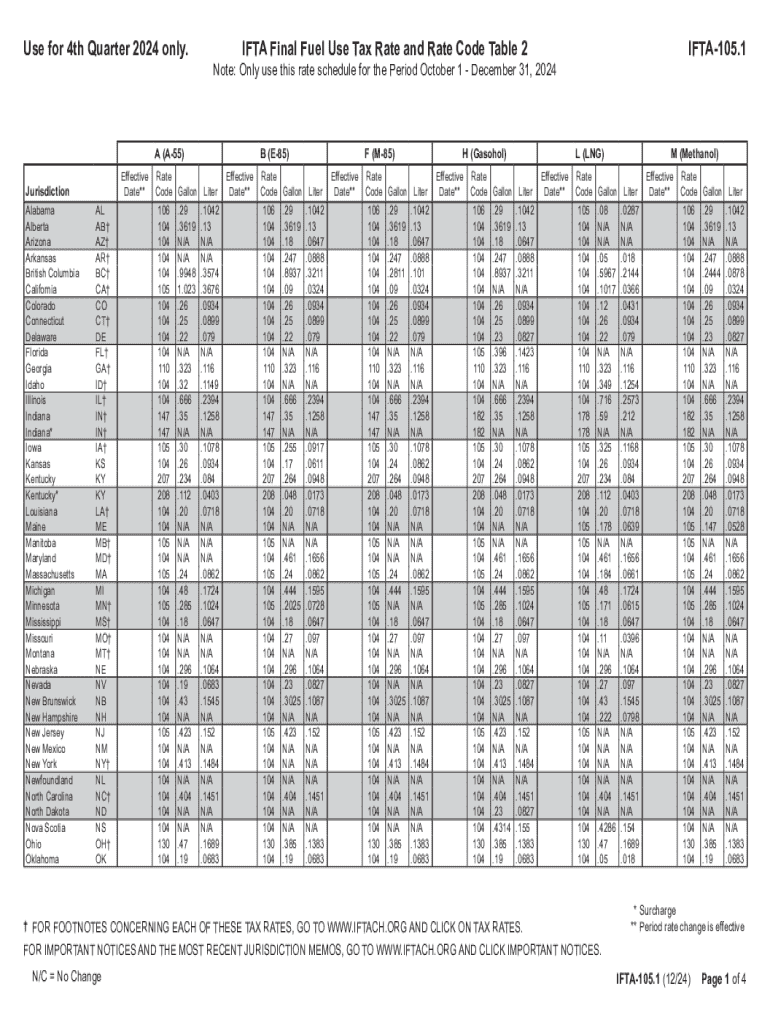







Definition & Meaning
The "IFTA 105" refers to a specific form used under the International Fuel Tax Agreement (IFTA) framework. It serves as the final fuel use tax rate schedule for the fourth quarter of a given year. This form is essential for commercial vehicles operating in multiple jurisdictions across the United States and Canada, as it outlines the effective tax rates for various types of fuel, including gasoline, diesel, and alternative fuels. The IFTA framework simplifies the reporting of fuel use taxes for vehicles traveling across multiple states and provinces.
Applicability and Purpose
- IFTA 105: Critical for motor carriers operating in two or more member jurisdictions.
- Purpose: Facilitates tax calculations and ensures compliance with fuel use tax obligations.
- Fuel Types Covered: Includes gasoline, diesel, and alternative fuels, ensuring comprehensive taxation.
Steps to Complete the IFTA 105
Completing the IFTA 105 form involves several detailed steps to ensure accuracy and compliance. Below is a structured outline to guide you through the process:
- Gather Necessary Information: Collect data related to fuel purchases, mileage, and jurisdiction of travel for the reporting period.
- Fill Out Fuel Use Columns: Enter quantities of fuel used for different types such as gasoline, diesel, and alternative fuels in the respective columns.
- Calculate Tax Obligations: Utilize the tax rates provided in the IFTA 105 to calculate the fuel use tax for each jurisdiction you’ve operated in.
- Check for Errors: Review your entries thoroughly for any discrepancies or errors, particularly in calculations and entry placements.
- Attach Required Documentation: Include all supporting documents, such as fuel receipts and mileage logs, with your submission.
Potential Challenges
- Complex Calculations: Accurately calculate taxes according to jurisdiction-specific rates.
- Documentation Requirements: Ensure all receipts and logs meet validity criteria.
How to Obtain the IFTA 105
Accessing the IFTA 105 form is a straightforward process, with several methods available:
- Online: Visit the official IFTA or your jurisdiction’s Department of Revenue website to download the form.
- Mail Request: Some jurisdictions may allow you to request a physical copy via mail.
- Local Authorities: Obtain the form directly from your local tax office if online access is unavailable.
Benefits of Online Download
- Immediate Access: Obtain the form instantly without waiting for postal delivery.
- Regular Updates: Download the most recent version with updated tax rates and instructions.
Key Elements of the IFTA 105
Understanding the key components of the IFTA 105 can help ensure accuracy and compliance:
- Jurisdiction-specific Tax Rates: Lists rates for each member jurisdiction, critical for proper tax calculation.
- Fuel Use Reporting Sections: Divided by fuel type, allowing detailed reporting per jurisdiction.
- Instructions Section: Provides detailed guidance on completing the form, including footnotes and notices relevant to each quarter.
Importance of Accurate Completion
- Compliance: Proper completion ensures compliance with IFTA regulations.
- Avoiding Penalties: Mistakes can lead to penalties or additional costs.
Who Typically Uses the IFTA 105
This form is primarily used by businesses within the commercial transportation industry:
- Trucking Companies: Regularly crossing multiple state and national borders.
- Bus Lines: Operating inter-jurisdictionally to transport passengers.
- Independent Owners-Operators: Driving across jurisdictions and managing their own fuel tax obligations.


Specific Roles
- Transport Managers: Responsible for tax and compliance.
- Financial Officers: Handle tax rate calculations and reconciliations.
Important Terms Related to IFTA 105
Understanding the terminology associated with the IFTA 105 is vital for accurate completion and compliance:
- Tax Rates: Specific charges applied to fuel use in different jurisdictions.
- Mileage: The distance traveled within each jurisdiction, crucial for tax calculations.
- Alternative Fuels: Non-traditional fuels that might be used in commercial vehicles.
Clarification of Terms
- Final Fuel Use Tax Rate Schedule: The term for the complete tax rate listing applicable to the current quarter.
- Reporting Period: The specified time frame covered by the form.
Filing Deadlines / Important Dates
Awareness of crucial dates is essential to avoid penalties:
- Quarterly Filings: Due dates usually fall shortly after each quarter ends; specific deadlines vary by jurisdiction.
- Review Cycle: Establish a calendar reminder to review the IFTA 105 requirements a few weeks prior to the due date.
Penalties for Late Submission
- Fines: Failure to submit by the deadline can result in financial penalties.
- Interest Accrual: Taxes not paid on time may incur additional interest charges.
Legal Use of the IFTA 105
The IFTA 105 form is legally binding and essential for fulfilling tax obligations legally:
- Compliance: Ensures operators are up to date with cross-jurisdictional fuel tax liabilities.
- Audit Trail: Acts as a record that can be audited by taxation authorities to verify compliance.
Legal Considerations
- Documentation Retention: Maintain records for the statutory period as defined by jurisdictional laws.
- Tax Law Updates: Stay informed of new legislation affecting fuel tax reporting requirements.




